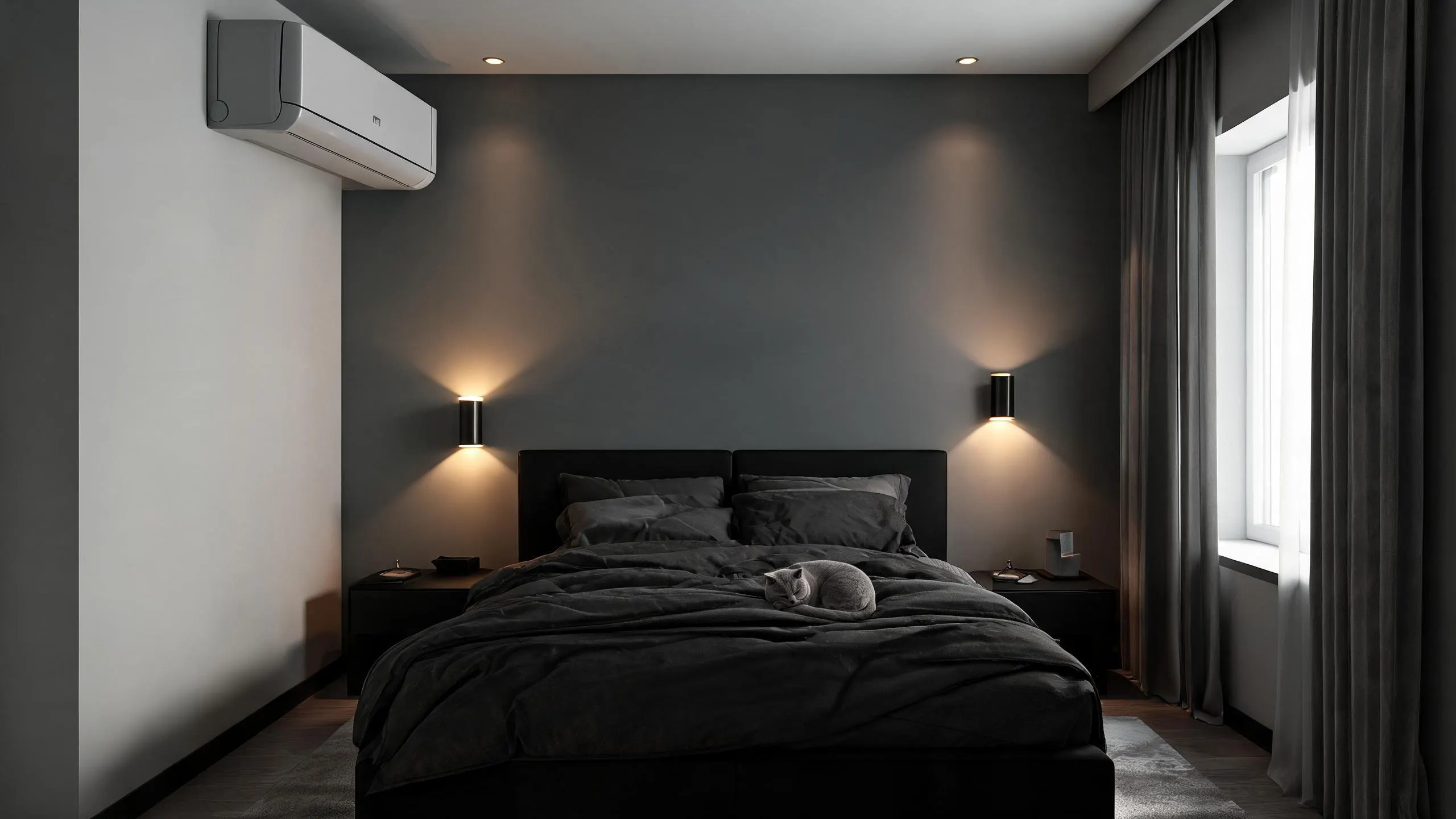
Mini Split Installation in Crystal Lake, IL
A new system here will heat from October through May and cool from June through August every year. Tell us about the house, and a licensed contractor who covers McHenry County will get in touch.
Tell us about the job
It takes about a minute.

What a mini-split has to handle here
Crystal Lake needs heat or cooling 11 months of the year. Winter nights average 17°F from December through February, and a mini-split installed here has to keep putting out heat at that temperature, night after night. Summer afternoons average 81°F, so the same unit is doing real cooling work too, from June through August.
Any mini-split manufactured now has to meet a federal minimum of 14.3 SEER2 for cooling and 7.5 HSPF2 for heating. That is the floor, not a feature to look for. What matters more in a place this cold is whether the unit keeps its heating output as the temperature drops toward 17°F, since not every heat pump does.
- 8 months
- October through May, your system heats
- 3 months
- June through August, it cools
- 17°F
- the average winter night it heats against
- 81°F
- the average summer afternoon it cools against
NOAA nClimDiv, 1991–2020 normals
In Illinois, HVAC licensing for homes is left to the cities and towns.
Check whether your city requires a license.
Source: Illinois General Assembly
- Is a mini split worth it?
- For the right room, yes. A mini split puts heat or cooling exactly where you use it, without ductwork, and it runs efficiently down to low temperatures when it's sized and installed correctly. Most homes here heat with gas already, so a mini split usually makes the most sense as a way to handle a room the furnace and ducts don't reach well, like an addition, a bonus room, or a finished garage. Whether it's worth it for your house depends on that room and what you're trying to fix, so a contractor should walk through it with you before you decide.
- How many rooms can a mini split cover?
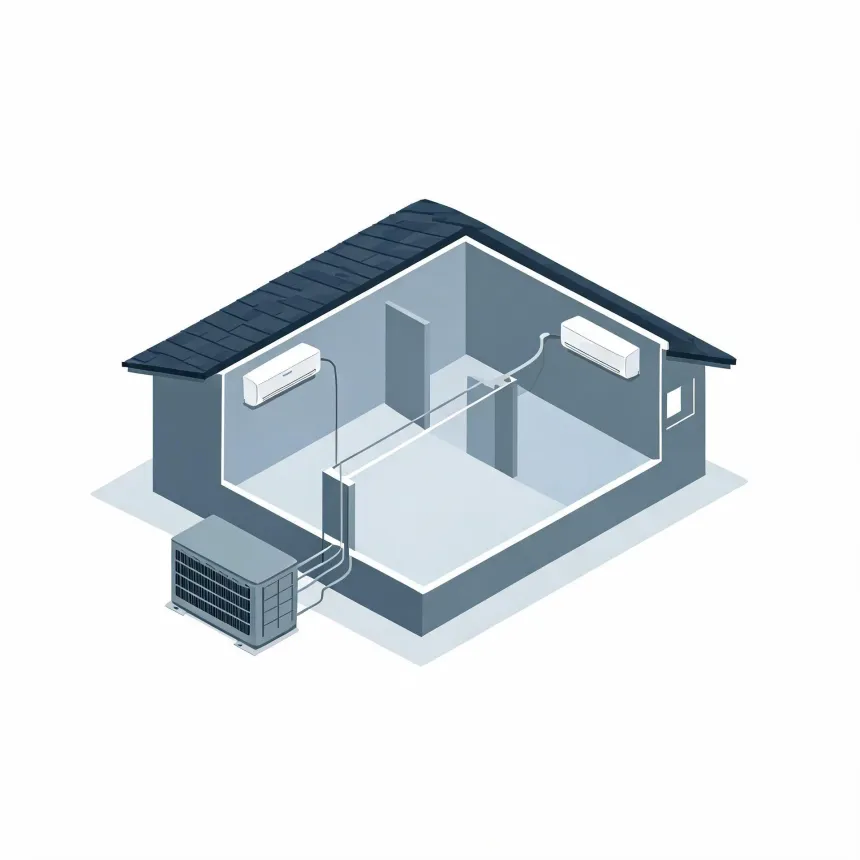
- A single-zone mini split covers one room or open area. If you need more than that, a multi-zone system runs several indoor units off one outdoor compressor, with each indoor unit heating or cooling its own room independently. How many zones your house can support depends on the outdoor unit's capacity and how the rooms are laid out, so a contractor needs to see the space to tell you what will actually work.
- Can a mini split heat a whole house?
- It can, but it usually takes more than one unit to do it well. A single indoor unit heats the room it's in and maybe an open space next to it, not a house with separate rooms and closed doors. Winter nights here drop to 17°F on average from December through February, so whatever system you use needs to be sized for that kind of cold, not just a mild day in fall. Most homes here already heat with gas, so a whole-house mini split setup is less common than using ductless units for specific rooms and letting the furnace handle the rest.