Mini Split Installation in Aurora, IL
A new system here will heat from October through May and cool from June through August every year. Tell us about the house, and a licensed contractor who covers Kane County will get in touch.
Tell us about the job
It takes about a minute.
A mini-split here works most of the year
Kane County asks a mini-split to run 11 months out of the year. Heat from October through May. Cooling in June through August. Winter nights average 18°F, cold enough that the heat pump side is doing real work, not sitting as backup.
Any unit built in 2023 or later has to meet a federal floor. At least 14.3 SEER2 for cooling and 7.5 HSPF2 for heating. That is a minimum, not a selling point, and every new system sold today meets it.
- 8 months
- October through May, your system heats
- 3 months
- June through August, it cools
- 18°F
- the average winter night it heats against
- 82°F
- the average summer afternoon it cools against
NOAA nClimDiv, 1991–2020 normals
In Illinois, HVAC licensing for homes is left to the cities and towns.
Kane County does not set a countywide rule. Illinois leaves HVAC licensing to cities and towns, so whether a mini-split installer needs a license, a registration, or nothing at all depends on which city or unincorporated area the house sits in.
Most cities and counties in the area require a permit for a mini-split installation and an inspection once the work is done. That inspection is what checks the refrigerant lines and electrical connections, the parts of the job most likely to cause problems if they are done wrong.
Source: Illinois General Assembly
- Is a mini split worth it?
- For the right room, yes. A mini split heats and cools one space well without ductwork, and it runs on a heat pump, so one unit handles both jobs. Aurora winters get cold, down to 18°F on average January nights, so check that any unit you're considering is rated to keep working at those temperatures. Most homes here heat with gas, so a mini split often works best as a way to add comfort to a room that furnace ducts don't reach well, rather than a full replacement.
- How many rooms can a mini split cover?
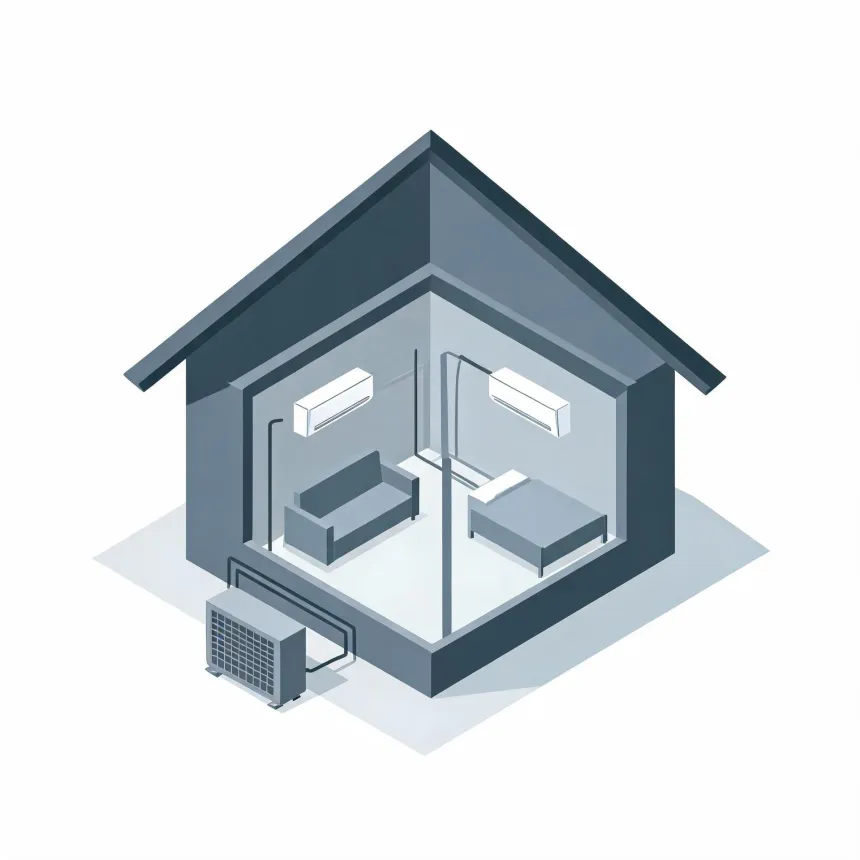
- One outdoor unit can run up to eight indoor heads, each one serving its own room. This is called a multi-zone system, and each indoor unit has its own thermostat, so every room can sit at a different temperature. A contractor sizes the outdoor unit to match the total load of all the rooms you want to cover, so get the room count and layout in front of them before deciding how many zones you need.
- Can a mini split heat a whole house?
- It can, if enough zones are installed to reach every room, but that takes real planning. A mini split with several indoor heads can replace a furnace, and since it's a heat pump it handles cooling too. In a place like Aurora, where nights average 18°F all winter, the heat pump needs to be rated to keep producing heat at those temperatures, and a contractor should work out the coverage room by room rather than guessing at zone count.