Is duct cleaning worth it in Naperville, IL

Send the form and finding a duct cleaner is handled.

Hand it off

For most homes in Naperville, duct cleaning is not something to do on a schedule. It is worth doing when there is a reason: after construction or remodeling work that left dust in the system, if you can see mold growth inside the ducts or on the coil, if rodents or insects have gotten into them, or if the vents are clogged enough with debris that air flow is actually affected. Dust that just sits in the ducts and recirculates is not a health issue for most people, and cleaning will not lower your heating bill or stop allergies on its own. Gas furnaces here run hard from November through March, and a dirty blower or clogged filter affects performance more than dusty ductwork does. If none of the specific triggers above apply to your house, cleaning is optional. If one of them does, it is worth having someone look at the system.

Does your duct system in Naperville need cleaning?

  • Half the homes here were built by 1978

    Half the homes in DuPage County were built in 1978 or earlier. An older duct system has had more years to collect dust and more chances for a gap or a loose joint to open up.

  • Heat runs October through May

    Heat runs here from October through May, about eight months of the year. That is most of the year pushing air through the same ducts, so whatever is sitting in them gets moved around a lot.

  • Cooling runs June through August

    Cooling runs June through August. Those three months bring the system's cold coil into the mix, and a coil that stays damp is where mold shows up first.

ACS 2020-2024 · NOAA nClimDiv 1991-2020

When cleaning the ducts makes sense

If a remodel left drywall dust in the supply runs, cleaning gets it out before another winter of heat circulates it through the house. The same goes for visible mold on the coil or inside the register boots, or a rodent problem that got into the ductwork. If someone in the house has allergies or asthma that gets worse indoors, clearing out what has built up in an older system can be worth the work. These are specific problems with a specific fix, not upkeep you do because enough time has passed.


When it's probably not needed

If the ducts have no visible mold, no pest damage, and no recent construction dust, cleaning them on a set schedule does not do much for a system that is already working fine. Dust in a duct mostly settles and stays put rather than blowing into the house every time the furnace kicks on. Changing the filter on schedule and keeping registers clear does more for the air moving through your home than a cleaning would. Spending money on a cleaning here would be addressing a problem you do not actually have.

A woman in a cream knit sweater reclines on a beige couch with eyes closed and a slight smile, a gray hardcover book resting open on a textured blanket over her lap, with a lit table lamp and a leafy plant in the dim background.
A smiling middle-aged man in a dark green sweater sits at a candlelit table with a glass of red wine and a bowl of salad in the foreground.

How a duct cleaning actually works

  • A duct cleaning crew runs a brush or air whip through each supply and return run to knock debris loose before vacuuming it out.
  • The return side usually holds more dust than the supply side, since that is the air pulled back in from the house before it passes through the filter.
  • A negative-air vacuum connects to the trunk line so loosened dust gets pulled out of the system instead of settling into another register.
  • The coil and blower wheel get cleaned separately from the ductwork, since caked dust there affects airflow in a way duct cleaning alone will not fix.
  • Register boots and the first few feet of flex duct near them collect the most buildup, since that is where air slows down entering or leaving a room.
  • A thorough job includes photos or a camera check of a few runs before and after, since there is no other way to confirm the inside of a duct is actually clean.

A crew doesn't just vacuum the registers. Each supply and return run gets a brush or an air whip worked through it to break loose what's built up on the inside walls of the duct, then a negative-air vacuum hooked to the trunk line pulls that debris out of the house instead of letting it resettle a few feet down the line. The return side is usually the dirtier half of the job, since that's the air coming back from the house before it ever reaches the filter. Register boots and the first stretch of flex duct near them tend to hold the heaviest buildup, because that's where moving air slows down as it enters or leaves a room. The coil and blower wheel are a separate task from the ductwork itself. A crew can clean every run in the system and still leave a caked blower wheel dragging down airflow, so a thorough job treats that as its own step rather than assuming duct work covers it. The best way to know a job was done right is to see it. Photos or a camera run through a few ducts before the work starts and again after gives you something to compare, since there's no way to check the inside of a duct by eye once the crew has packed up. If a company offers to clean your ducts in under an hour for a flat low price with no mention of the coil or blower, that's worth asking about before you book.

A smiling bearded man in a dark blue henley shirt sits leaning back on a light grey sofa in a living room, with a bowl of popcorn on a wooden coffee table and a large window behind him.
A bearded man in a dark quarter-zip sweater sits smiling on a brown sofa in a dimly lit living room, with a bowl of popcorn and a mug on a table in the foreground and a potted plant near a window behind him.
A smiling man with graying dark hair and a beard, wearing an olive sweater, sits on a sofa in a living room beside a bowl of popcorn on a wooden table.
A smiling man in a dark green henley shirt sits on a gray sofa in a living room with a lit table lamp, wooden shelving unit, and a bowl of popcorn in the foreground.
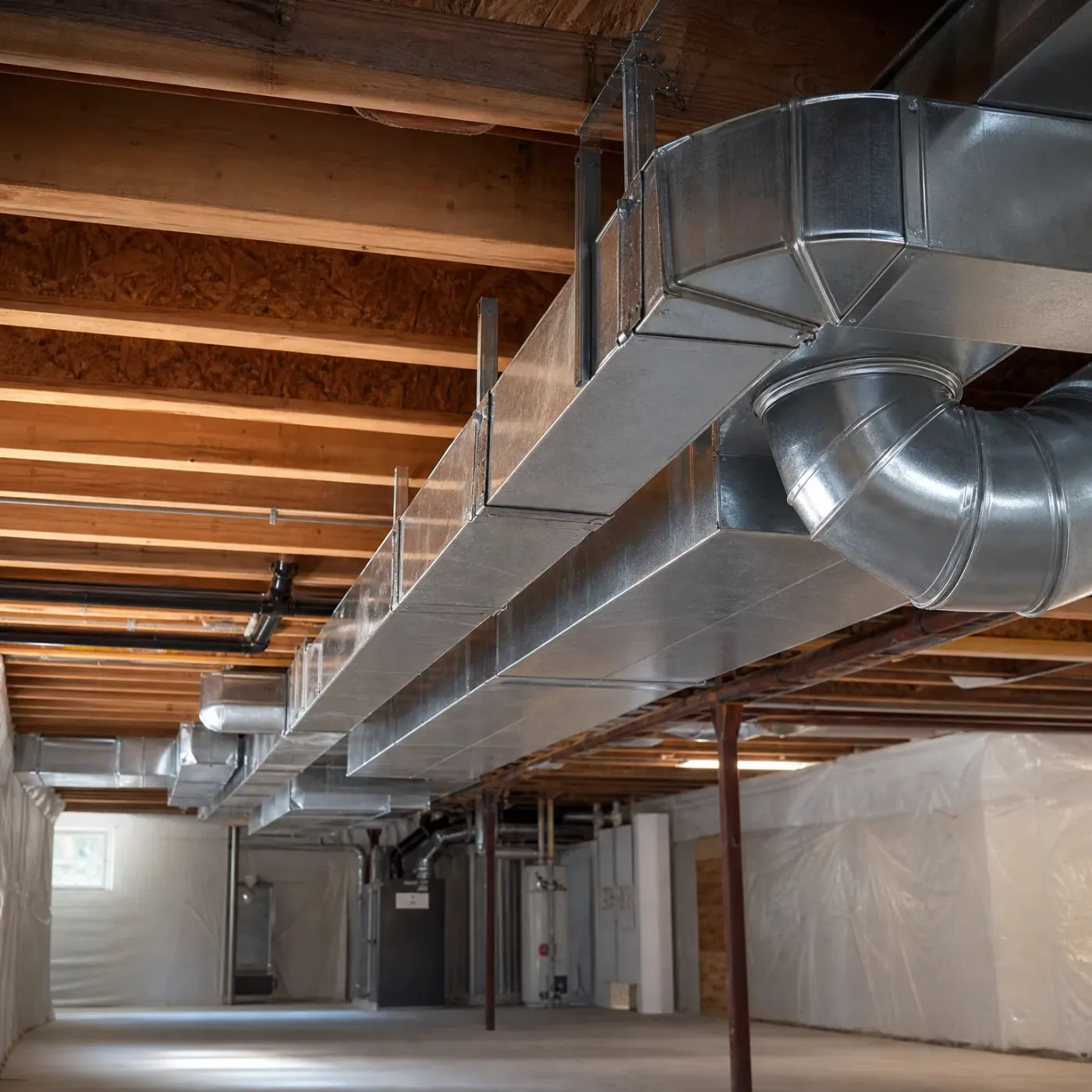
Unfinished basement with galvanized sheet-metal trunk ductwork and round branch ducts suspended beneath wood floor joists, with support posts, plastic sheeting on the walls, and a furnace and water heater along the far wall.

Finding a pro stops being your job

Skip searching for someone who cleans ducts in DuPage County.

One request and the duct cleaning stops waiting on you.

Skip the search

No charge to send it. You decide if you hire them.

Clean the Ducts or Skip It

Clean the ducts

  • A remodel that left drywall dust in the supply runs will keep circulating that dust every time the furnace kicks on this winter.
  • Visible mold on the coil or inside the register boots is a health concern as much as an air quality one, and cleaning addresses what's actually there.
  • A rodent problem in the ducts leaves droppings and nesting material that air whips and vacuuming are built to remove.
  • If a past contractor or inspector pointed out heavy debris during other work on the system, that's a specific reason to act, not a guess.
  • Someone in the house with allergies or asthma who notices symptoms worsen when the system runs has a reason tied to their own health, not a general concern.

Skip it for now

  • A duct system with no visible mold, no rodent signs and no recent construction dust has no real problem for cleaning to solve.
  • Dust that settles in ducts mostly stays put once the system is running normally, since moving air doesn't stir it up the way people expect.
  • Cleaning on a fixed schedule, like every two or three years regardless of condition, spends money without a reason behind it.
  • A newer duct system that came with a home built after 1978 has had far less time to accumulate the kind of buildup that justifies cleaning.
  • If nobody in the house has noticed dust, odor or allergy symptoms tied to the system, there's nothing the cleaning would fix.
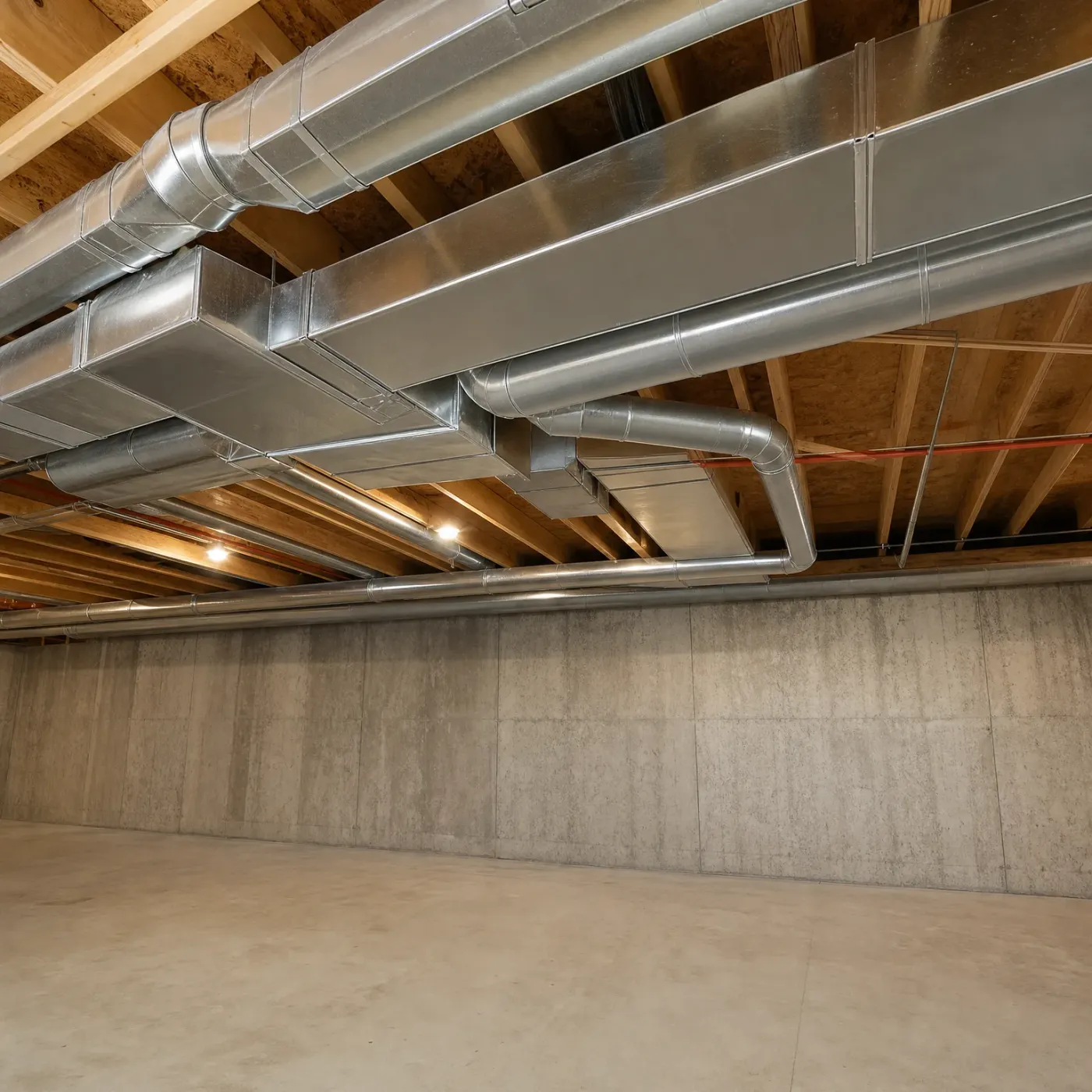
Unfinished basement with bare concrete walls and floor, exposed wood joists, and large sheet-metal HVAC ducts and pipes running along the ceiling.

Ductwork doing its job

This is what a duct system looks like with nothing wrong. Runs are sealed, joints are tight, and the furnace can move air through the house without pulling dust back in off the basement floor.

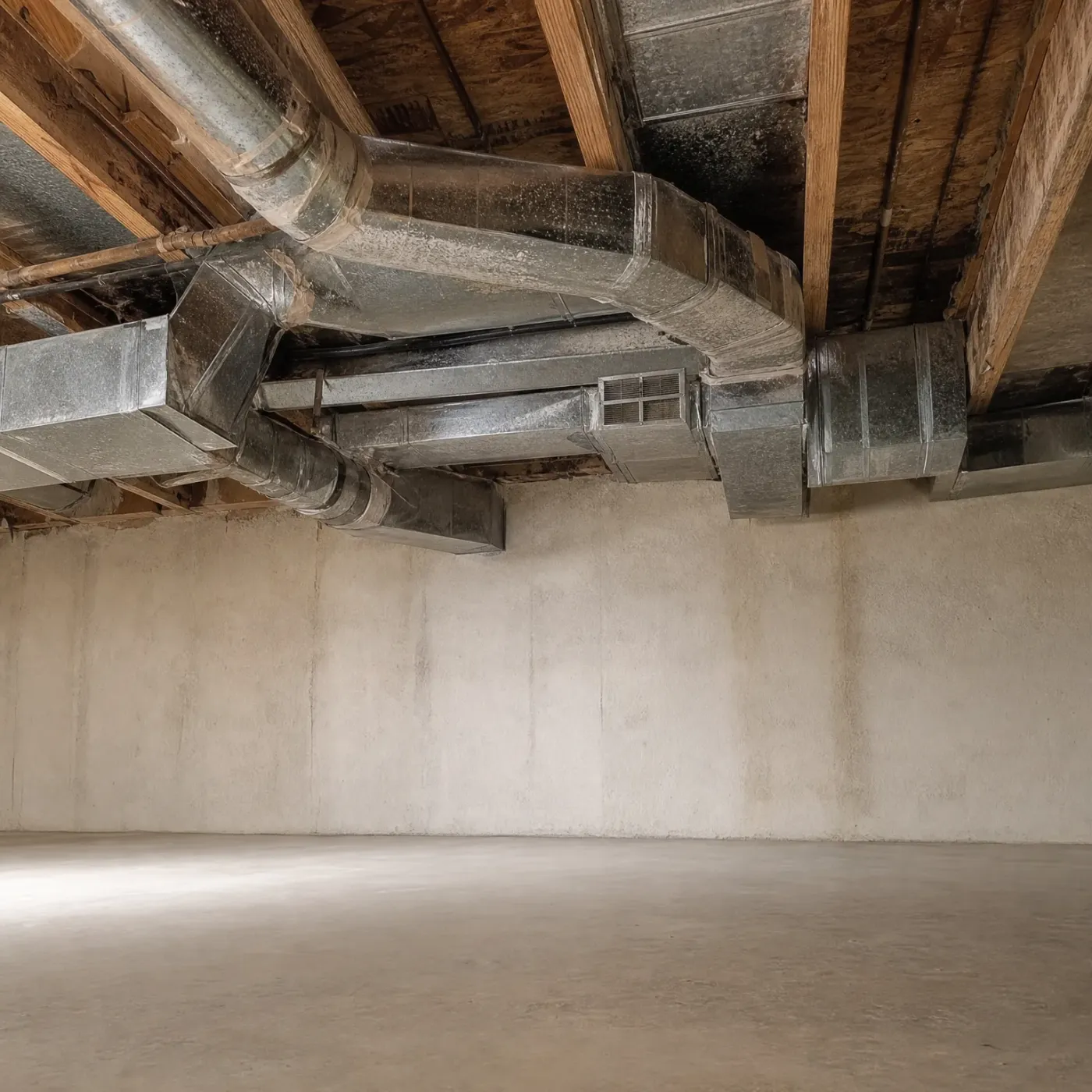
Basement interior with galvanized rectangular and round sheet-metal ductwork and copper piping running below a wood-joist ceiling, above a concrete wall and bare concrete floor.

Ductwork with a problem

A joint that has worked loose, a gap at a seam, or a line running through a damp spot gives dust and sometimes mold a way into the air the furnace pushes through the house. This is when cleaning has a reason behind it.

What's actually coming out of your vents

Pull a return grille off the wall and look at it. A gray, matted layer on the mesh means dust is getting pulled back into the system every time the furnace runs. Check the supply registers too, the ones you can feel air coming out of. A ring of dark buildup around the edge is dust that settled there over time. If anyone in the house has started sneezing more at home than elsewhere, or you notice a musty smell when the furnace first kicks on, that points to something sitting in the ducts rather than just in the air. A sour or stale smell that doesn't clear with the windows open is worth taking seriously, since it can mean moisture or mold somewhere in the runs.

Unfinished basement with bare concrete floor and walls, showing galvanized sheet-metal HVAC ducts, pipes and recessed lights beneath a wood-joist ceiling.
Steel runs overhead, sealed and clear, carrying air to the registers without pulling dust back off the basement floor.
An empty basement room with bare concrete walls and floor, with galvanized sheet-metal HVAC ductwork and a vent grille running along the wooden joist ceiling.
Dust built up along the seams like this means the furnace has been drawing in more than air for a while.
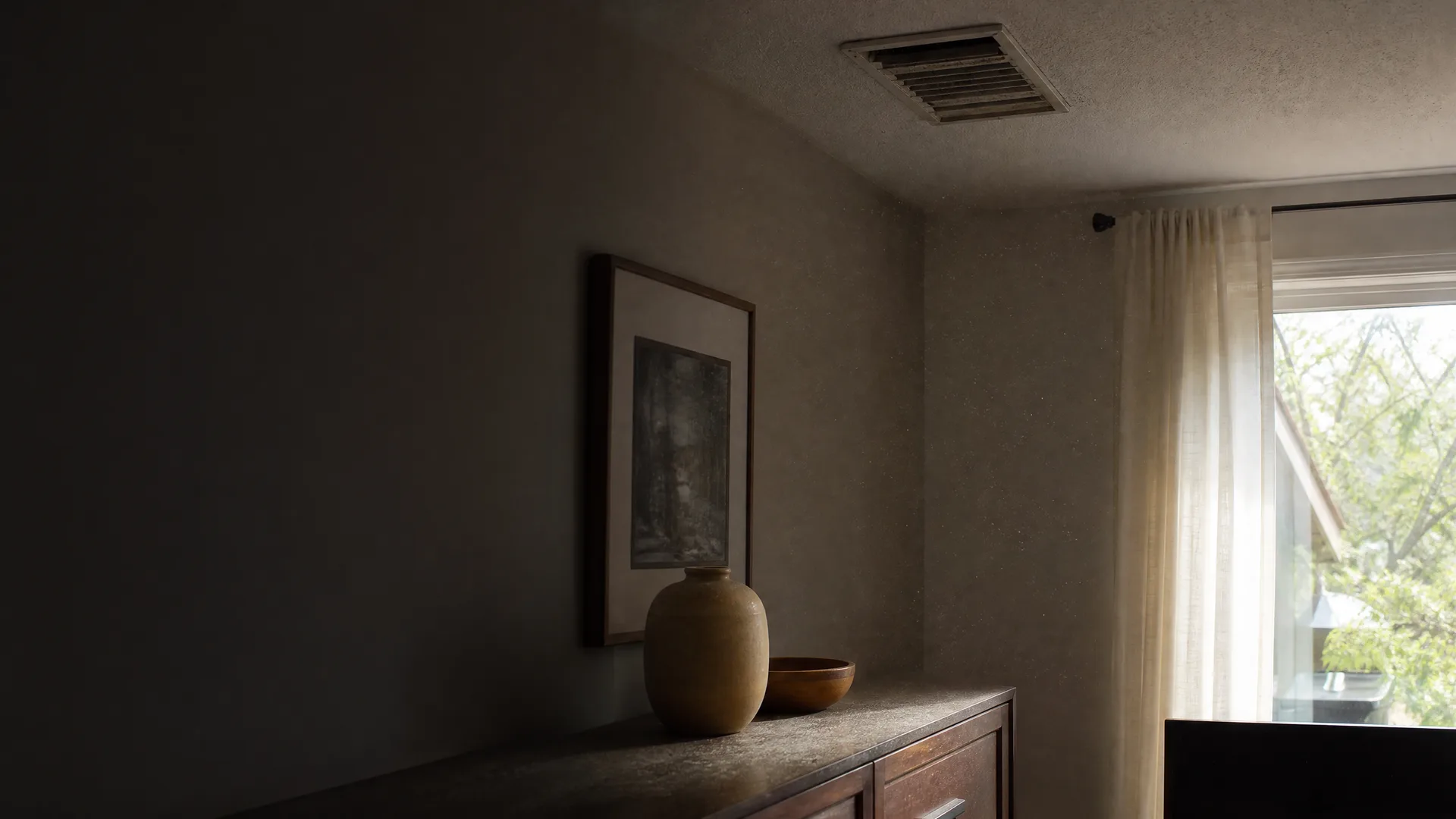
Dim room corner with a framed picture on a textured wall above a counter holding a tall ceramic vase and a shallow wooden bowl, with a sheer curtain beside a window and a ceiling air vent overhead.

It's a Saturday morning in April and the sun through the living room window shows what the lamp light never did. The ceiling vent has a gray ring of dust around the grille, thicker at the corners where the slats meet. On the end table underneath, a film has settled since you dusted it last week, the kind that comes back in a couple of days no matter what you do. The furnace hasn't run since Tuesday, when DuPage County had one more cold snap before spring held. You run a finger along the grille and it comes back dark. Nobody in the house has said anything about it yet, but you've started noticing it every time you sit down.

Power here costs 17.56 cents per kilowatt-hour

A furnace blower runs on electricity even though the heat itself is gas, and at 17.56 cents per kilowatt-hour, a motor working harder to push air through dusty, restricted ducts shows up on the bill. Clear runs let it do the job without straining.

EIA-861 2025

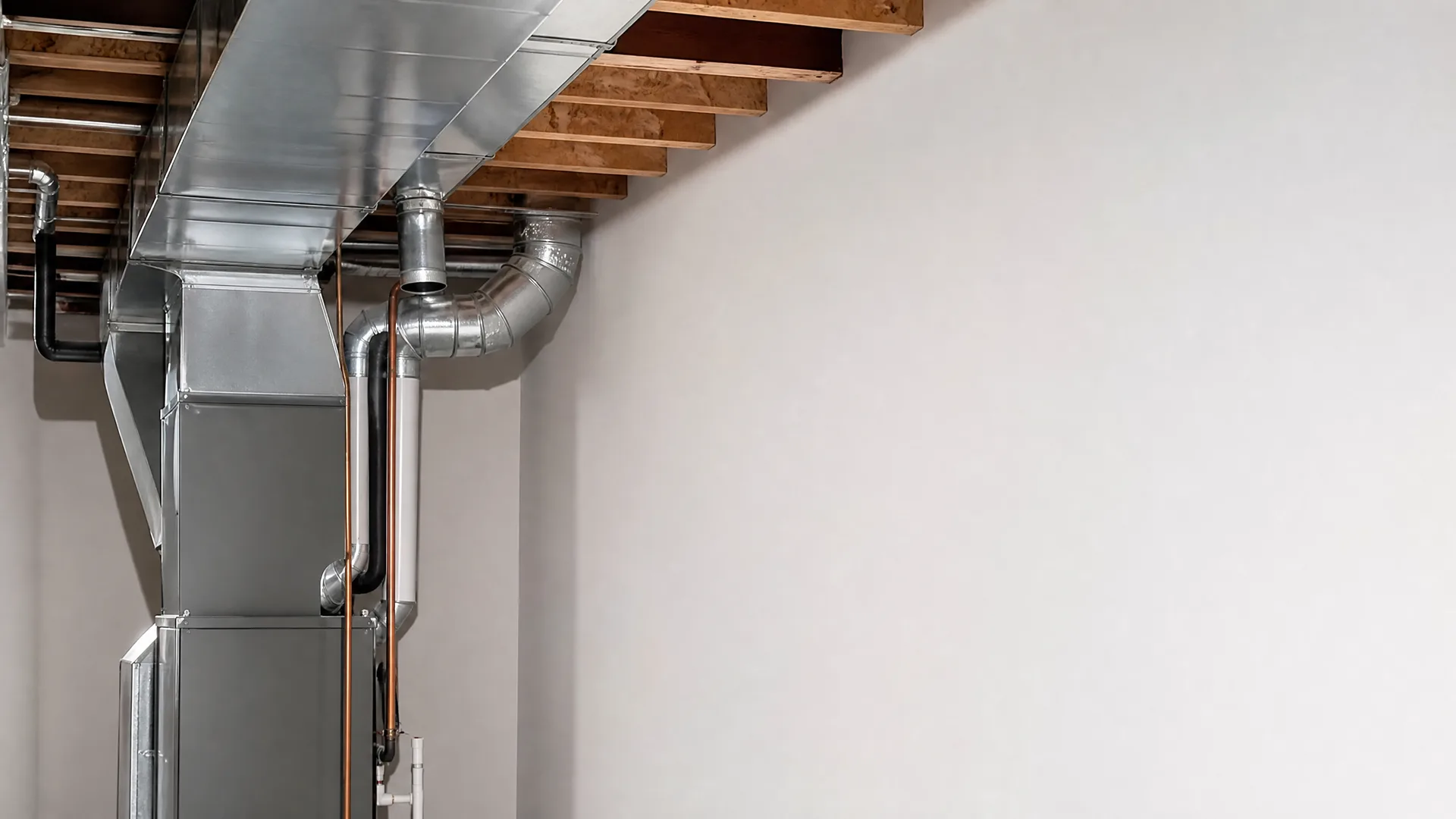
Basement interior showing a furnace with sheet-metal ductwork, a round flue pipe and copper lines running beneath exposed wooden floor joists next to a plain light-colored wall.

Skip it this year

If nobody in the house has allergy or asthma symptoms that get worse indoors, there was no recent remodel, and a look inside the ducts and at the coil shows no mold or rodent activity, cleaning will not change anything you can feel or measure. The dust that collects on steady, sealed runs mostly stays put rather than blowing out the registers. Spending the money without one of those reasons just empties your wallet for nothing.

Interior corner of a building with a large blank white wall beside an unfinished ceiling showing wood joists, galvanized sheet-metal ductwork, and white and copper pipes.

Get it done now

A rodent problem, visible mold, or a remodel that dropped drywall dust into the supply runs are each reasons enough on their own. So is a musty smell from the vents when the furnace kicks on, or a family member whose breathing gets worse at home and better away from it. With winter heat about to run for months straight, whatever is sitting in those ducts right now is what circulates through the house every day until spring.

A closed silver laptop and a white cup of coffee on a saucer sit on a wooden table in front of a wooden chair, a plain beige wall, a potted leafy plant and a window with greenery outside.

Where that leaves you

So the answer depends on what's actually in your ducts, not on the calendar. A remodel that left dust behind, mold on the coil, a rodent problem, a system nobody's looked at since 1978: those are reasons to clean. A clean-looking system with no symptoms and no history like that isn't waiting on anything.

If you've checked the registers and you're still not sure which side of that line your house falls on, that's a reasonable place to stop guessing. Finding a crew that will actually look before quoting a price, instead of selling you a cleaning on a schedule, is the harder part. That's the part this page can take off your hands.

A light-colored ceramic vase holding green leafy branches sits on a round wooden table, with a wooden-framed armchair draped in a cream throw, a tripod floor lamp, and sheer curtains blurred in the background.
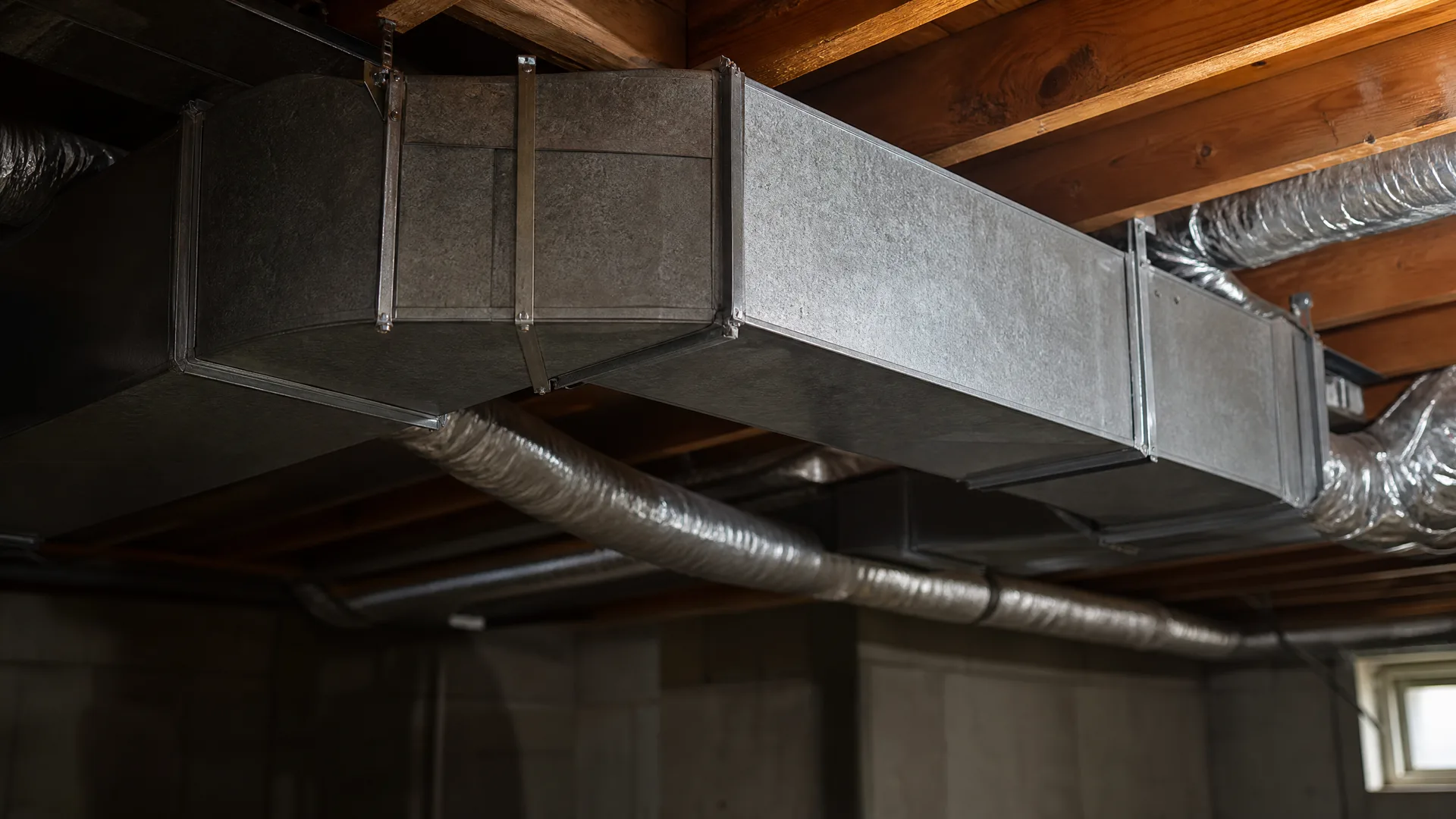
Rectangular sheet-metal HVAC trunk ducting and insulated flexible ducts running along wooden floor joists in an unfinished basement ceiling above concrete block walls.

Let someone else find the pro

Duct and vent cleaningDucts or ventsDuPage County, IL
Step 1 of 2

What ZIP code is the job in?