




Signs your ducts need cleaning in Aurora, IL

Get matched with a pro who works on ducts in Kane County.

Match me with a pro

How do I know if my ducts need cleaning?

You haven't had the ducts touched since you moved in, and you're not sure if that's a problem. Maybe someone in the house has started sneezing more, or you noticed dust settling again days after cleaning. You're not looking to spend money on a guess. You want to know what to actually look for before you decide this is worth doing.

Dust that comes back fast, musty air from the vents, or a furnace filter that's dirty again within weeks

A few signs point to it clearly. Dust that settles back on furniture just days after you clean, visible dust blowing out of the vents when the system kicks on, or a musty smell when the furnace or AC runs. If your filter is gray again two or three weeks after a fresh one, that's air pulling through dirty ductwork. Mold around a vent cover is a reason to have the ducts looked at, not just wiped down. In Kane County, the furnace runs hard all winter and the AC runs hard all summer, so whatever is sitting in the ducts gets pushed through the house for most of the year. A system that cycles that much either way shows these signs sooner than one that barely runs.

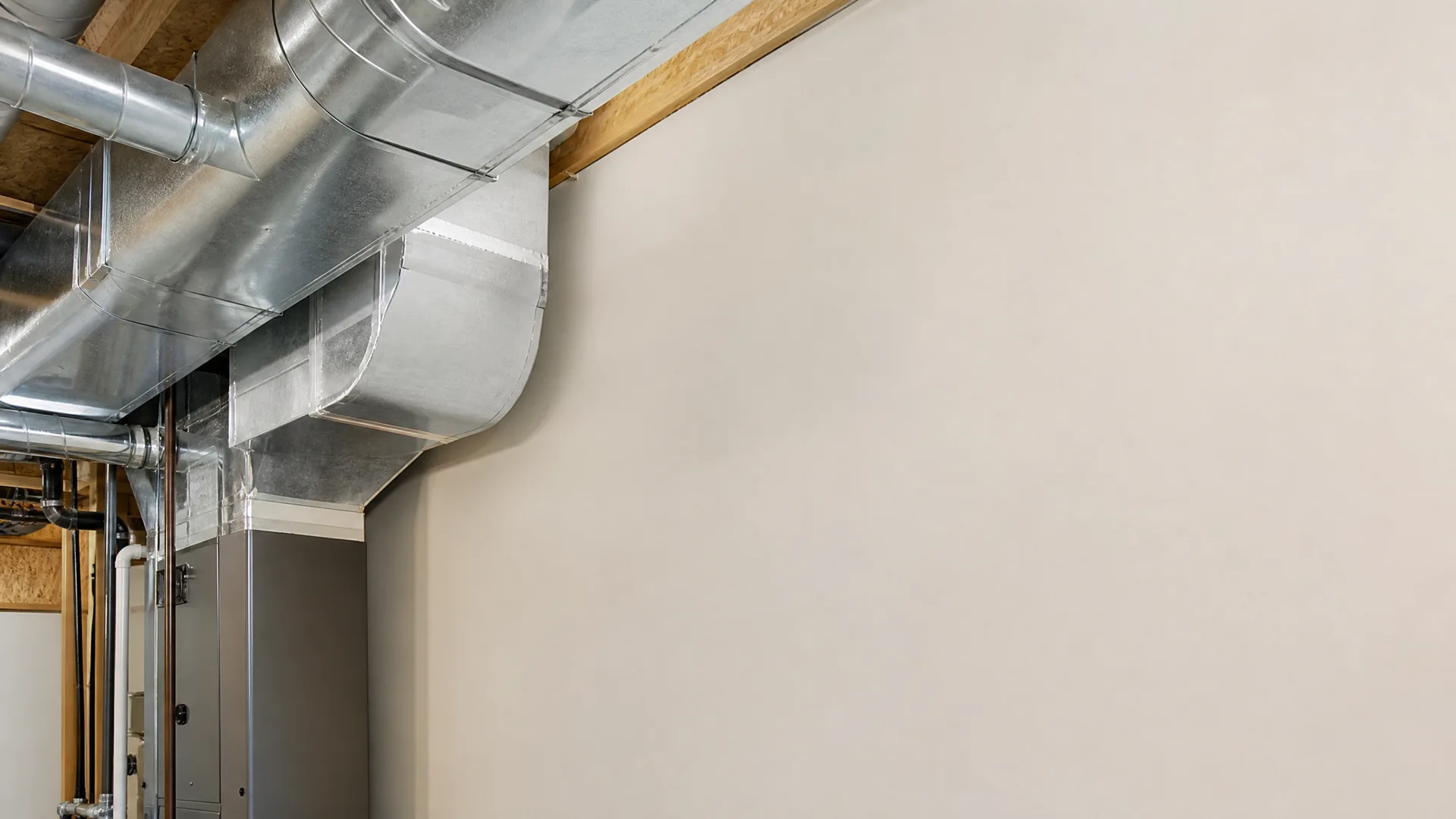
Galvanized sheet-metal ductwork and pipes running along an unfinished basement ceiling beside a plain beige wall, with a gray equipment cabinet below.

What's actually moving through your vents

Your ducts connect to every room through the same trunk line, so what collects in one branch gets pulled back through the blower and pushed into the next. A dusty return or a musty smell near one vent usually means the whole system is carrying it, not just that room. Furnace filters catch some of this, but they're built to protect the blower motor, not to clean the air you breathe.

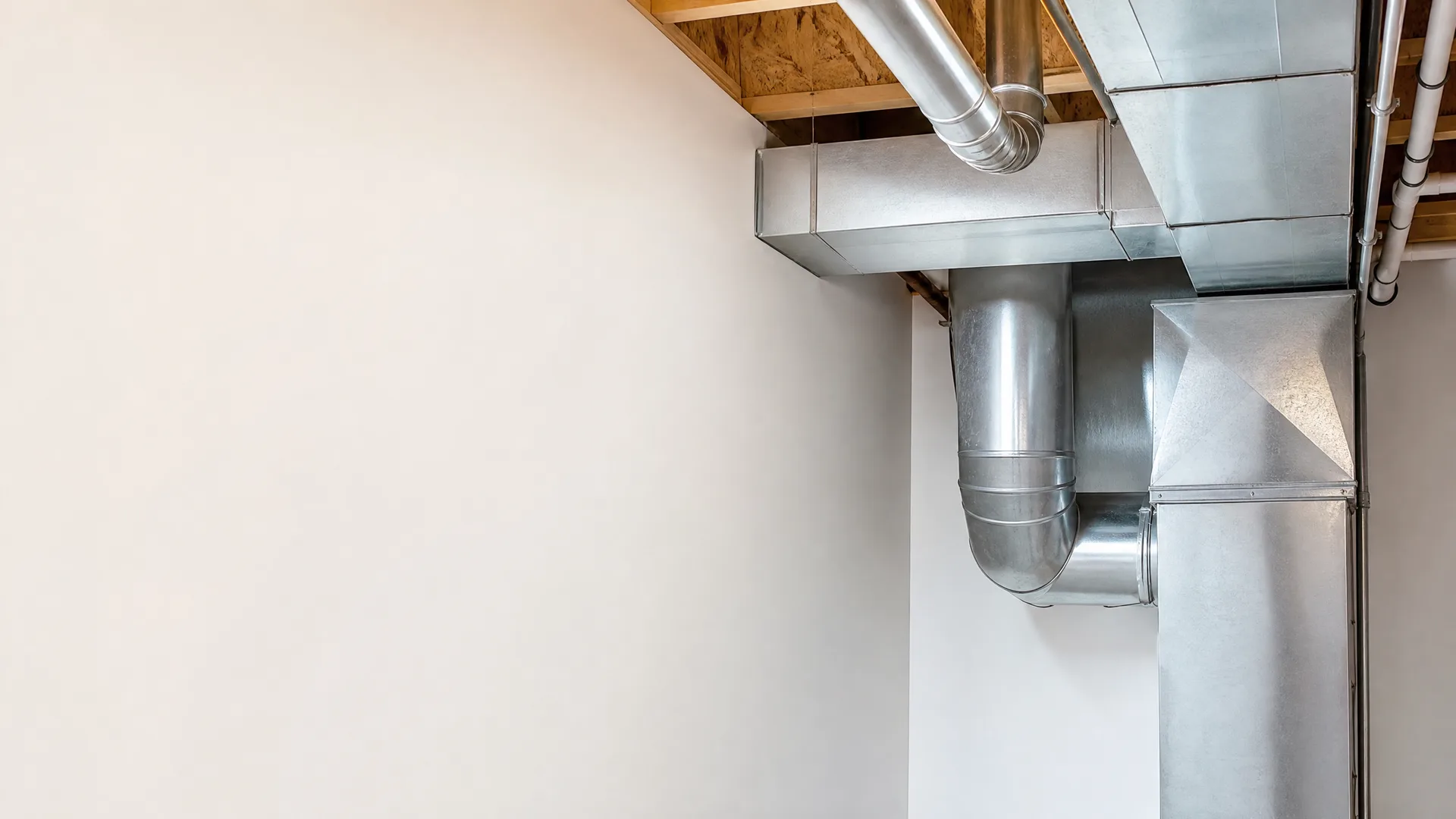
Galvanized sheet metal rectangular and round HVAC ducts running along a ceiling and down a white interior wall, with exposed wood joists and subfloor above.

What the registers can tell you

Pull a floor or wall register off and look inside the first foot of duct. Gray buildup along the metal, or dust that falls out when you tap the cover, means it's been collecting for a while. Pet hair wrapped around the damper or screen is another sign, especially if you're finding it again soon after you last vacuumed. These checks take a minute and tell you more than guessing from the vent face alone.

Why does duct buildup matter so much in a Kane County house?

  • Half the homes here were built by 1985

    Half the homes in Kane County were built in 1985 or earlier, old enough that the ductwork has likely never been cleaned since it went in.

  • Heat runs October through May

    Heat runs October through May here, eight months of the blower pushing air through the same ducts, carrying whatever has settled in them.

  • Cooling runs June through August

    Cooling runs June through August, so for most of the year that system is either heating or cooling, and the ducts rarely get a rest to be checked.

ACS 2020-2024 · NOAA nClimDiv 1991-2020

What these signs actually mean

  • Dust that resettles on furniture within a day or two of cleaning usually means the supply ducts are feeding it back into the room.
  • A burning smell the first time the furnace fires up each fall often comes from dust baked onto the heat exchanger, not the ducts themselves.
  • Rooms that stay warmer or cooler than the rest of the house can mean a duct run is partly blocked rather than a thermostat problem.
  • Registers that whistle or rattle at low speed point to debris narrowing the duct opening, not a failing blower motor.
  • Finding rodent droppings or insect shells near a vent means the duct run has an opening somewhere that needs sealing as well as cleaning.
  • A musty smell that only shows up when the AC runs points to moisture sitting in the ducts near the evaporator coil.

Each of these points to a different spot in the system, and knowing which one helps whoever looks at it get there faster. Dust that comes right back after cleaning is a sign the supply side is still loaded, so the blower keeps stirring up what's left every time it kicks on. The burning smell in fall is separate from the ducts. That's dust that settled on the heat exchanger over the summer, and it burns off within the first hour the furnace runs. It should not happen a second time that week. Uneven temperatures from room to room often get blamed on the thermostat or the furnace itself, but a duct run that's partly blocked will starve one room while the rest of the house runs fine. A whistle or rattle at a register is air forcing its way past something narrowing the opening, not a motor problem, and it usually gets louder before it gets quieter. Droppings or shells near a vent mean something got in, and if it got in, air is also getting out somewhere along that run, which is why sealing matters alongside the cleaning. The musty smell tied to the AC specifically, not the furnace, points to moisture collecting near the coil, where the duct stays damp longer after the system shuts off. None of these are guesses once you've seen them a few times. They're the ordinary ways a duct system tells you something's wrong before it turns into a bigger repair.

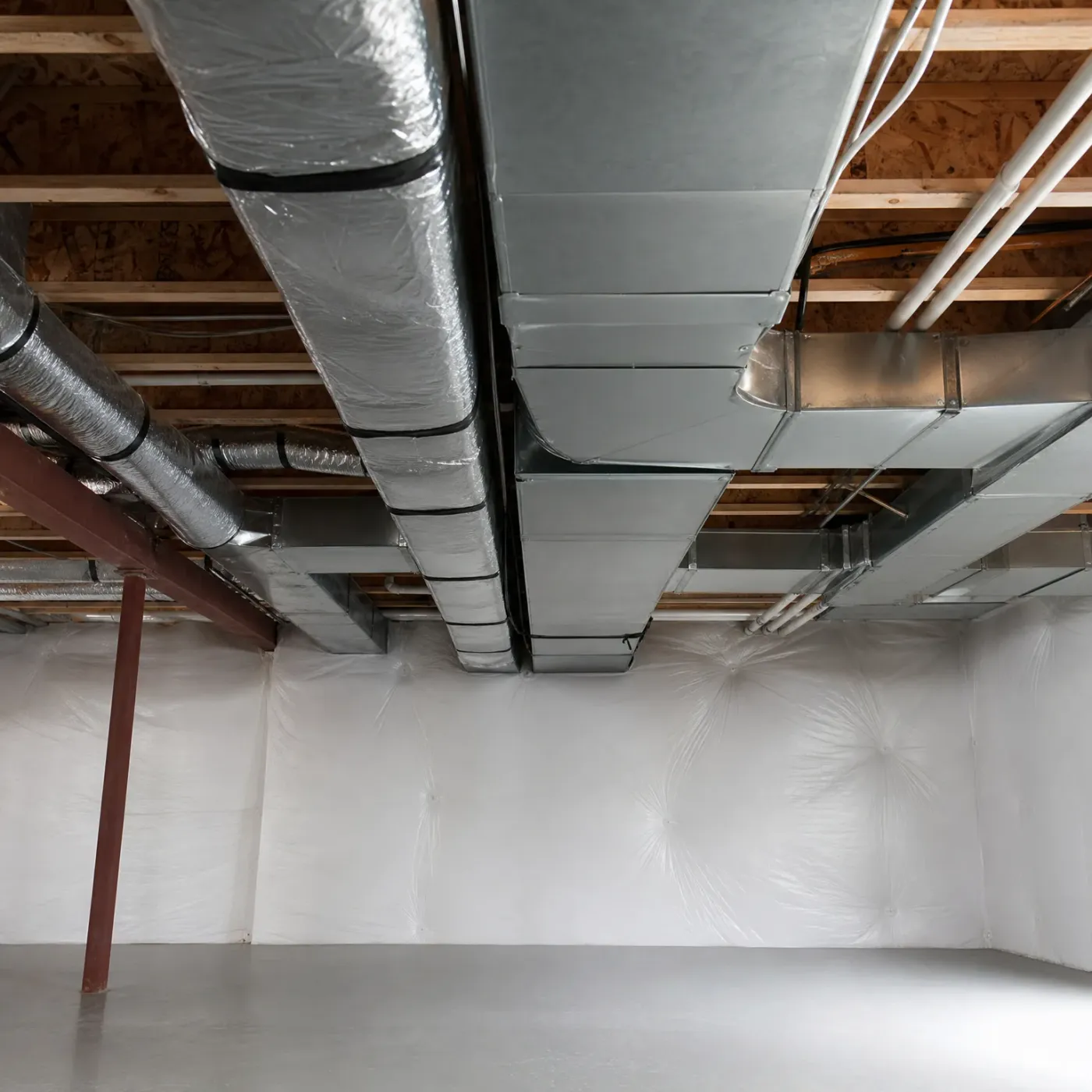
Unfinished basement with exposed wood joists, sheet metal and insulated flexible ductwork, white pipes, a steel support post, plastic-covered walls, and a bare concrete floor.
Metal trunk lines and flex runs sit open and dry between the joists, with no dust trail hanging off the seams.
Galvanized sheet-metal ductwork and round pipes run beneath wooden floor joists in a basement with concrete walls and floor.
Dust cakes the outside of the trunk line and collects where the flex elbow joins it, a sign of what's built up inside too.
A woman in a cream cowl-neck sweater stands in a lamp-lit room looking out a window at a snow-covered yard with shrubs and bare trees at dusk.
A woman in a gray turtleneck sweater stands near a large window in a lamp-lit living room, looking out at falling snow and snow-covered conifers.
A woman in a chunky knit sweater stands by a large window looking out at snow-covered ground, with a dimly lit living room containing a gray sofa, framed artwork, shelves and table lamps behind her.
A woman in a gray turtleneck sweater stands in a dimly lit living room with a lamp and bookshelves, looking out a multi-pane window at falling snow.

Get matched with a duct system pro in Kane County

The pro who gets in touch is licensed in Illinois and works in Kane County.

It costs nothing to send, and you don't have to hire anyone.

What it costs you month to month

A furnace pulling air through ducts packed with dust works harder to push the same heat through the house, and that shows up on the gas bill before you ever see the dust itself. Power here isn't cheap, and the blower motor runs longer to move air through a restricted line. If a room near the end of a trunk run stays colder than the rest of the house all winter, that's not always the thermostat. It can be buildup narrowing the duct enough to slow what reaches that room.
What it means for your family

If someone in the house has started sneezing more since fall, or a cough that clears up when they leave for the day and comes back by evening, check what's blowing out of the vents before you check anything else. Ducts that haven't been cleaned since you moved in have had years to collect dust, pet hair and whatever else gets pulled into the return. Every time the furnace or the AC kicks on, that gets pushed back into the rooms you spend the most time in, not just the basement.

Power here costs 17.51 cents per kilowatt-hour

At 17.51 cents a kilowatt-hour, the blower motor running harder against clogged ducts costs you more than it would most places. A duct system full of dust makes that motor work longer to push the same air, and you pay the going rate for every extra minute it runs.

EIA-861 2025

When a quick vacuum is enough

If the only sign is a dusty supply vent in one room, that's not a whole-house job. Pull the vent cover and wipe it down, run a vacuum hose a foot or two into the duct, and check if the dust keeps coming back within a few days. A single dirty register often means a loose filter or a return that's not sealed right where it meets the wall, not years of buildup through the whole system. That's worth ruling out first, since it's something you can see and fix yourself in an afternoon without opening up the trunk line.

When it's the whole system

If every vent in the house shows the same dust trail, or the smell is coming from more than one room, the buildup is in the trunk line itself and a vacuum at the register won't reach it. That calls for equipment that gets into the branches and the trunk, not just the first foot of ductwork behind the wall. A contractor local to Kane County who cleans ducts through the winter here knows which runs tend to collect the most, usually the longest branches and the ones closest to the return, and checks those first instead of working the whole system blind.

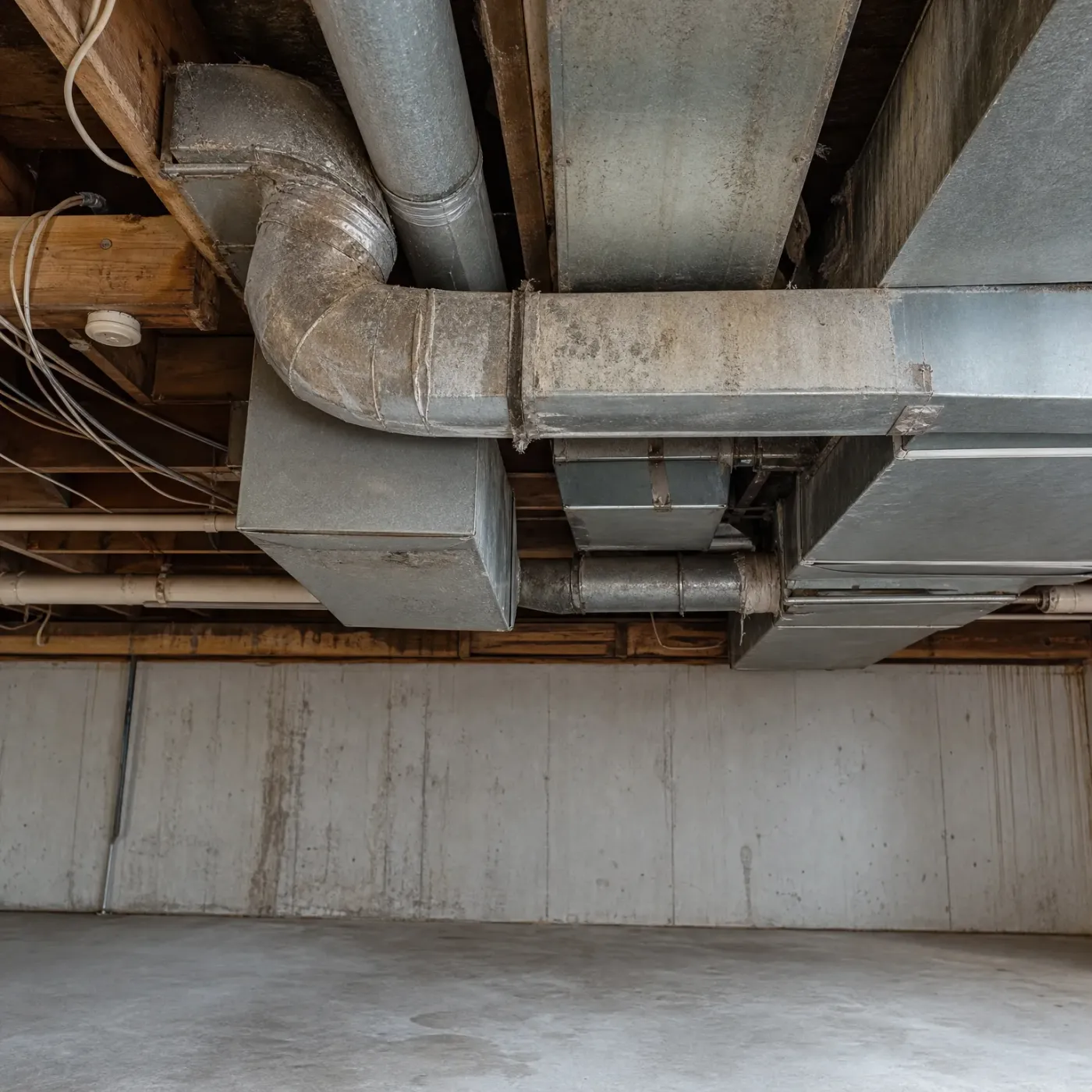
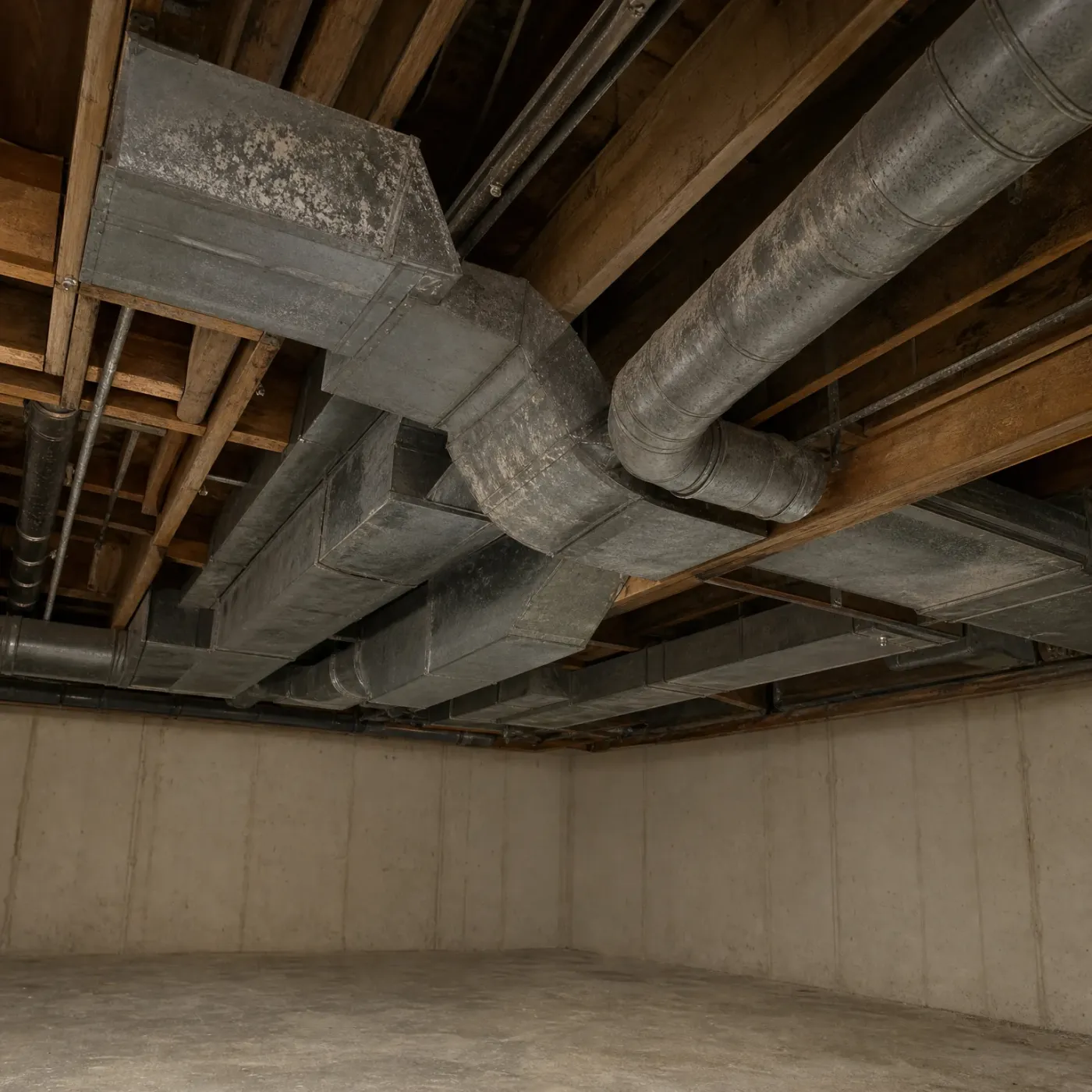
Empty concrete-walled basement room with exposed wooden joists and galvanized rectangular and round ductwork plus pipes running across the ceiling.
Before you get your ductwork cleaning
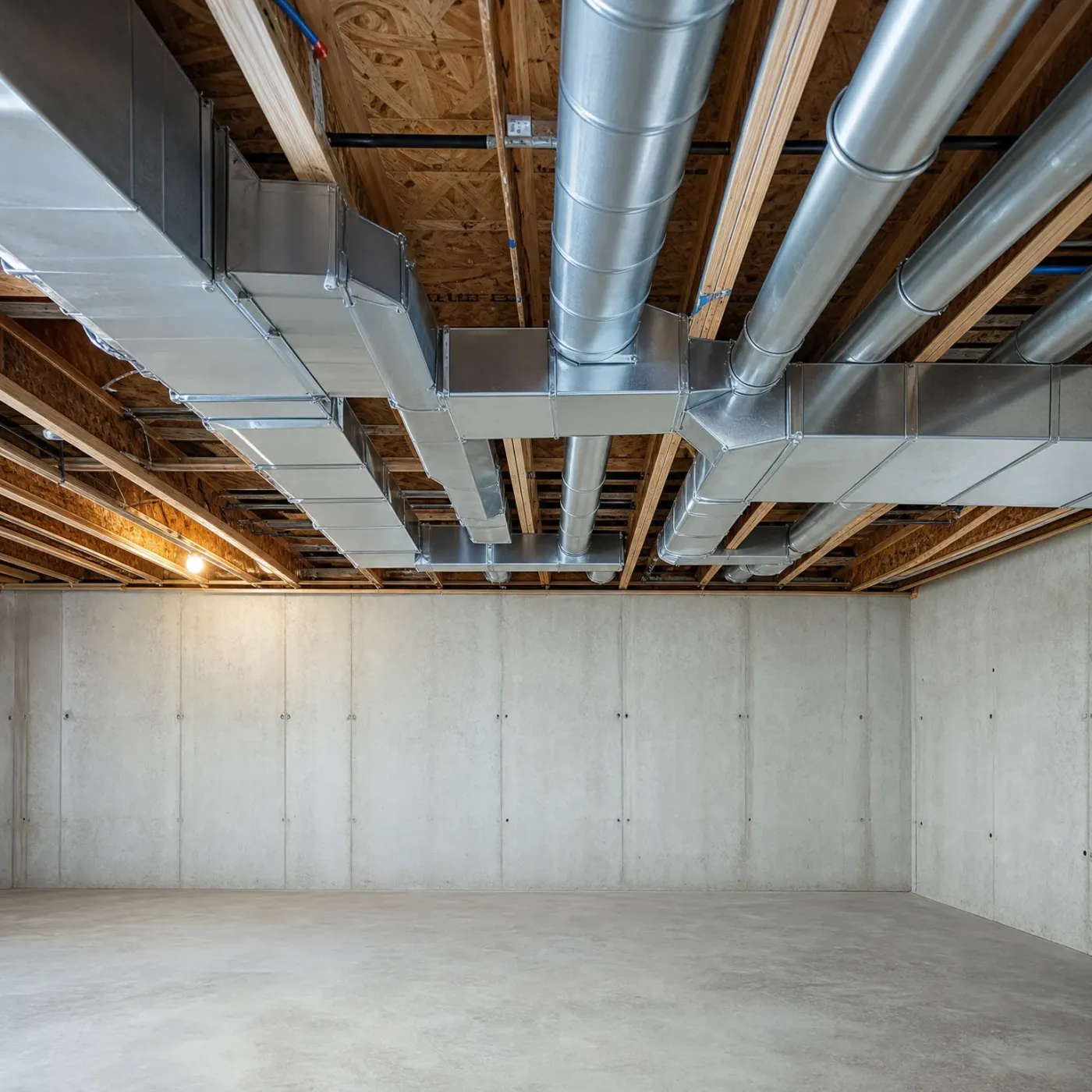
Empty concrete-walled basement room with bare floor and an exposed wood-joist ceiling carrying galvanized rectangular and round sheet-metal ducts, black pipes, and wiring.
After you get your ductwork cleaning

A crew doesn't just stick a hose in the nearest vent. They cut small access ports along the trunk line so they can reach every branch that feeds a room, and they pull a vacuum on the whole system before anything gets disturbed. That negative pressure matters: it means the dust a brush knocks loose gets pulled out through the hose instead of puffing into your living room. The brush itself, sometimes a rotating head, sometimes a whip, scrapes the inside walls of the metal trunk and the flex runs, then the vacuum makes another pass to clear what came off. The return side gets the same treatment, since that's where dust off your floors and furniture collects before the blower ever pulls it toward the furnace. Once a branch is clean, the port that was cut into it gets closed back up with a metal patch or sealed with mastic, so the duct runs tight again. A thorough job also covers the blower compartment and the coil, because dust sitting there just gets pushed back into the ducts the next time the furnace runs.

How a duct cleaning actually works

  • A duct cleaning crew works room by room, cutting access ports into the trunk line so a vacuum hose and brush can reach each branch.
  • The vacuum runs under negative pressure the whole time, so loosened dust and debris pull out through the hose instead of blowing into the room.
  • A rotating brush or whip knocks caked dust off the inside walls of the metal trunk and the flex runs before the vacuum passes through again.
  • The return side gets cleaned too, since dust pulled off the floor and furniture settles there before it ever reaches the furnace.
  • Every port that gets cut into the ductwork gets sealed back up with a metal patch or mastic once the branch is clear.
  • The furnace's blower compartment and coil get a pass as well, since dust that collects there blows right back into the ducts otherwise.
A bearded man in a plaid flannel shirt looks out a window at snow-covered conifer trees, with a steaming ceramic mug on the sill and wooden shelves holding dishes and a plant behind him.
A bearded man in a dark blue T-shirt sits on a gray couch, smiling and looking down to his left, with a bookshelf and a bright window behind him.

If dust keeps coming back, air smells stale near the vents, or the furnace smells like it's burning dust every time it kicks on, your ducts are telling you something. Those are the signs that add up to a real cleaning, not just a wipe-down of one vent cover. A contractor who services ducts in Kane County all year, through the long heating months and the sticky summers, has seen what a trunk line looks like after it's gone untouched since the house was built, and knows where the buildup usually sits worst. Once you request service, you're matched with one licensed local contractor, not a handful of companies competing for your callback, and that contractor reaches out to you directly about what they find in your system. You already know what you're dealing with. The next step is getting someone out to look at it.

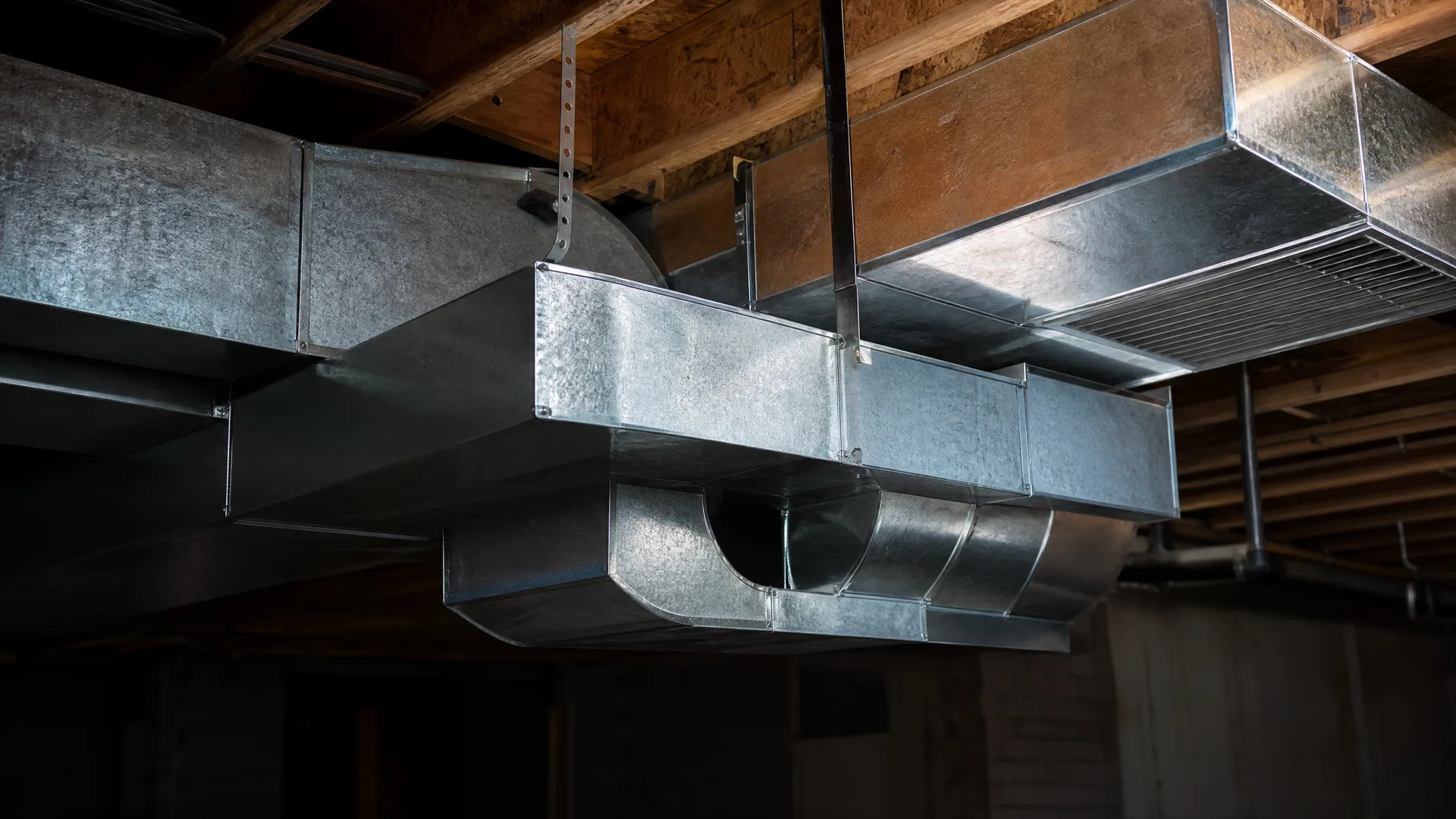
Galvanized sheet metal HVAC ductwork with rectangular trunks and round takeoffs suspended from wooden floor joists in an unfinished basement ceiling.

Find a duct system cleaning pro in Kane County

Duct and vent cleaningDucts or ventsKane County, IL
Step 1 of 2

What ZIP code is the job in?