


Ducts running clean
Air moves through the system and out the vents without picking up much along the way. You dust the house and it stays down for a while. The furnace kicks on and nobody in the next room notices a thing.
A local pro who cleans ducts gets in touch with you.
Get matchedIf you or someone in the house deals with allergies, it's natural to wonder whether the dust sitting in your ducts is making it worse, and whether cleaning them out would actually bring relief. With Illinois summers getting sticky and the furnace running most of the winter, air is moving through that ductwork constantly, carrying whatever is in there along with it.
Duct cleaning removes dust, pet dander and other debris that builds up on duct walls and gets stirred into the air every time the furnace or air conditioner runs. If that debris is a real source of what you're reacting to, clearing it out can mean less of it circulating through the house. It won't do much for allergies caused by something else, like pollen coming in through open windows or a damp spot growing mold somewhere the ducts never touch. A contractor who inspects the ductwork can tell you whether there's enough buildup inside to matter, and whether what's in there matches what's been bothering you.




You notice it most when the furnace or the AC kicks on. A puff of dust off the vent covers, a musty smell in a room that was fine a minute ago, more sneezing once the system has been running a while. Dust on the supply grilles is a sign there's more sitting further back in the ductwork where you can't see it. Every time the blower runs, some of that gets pushed into the air you're breathing. In a house that's shut up tight for the muggy summer or sealed against the cold all winter, that air gets recirculated again and again instead of clearing out. If anyone in the house has asthma or allergies, that's the air they're dealing with every day.
Air moves through the system and out the vents without picking up much along the way. You dust the house and it stays down for a while. The furnace kicks on and nobody in the next room notices a thing.

Years of dust sit in the runs between the joists, and every cycle stirs some of it loose into the rooms you live in. A damp basement wall nearby can mean the ducts are feeding mold spores along with the dust. That combination is what sends allergies up.


A brush or whip agitates dust loose from the duct walls.
A vacuum connected to the system pulls the loosened dust out.
Each vent and return gets cleared one at a time.
The furnace blower and coil get a pass before vents close.


You've read what duct cleaning can and can't do for the sneezing and the musty smell. The part left to figure out is whether your ducts are actually the reason, and that's not something you can tell from the vent covers alone. A contractor who works on homes around Illinois can look at what's really built up in there and tell you straight whether cleaning will change anything for the allergies in your house, or whether the dust is coming from somewhere else entirely. Gas furnaces here run long stretches once the cold sets in, and whatever is sitting in the ducts gets pushed through the house every time the system kicks on. Getting someone out to look settles the question instead of leaving you guessing through another season of sneezing. Send the request and that part of the search is no longer something you have to carry.

Supply and return runs come off the furnace tight at every joint, metal and flex pipe alike. Air gets where it's going without picking up a load of dust on the way. Nothing hanging loose along the plenum or the joists overhead.

A run like this, cutting across open floor joists above a concrete foundation, collects dust at every bend and branch. Loose wiring and gaps around the register are places air leaks instead of moving straight through. That's dust working its way into the house instead of out the vent.


Research on house dust estimates close to 40 percent of it starts in the ductwork. That dust gets pushed into the air every time the furnace or AC runs.
The filter cleans the air moving through it. Dust already resting on the duct walls stays there until something agitates it loose.
At 17.67 cents a kilowatt-hour, running the blower more than the house actually needs costs you something real every month. Ducts packed with dust make the system work harder to push air through, so a cleaning can mean the furnace and AC aren't straining, and fighting dust, on your dime.
EIA-861 2025 statewide residential average
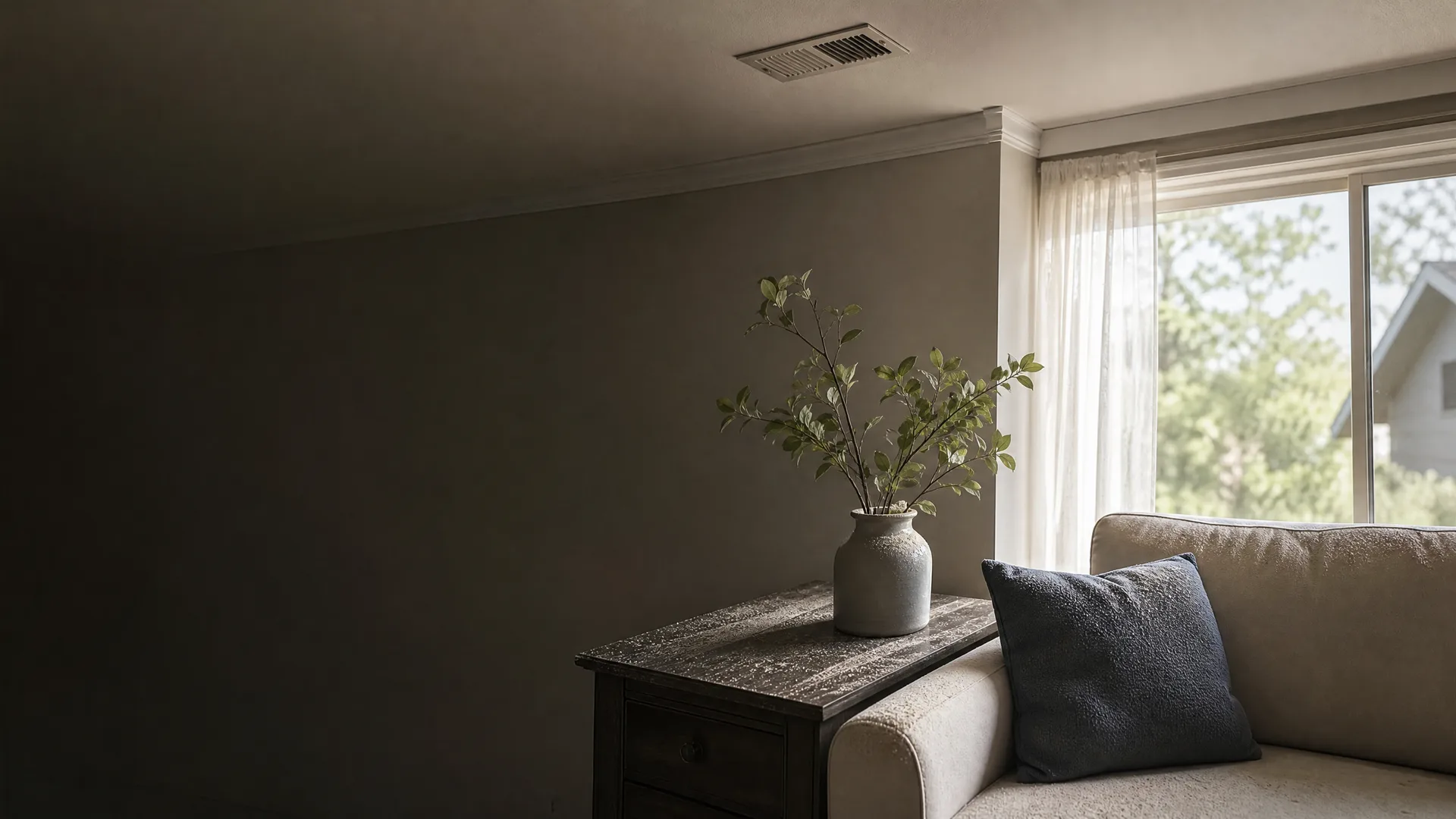
It's April, and you've finally opened the windows to let the spring air in. The furnace kicks on one more time against a cool morning, and you notice it: a gray film across the ceiling vent grille, thick enough to see from the couch. Below it, the side table has a layer of dust again, two days after you wiped it down. You run a finger along the grille slats and it comes away dark. The light coming in through the window catches dust hanging in the air above the vent, settling slow over the armchair and the rug underneath it. You've cleaned this room twice this week already.

If the sneezing and the stuffed up nose track with the furnace or the AC running, dust sitting in your ducts is a real suspect, and clearing it out can mean cleaner air moving through the house instead of another load of dust with it. If your symptoms don't follow that pattern, the ducts may not be the reason, and no amount of cleaning will touch it. Either way, you don't have to work that out alone from the vent covers.
A contractor who looks at your system can tell you what's actually built up in there and whether it's worth clearing out, and once you're matched with one, they'll reach out to you about your house specifically, not a general case. That's one less thing on your list this week, with gas heat running most of the year and the AC working hard through a sticky Illinois summer. You'll know where you stand instead of guessing at it.


Send the form and the duct cleaning stops sitting on your list.