After you send the request, you're done searching.
You dust the shelves on a Saturday and by Wednesday there's a film on them again. In Waukegan that's not in your head. Furnaces and AC units move the same household air through the ducts over and over, and if the duct system is carrying dust along with that air, it keeps putting it back in the same rooms no matter how often you clean.
Winters here are hard, and a gas furnace runs for months straight pulling air through the return ducts. Summers get sticky too, so the AC is working nearly as many months on the other end. Either way the air is moving through metal or flex duct that collects dust, pet hair and whatever else gets pulled in, and some of it blows back out every time the system kicks on.
A clogged or dirty duct system doesn't announce itself. You just notice the house feels dusty no matter what you do, or someone in the house is sneezing more than they used to. Cleaning the ducts is the kind of job that needs someone who actually does it, with the equipment to get the dust out of the runs rather than just stir it up.
Once you send the request here, you're done hunting for someone to call. You get matched with one licensed contractor local to Lake County, not a handful of companies competing for your callback. Someone who works on duct systems in this area deals with the same heating season and the same cooling season you do, and knows what tends to build up in a house that runs its furnace all winter and its AC all summer.
Fill out the form and let the search be someone else's job for once.
The dust keeps coming back because your ducts are recirculating it, not because your house is dirtier than anyone else's. A furnace or AC system here pushes the same air through the house ten or more times a day, all winter when the furnace runs long hours and all summer when the AC does the same. Every pass picks up what's loose in the ducts and lays some of it back down on your shelves. If the system has gone a few years without a cleaning, or if a filter sat too long before you swapped it, the ducts build up a supply that a filter alone can't catch. Leaky ducts make it worse by pulling in dust from your attic or crawl space and feeding it straight into the air you breathe. A dusty house usually means dusty ducts, not a dustier street.
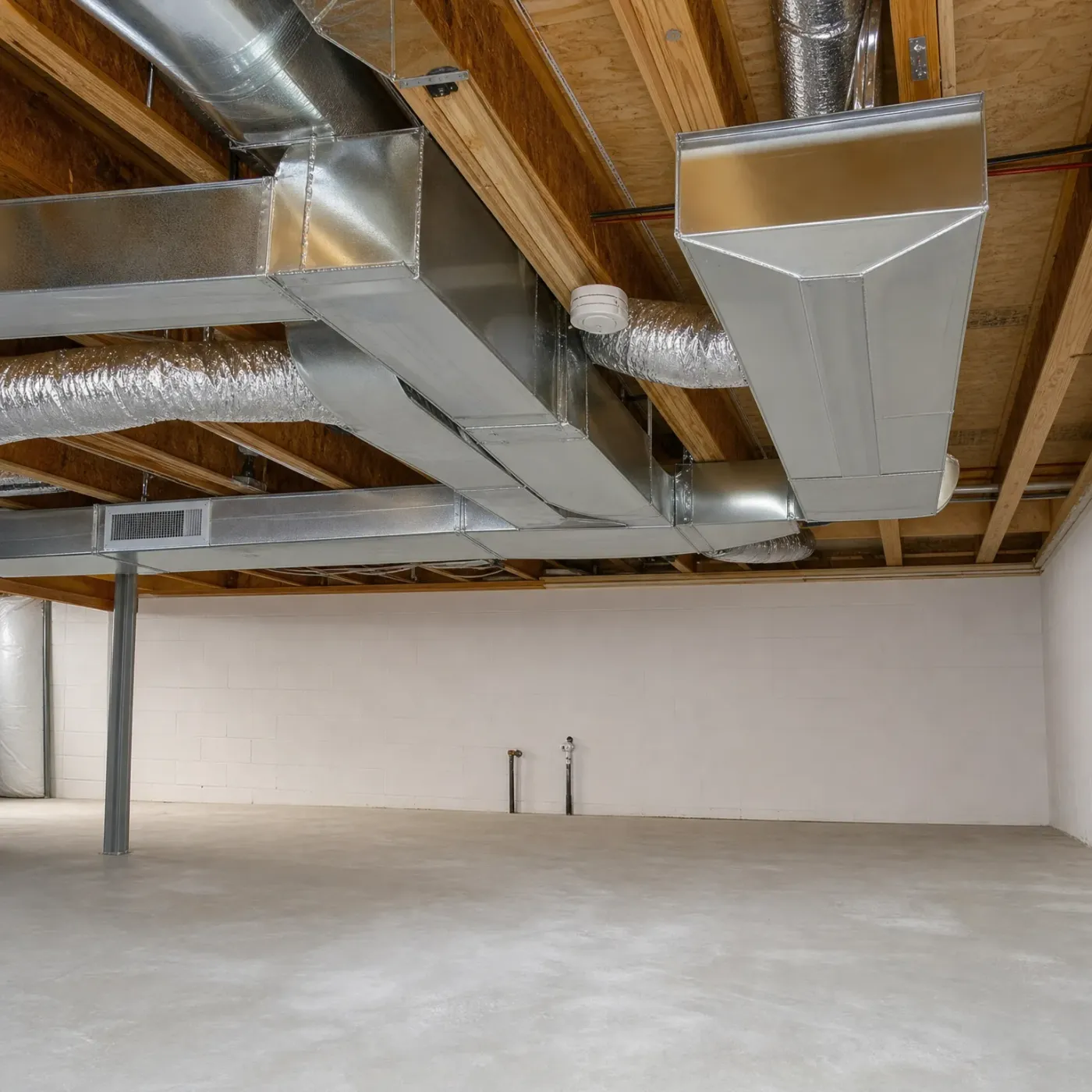
Ducts like this move air clean, with tight joints and no gaps for dust to collect or leak through.
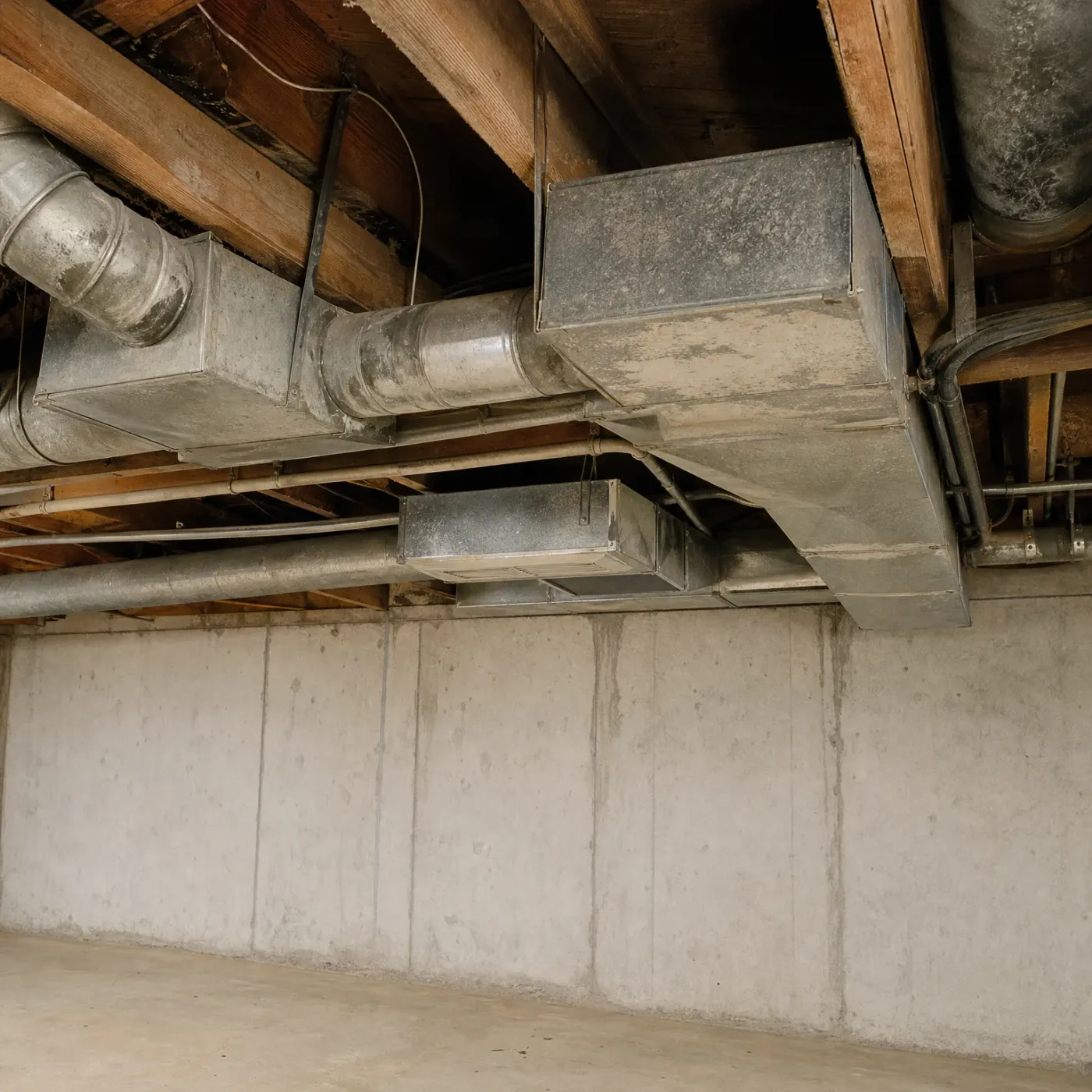
Loose joints and open seams like these pull in dust from the joist bays and send it straight through the house.
Dust gets into your air in a few specific spots, not just from everyday living. A leak on the return side pulls air straight from the attic or crawlspace before it ever hits the filter, so whatever is up there joins what's blowing into your rooms. The filter itself only catches so much. A standard one-inch MERV 8 is built to protect the furnace, not to clean the air you breathe, and fine dust rides right past it. Once dust settles inside the ducts, it doesn't stay put. Every time the blower kicks on, it stirs that layer loose and pushes it back out through the vents. Low registers make it worse, since foot traffic nearby kicks dust up into the airstream before it can settle for good. Even the blower wheel plays a part. A dirty fan throws dust off its own blades with every cycle. And if the flex duct running through your attic or basement has a sag or a crushed spot, airflow slows down enough that dust drops out and piles up right there in the duct.
Where the dust actually comes from
Return air leaks pull dust from attics and crawlspaces into the duct run before it ever reaches the furnace filter.
A one-inch filter rated MERV 8 stops larger particles but lets fine dust pass through and settle on furniture.
Dust that collects in the duct lining gets stirred loose every time the blower motor cycles on and off.
Supply registers that sit low on a wall or floor pull settled dust back into the airstream with normal foot traffic.
A blower running on a dirty fan wheel throws dust off the blades and back into the supply ducts.
Flex duct with sagging or crushed sections slows airflow enough that dust drops out and builds up inside instead of reaching the vent.
A duct system that's been pulling in dust for a few winters doesn't fix itself. Every heating cycle lays down another layer inside the trunk lines, and by the time you can see it on your furniture, there's more of it sitting in the ductwork itself. A contractor who services duct systems around Waukegan every winter knows where that buildup collects, which seams tend to open up on houses in this area, and what a return leak looks like before it's gotten worse. You get matched with one local contractor, not a handful of companies competing for your callback, so the person who shows up already has your situation in mind instead of a sales script. Send the request and the work of tracking down who to call is off your plate. What's left is a straightforward visit to find where your air is picking up dust and get it sealed off, so you stop fighting the same film on your shelves every week.
Why winter makes it worse
A furnace cycles far more often in January than an AC unit does in July, and every cycle pushes air through the same leaky joints and seams. Lake County winters mean long runs where the furnace is on for hours at a stretch, so dust that's sitting in the ducts gets stirred and carried into the house again and again. By February, a duct system with gaps has had months of steady runtime to move that dust through every room it serves.
What a cleaning actually removes
A duct cleaning clears the dust sitting inside the trunk lines and branch runs, the material a filter never touches because it's already past the furnace or built up downstream of it. That's different from sealing the leaks that let dust in to begin with. Cleaning takes out what's accumulated; it doesn't stop more from entering if the ducts still have open seams. A contractor can tell you which problem you actually have once they've looked at the run.
Before you get your ductwork cleaningAfter you get your ductwork cleaning
Clean duct run
This is what moves air without adding to the problem. Metal trunk and flex duct sit tight against the joists, joints sealed, nothing open to the space around them. Air goes from the furnace to the room and back, and nothing extra rides along with it.
Dust-coated duct run
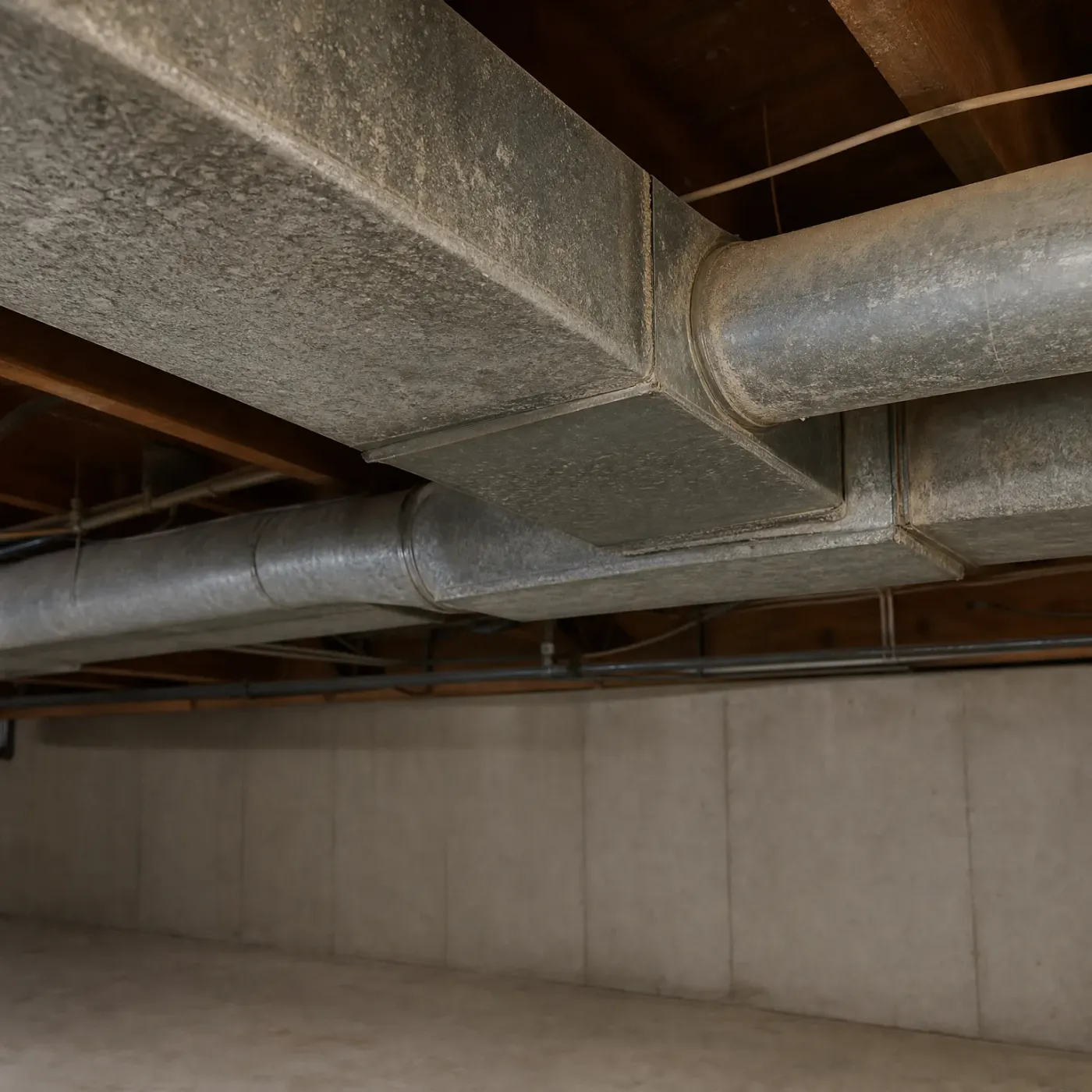
This is what's been collecting dust for a while. The trunk line and the branch feeding off it are gray with buildup, and so are the joists around them. Every time the furnace kicks on, that duct is pushing some of this back into your rooms.
Power here costs 18.09 cents per kilowatt-hour
At 18.09 cents per kilowatt-hour, running a blower longer than it needs to costs you something every month. A duct system clogged with dust makes the furnace or AC work harder to push air through, so a cleaning that restores airflow also keeps that bill from creeping up.
EIA-861 2025
How long has your duct system been collecting dust?
Half the homes here were built by 1983
Half the homes in Lake County were built in 1983 or earlier. An older duct system has had more winters to collect dust in the seams and trunk lines.
Heat runs October through May
Heat runs October through May here, about eight months. That's eight months of furnace cycles pushing air through the same ducts, over and over.
Cooling runs June through August
Cooling only runs June through August. For most of the year, it's the furnace doing the work, so winter is when the ductwork matters most.
ACS 2020-2024 · NOAA nClimDiv 1991-2020
Where this leaves you
Dust that keeps coming back points to the duct system, not the housekeeping.
A sealed duct run moves air through the house without adding anything to it.
A local contractor who services this kind of duct work season after season knows which joints and seams tend to open up first.
One contractor takes the job, so you hear from one crew instead of fielding calls from several.
Fixing the airflow problem now means fewer passes with a rag and a vacuum later on.
The dust on your shelves was never about how often you clean. It was about air moving through a duct system that picks up more than it should, cycle after cycle, all winter and into summer. A furnace or AC unit doing exactly what it's built to do, pushing household air through trunk lines and seams that have had years to open up. Once those joints are sealed and the run is cleared out, the air coming through your vents carries only what you put into the room, not what it picked up in a joist bay or crawlspace along the way.
That's the kind of job that goes to someone who works on duct systems like yours through every Lake County winter, not someone seeing this setup for the first time. A contractor who services this equipment season after season knows where flex duct tends to pull loose and where a return leak usually shows up first, because it's the same handful of spots in most homes built the same way. You'll hear from one contractor, licensed and local, not a string of callbacks from companies competing for the job.
The dust will tell you when the work is done. Less of it, slower to come back, and a lot less time spent wiping it off the same surfaces every few days.
Ductwork Cleaning
Send one request and you're done looking
Get matched with a pro who works on ducts in Lake County.
Your request goes to a Lake County pro who takes ductwork jobs.
After this form, you can stop searching for a duct system pro.
One request and the search for a pro is handled.
Skip searching for someone who cleans ducts in Lake County.
Skip searching for a duct system pro and answer a few questions instead.
Your duct cleaning request goes to one local pro.
Your request goes to one pro, not a list of companies.