Registers blowing dust
Hold a hand near a supply vent when the system kicks on. If dust visibly puffs out or settles on nearby surfaces fast, the ducts are feeding it back into the room.

Dust that resettles within a day or two of cleaning, musty air when the furnace or AC kicks on, and more sneezing or stuffiness indoors than outside are the usual signs your ducts need attention. In Illinois homes, where the furnace runs hard from fall through winter and the AC fights humidity all summer, that system is pushing air through the same ducts almost year round, so whatever collects in there keeps getting redistributed through every room. Check the supply vents for a buildup of gray or black dust around the edges, and look inside the first foot of ductwork with a flashlight if you can reach it. Rooms that stay dustier than others, or registers that blow out a visible puff when the system starts, point the same direction. None of this means the ducts caused a problem that wasn't there before. It means they're circulating whatever already got in, and clearing them out stops that cycle before it turns into a bigger air quality issue in the house.




Hold a hand near a supply vent when the system kicks on. If dust visibly puffs out or settles on nearby surfaces fast, the ducts are feeding it back into the room.
A bedroom or office that stays stuffier or dustier than the rest of the house points to buildup in the branch line feeding that room, not just the room itself.
You dust the shelves on Saturday and by Tuesday there's a film again. Furniture collects it faster than it should for a house this size. You might notice it on the windowsills, on the TV screen, or just underfoot when you walk through in socks. If anyone in the house gets a stuffy nose or starts sneezing indoors but feels fine outside, that's worth paying attention to. Pet smell that lingers for weeks after the dog's had a bath, or a smell you can't place that shows up only when the furnace or AC is running, points the same direction. None of this means the ducts are the only cause, but it's usually where it starts.
Air pulls into the return vents and down into the ducts.
Loose dust and debris ride along the sheet metal walls.
A rotating brush or air whip knocks buildup loose from the ducts.
A vacuum pulls the loosened debris out through the return line.

Every time the furnace cycles on, whatever is sitting in those ducts gets pushed back into your rooms. That's the film on the windowsills, the reason the TV screen needs wiping twice a week, the sneezing that eases up the second you step outside. It doesn't stop on its own. It just keeps circulating, pass after pass, all winter and into the muggy months when the AC takes over the same ductwork.
Finding someone to deal with it is usually the part that stalls people out. You end up searching for a duct cleaning company, calling two or three, explaining the same thing about the dust and the stuffy bedroom each time, then trying to compare quotes that aren't even for the same scope of work. Send the form here and that legwork is done. A licensed contractor gets your details and reaches out, and you go straight to getting it looked at instead of spending an evening on the phone first.

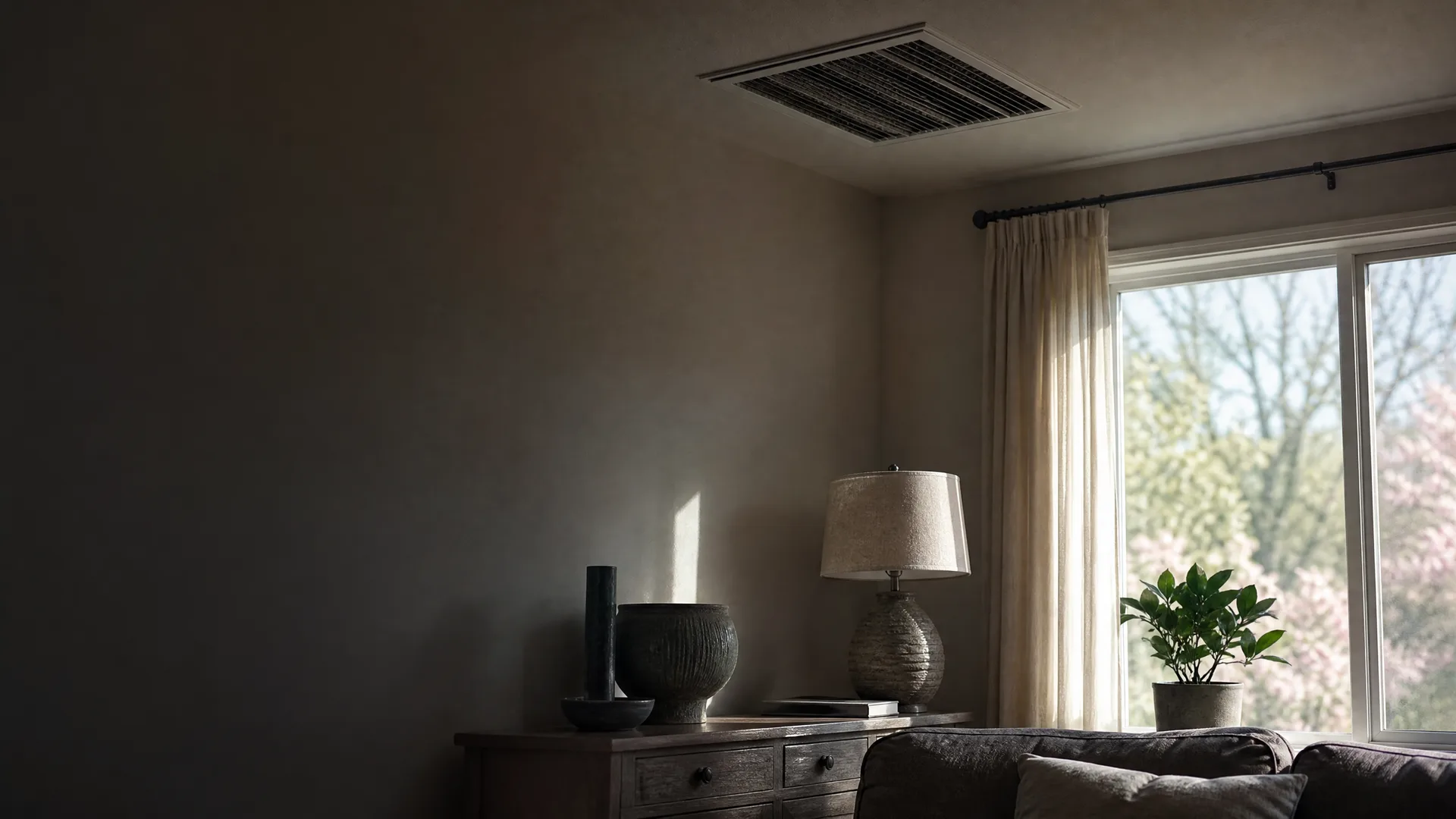
It's early afternoon and the sun through the window shows what the lamp light hides. The ceiling vent grille in the living room has a gray edge of dust along its slats, thicker than the wall around it. On the side table underneath, a fine coat has settled since you wiped it down a few days ago. The TV screen has the same film. You run a finger along the coffee table and it comes back gray. The furnace clicked on twenty minutes ago, the first cool afternoon after a run of warm ones, and the room still feels close, like the air moved through something it shouldn't have.
You already know what it looks like in your house: the gray edge on the vent grille, the film back on the table two days after you wipe it, the stuffy bedroom that never quite clears. That's enough to go on. Figuring out who actually cleans ducts in Illinois, and whether the outfit on the phone is worth letting into your house, is its own job. Most people start calling around, explaining the same thing to three or four companies, waiting on quotes that use words like "cfm" and "negative pressure" without saying what they'll actually do. You don't have to do that part. Send the request through this page and it goes to one contractor suited to the work, not a list of five competing for your money. No cost to ask, no obligation to hire. The dust on your windowsill and the stuffy air when the furnace kicks on don't need you to become an expert in ductwork. They just need someone qualified to come look, and that part can stop being on you today.

Some houses with a dusty vent or a musty smell go a few more months fine. The furnace keeps running, the filter keeps catching what it can, and nothing dramatic happens right away. But the gray edge on the grille doesn't go back in on its own, and the room that never feels right stays that way until something in the ducts changes. Waiting doesn't cost you anything today. It just means today looks like tomorrow.

A camera run through the ducts shows exactly what's built up on the walls of the metal and how much of it there is. Some systems turn up a thin layer of household dust, nothing urgent. Others show matted debris thick enough to narrow the duct itself, or signs that something has been nesting in there. You don't know which one your house is until someone looks. Once you do, you're deciding from what's actually there instead of guessing from a windowsill.
At 17.67 cents a kilowatt-hour, every extra minute your furnace blower or AC fan runs to push air through clogged ducts shows up on the bill. Clean ducts move air with less resistance, so the fan isn't working harder than it has to.
EIA-861 2025 statewide residential average
The gray edge on the grille, the dust back on the table two days after you wipe it, the bedroom that never clears. That's what duct buildup looks like in a house. None of it tells you how deep the buildup goes or whether a loose duct joint is pulling in more dust from the attic or crawlspace along the way. What it does tell you is that air moving through those ducts is picking something up and carrying it into your rooms, and that happens whether the furnace is running in January or the AC is running in July. Both push air through the same metal. Waiting through a season doesn't change that. The dust will keep resettling and the musty smell will keep showing up when the system kicks on, because the ducts themselves haven't changed, only the thermostat setting has.
Knowing the signs is the easy part. The harder part is finding someone in Illinois who actually cleans ducts rather than listing it as one line on a long service menu, then calling around to ask what their process involves, and explaining the same gray-grille, stuffy-bedroom story to each one while you compare what they quote. Sending the details once and letting a contractor who does this work regularly get in touch skips that part. The signs you've noticed are enough to act on. What's left is getting the right person to look at the ducts themselves.





Skip calling around for someone who cleans ducts.
No fee to send it, and nothing to sign.