







Signs of leaky ductwork in Chicago, IL

Get matched with a pro who works on ducts in Cook County.

Find a pro near me

What are the signs of leaky ductwork in my house?

Your heating bill feels high for what your furnace is actually putting out, or some rooms never get comfortable no matter how long the system runs. You're wondering if the ductwork itself is the problem rather than the furnace or AC. Leaky ducts don't announce themselves the way a broken thermostat does, so you're left reading smaller clues around the house to figure out if that's what's going on.

Rooms that won't heat or cool evenly, and higher bills than the system should produce

Leaky ducts lose conditioned air into the attic, basement or crawlspace before it ever reaches the room. You'll notice certain rooms stay colder in winter and warmer in summer than the rest of the house, especially rooms farthest from the furnace. Your gas bill in the winter and electric bill in the summer run higher than they should for the comfort you're getting, because the furnace or AC is working to replace air that never made it where it was supposed to go. Dust building up faster than usual, especially near vents, is another sign, since leaks pull in unconditioned air from spaces full of dust and debris. Ducts running through an unheated attic or crawlspace are the most common place for this to happen.

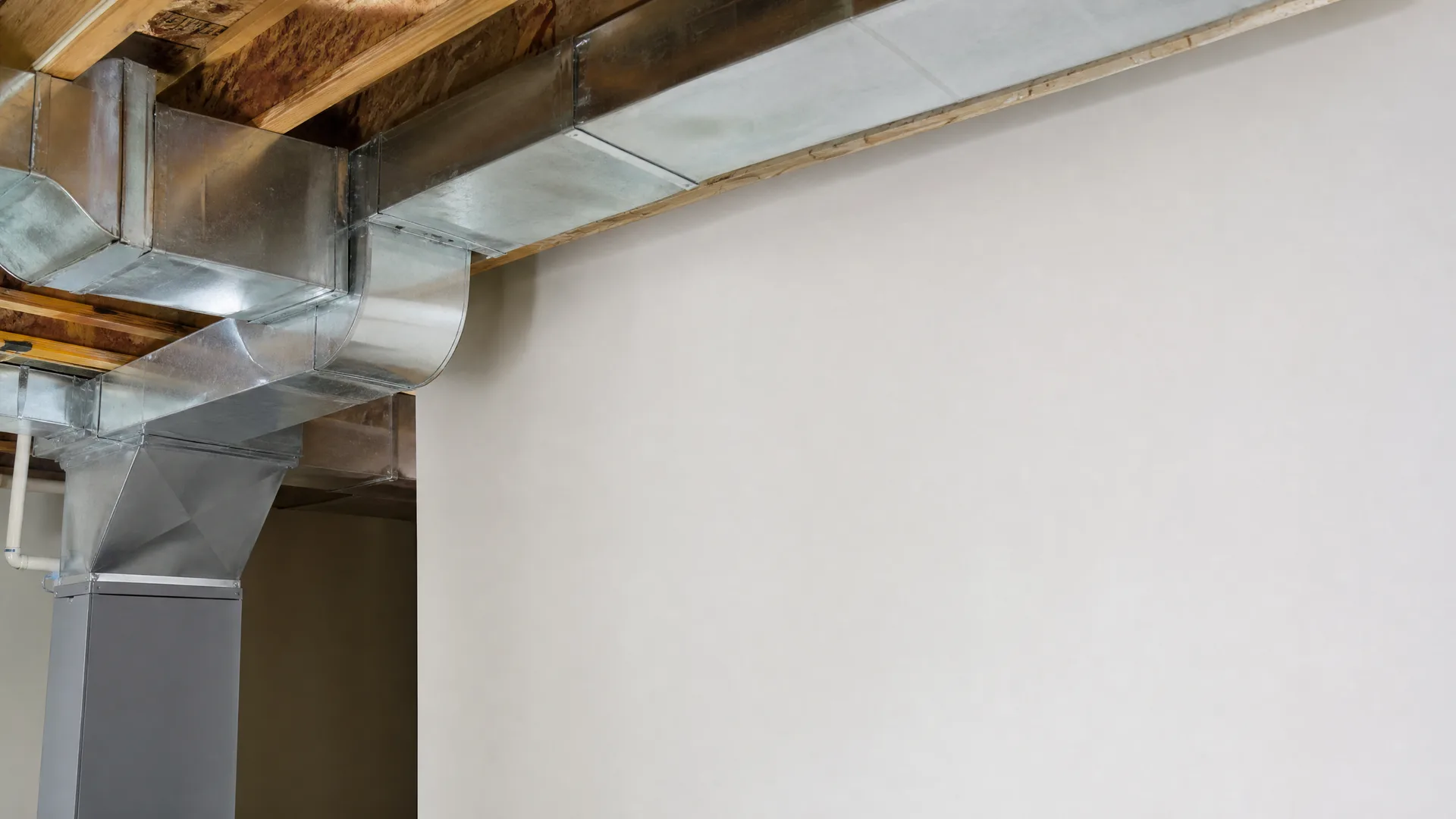
Galvanized sheet-metal HVAC ducts running along wooden joists at a basement ceiling, next to a plain off-white wall.

Dust around vents and registers

Leaky supply ducts pull air from attics and crawlspaces as they run, and that air carries dust straight into your rooms. If you're dusting the same shelf more often than you used to, or you notice buildup around the vent covers themselves, that's air escaping somewhere between your furnace and the room. Ducts are supposed to deliver air, not pick up whatever is sitting in the space around them.

Unfinished basement interior with galvanized sheet-metal HVAC ductwork and round pipes running along a wooden joist ceiling, a furnace and water heater at the far end, and a blank white wall filling the left half of the frame.

One room off from the rest

A duct leak rarely affects a whole house evenly. More often it's one bedroom or a room at the end of a long duct run that stays colder in winter and warmer in summer than everywhere else, even with the thermostat set the same. Air meant for that room is leaking out before it arrives, usually at a joint or a seam somewhere along the run. If you can point to one room that never matches the rest, that's worth checking.

Why would your ductwork be leaking in the first place?

  • Half the homes here were built by 1961

    Half the houses in Cook County went up in 1961 or earlier, and duct joints and seams loosen with age. If yours is one of them, the odds of a leak go up.

  • Heat runs October through May

    Your furnace runs eight months a year here, October through May. That's a long stretch for air to escape through a gap before you'd ever notice the bill.

  • Cooling runs June through August

    Cooling only runs three months, June through August, so a leak hiding in that short season can go unnoticed until the real cost shows up in winter.

ACS 2020-2024 · NOAA nClimDiv 1991-2020

How Duct Leaks Actually Happen

  • Supply ducts run under positive pressure, so a leak there pushes conditioned air out into the attic or crawlspace instead of your rooms.
  • Return ducts run under negative pressure, so a leak there pulls in attic or crawlspace air and feeds it straight to your furnace.
  • Leaks are almost never in the straight runs; they show up at the joints, the elbows, and where a branch takes off from the main trunk.
  • Duct tape fails as a sealant within a few years even though it's named for the job, which is why contractors use mastic or foil tape instead.
  • A blower door and duct pressurization test can find and measure leaks that are hidden behind drywall or above a dropped ceiling.
  • Flex duct leaks most often where the inner liner connects to a metal collar, since that joint depends on a tight clamp to hold.

Your duct system has two sides, and they fail in opposite ways. The supply side pushes air out from the furnace to your rooms, so a crack or gap there is under pressure and air forces its way out into the attic or crawlspace before it ever reaches a register. The return side pulls air back toward the furnace, so a leak there does the opposite: it draws in whatever air surrounds the duct, whether that's hot attic air in July or cold crawlspace air in January, and sends it straight into the system. Neither kind of leak shows up in the middle of a straight metal or flex run. Sheet metal doesn't crack on its own. The weak points are the connections: where two sections of trunk line meet, where an elbow turns the air, where a branch duct splits off to feed one room. If your ducts use flex duct, the collar connection is the one to know about, since that joint relies on a clamp staying tight over the years, and when it loosens, the inner liner pulls away just enough to leak. A lot of these leaks sit behind drywall or above a dropped ceiling where you'd never see them, which is why a contractor can run a duct pressurization test with a blower door to find and measure leaks that aren't visible at all. And if someone patched a joint with ordinary duct tape at some point, don't count on it. It dries out and lets go within a few years, which is the reason contractors seal joints with mastic or foil tape instead.

Empty unfinished basement with bare concrete floor, insulated walls with vapor barrier between wood studs, exposed wood joists, galvanized sheet-metal ductwork, a recessed light, and a steel support column.
Sealed joints and intact runs keep the air your furnace heats moving straight to each room without losing it along the way.
Empty basement room with bare concrete walls and floor, exposed wooden floor joists overhead, large galvanized sheet-metal ducts with a vent grille, colored pipes, and a single lit bulb.
Gaps at the seams and bare duct board next to the PEX lines let conditioned air escape before it ever reaches a register.
A gray-haired man in a dark coat with snow on the shoulders and collar stands smiling in a dimly lit entryway with a paneled front door, lamps, and a framed picture in an adjoining room.
A gray-haired, bearded man in a dark winter coat with snow on the shoulders stands in a doorway of a home interior with a lit lamp, framed pictures, a potted plant and a staircase behind him, and an evergreen wreath at the left edge.
An older man with gray hair and a beard, wearing a snow-dusted dark coat and knit scarf, stands smiling in a dimly lit house entry with a lit lamp, mirror, and a living room with snow visible through the window behind him.
A smiling gray-haired man in a dark wool coat with snow flecks stands in a dimly lit home entryway, with a lit table lamp, potted plant, framed pictures and a living room visible behind him.

A local pro for your ductwork cleaning

The pro who gets in touch is licensed in Illinois and works in Cook County.

No fee to send it, and nothing to sign.

What it does to your bill

Your furnace runs the same amount of gas whether the air it heats reaches your rooms or leaks into the attic along the way. If ducts are losing air before it gets to the registers, the furnace has to run longer to make up for it. Power here is expensive, and a furnace working overtime to cover for leaky runs shows up on the bill month after month, all winter. You end up paying for heat that never made it past the duct joints.


What it does to the house

A leak on the return side pulls air from wherever the ducts run, attic, crawlspace, or the space behind a wall, and sends it straight into your living space. That air can bring in dust, insulation fibers, and whatever else is sitting in those spaces. Rooms far from the furnace or at the end of a long run often stay colder in winter and warmer in summer than the rest of the house, because the air meant for them is leaking out before it arrives.

A woman with hair in a bun sits wrapped in a thick cream blanket in an armchair, an open book in front of her, beside a lit lamp and a frosted window.
An older woman in a cream knit sweater smiles while looking off-camera in a warmly lit kitchen, with a round loaf of bread on a wooden board in the foreground and a dark window behind her.

Hiring a duct sealing contractor

Finding a leak in a duct run means getting into the attic or crawlspace and checking seams and joints by hand, sometimes with a pressure test to see where air is actually escaping. A contractor who works on ductwork around Cook County every winter knows where builders here tend to cut corners and which joints give out first in houses built before the 1960s versus ones built after. That's not something you work out from a single visit to one house.

What a local match gets you

Submit a request and you get matched with one licensed contractor local to your area, not a handful of companies competing for your callback. That contractor follows up with you directly to look at your system and tell you what they find. Because they're local, they've likely seen the same duct material and the same builder habits in other houses nearby, which means less guesswork when they're up in your attic tracing a leak back to its source.

Basement ceiling with large galvanized sheet-metal ductwork, round metal pipes and plumbing lines running beneath wood joists, above a bare concrete wall and floor.
Before you get your ductwork cleaning
Unfinished basement with bare concrete floor and walls, exposed wood joists, large galvanized sheet-metal ductwork, PVC and copper piping, and a gray furnace unit beside wood stud framing.
After you get your ductwork cleaning

Before you get your ductwork sealed

Rooms stay uneven and the furnace runs long to keep up. Dust keeps turning up around vents, and the gas bill doesn't match the comfort you're getting.

Get a licensed local pro

After you get your ductwork sealed

Air reaches the rooms it's meant for instead of leaking into the attic or crawlspace. Rooms even out, and the furnace stops working overtime to cover the loss.

Get a licensed local pro

What does a leaky duct actually feel like in your house

Walk through your house and pay attention to the rooms farthest from the furnace. A leaky duct run usually shows up there first, a bedroom or a room over the garage that stays cold in January no matter what the thermostat says. You might feel a draft near a vent that shouldn't be there, or notice a closet or hallway runs warmer than the rooms it's supposed to be feeding. Some homeowners hear it before they see it, a faint hiss near a duct joint in the basement or attic. Left alone, the furnace keeps working to cover the loss, and the rooms it can't reach stay uncomfortable through the whole winter.

A dimly lit interior wall with a ceiling air vent above a wooden sideboard holding a potted plant, a shallow bowl, and a table lamp beside a curtained window.

It's a Saturday afternoon in April, the kind of day warm enough that the furnace has finally gone quiet for a while. Light comes in low across the living room. You're sitting on the couch and catch the ceiling vent out of the corner of your eye, a gray ring of dust ringing the grille, darker than the paint around it. You run a finger along the end table and it comes back coated. You dusted this same table a week ago. Nothing's changed in the room since winter except how much air has been moving through that vent since October, pulling from wherever the duct run actually leaks before it gets here.

Power here costs 18.08 cents per kilowatt-hour

At 18.08 cents per kilowatt-hour, the electricity running your blower motor isn't cheap to begin with. A leaky duct run makes that motor work longer to push air through gaps and bare seams, so every hour it runs past when it should have shut off costs you at that rate.

EIA-861 2025

Empty basement with bare concrete walls and floor, a small window at left, and exposed wood joists with galvanized sheet metal ductwork and pipes overhead.

Clean ductwork, sealed and moving air

Metal runs and flex pipe like this carry heated or cooled air straight to your rooms without losing it along the way. Joints stay tight, surfaces stay clear, and the furnace doesn't have to make up for air that never arrives.

Dusty sheet-metal HVAC ducts with a rectangular vent register run beneath wooden floor joists above an empty concrete-walled basement.

Ductwork coated in grime, likely leaking

Dark buildup like this on the duct surface usually means air is moving somewhere it shouldn't, pulling in dust from the crawlspace or attic as it runs. A duct this soiled often has the gaps or loose seams to go with it.

The signs come down to this: uneven rooms, dust you can't keep up with, and a gas bill that doesn't match what the house actually feels like. Any one of those on its own might be something else, but together they point to ductwork losing air before it reaches your registers. A contractor who works on duct systems around Cook County every winter has seen what sixty-year-old joints and seams do once the furnace starts running eight months a year, and knows where to check first. When you put in a request here, it goes to one licensed local contractor, not a handful of companies competing for your callback, so the person who reaches out is already set up to look at your house and tell you what's actually going on with your ducts.

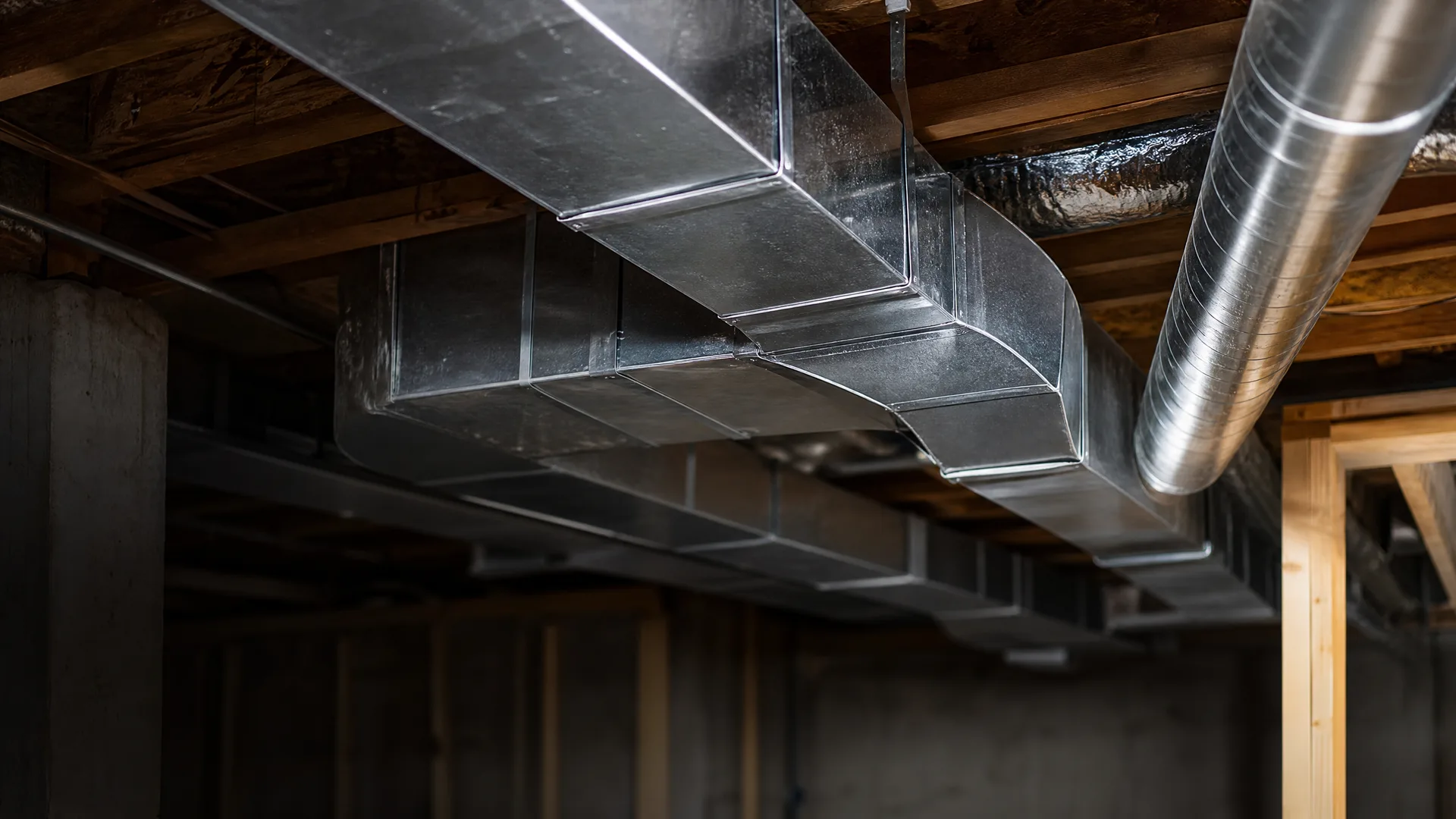
Galvanized sheet metal rectangular ductwork and a round spiral duct running along wooden floor joists in an unfinished basement ceiling.

A pro who works on ducts

Duct and vent cleaningDucts or ventsCook County, IL
Step 1 of 2

What ZIP code is the job in?