A flat green cornfield extends to a distant treeline under a blue sky with scattered clouds, with a mown grass strip and gravel edge in the foreground.Find my pro

Mold in air ducts in Joliet, IL

Your request goes to a Will County pro who takes ductwork jobs.

A musty smell when the furnace or AC kicks on is usually the first sign. Sometimes it's dark spots around the vent covers. Either way, mold in a duct system doesn't stay put. It rides the airflow into every room the system serves.

Joliet's summers get sticky enough that ducts can sweat where they run through a crawl space or attic, and that moisture is what mold needs. Winters here are hard in the other direction, with the furnace running for months, pushing whatever is growing in there through the house every time it cycles on.

You can't see most of your ductwork, and you shouldn't have to guess what's living in it. Someone who cleans ducts for a living can get a camera or a hand into the runs and tell you what's actually there, not just what the smell suggests.

Finding that person is the part that takes time, if you go looking on your own. Not every outfit that answers the phone does this work the way it needs to be done, and not every one of them is set up for a Will County home specifically. Send the form on this page instead and that search is off your plate. A contractor who works on homes like yours in this area gets your information and reaches out to you directly.

From there it's between you and them, on your schedule, with your questions answered by someone who's seen this in houses around here before.

How do I know if there's mold in my air ducts?

A musty smell when the furnace or AC kicks on, dark spots near a vent cover, or dust that keeps coming back no matter how often you clean are the usual signs something's growing in the ductwork rather than somewhere else in the house.

A musty smell every time the air runs, plus dust or dark flecks around the vents, points to mold in the ducts

Mold needs moisture to grow, and a duct system holds onto it after a muggy Joliet summer or whenever condensation forms near the coil. If the smell shows up only when the furnace or AC is running and fades when it's off, that's the system itself, not a damp room nearby. Dark spots around a vent cover are another sign, since they mean something is settling out of the airflow onto the metal. A sudden rise in dust or a smell that lingers after cleaning the house usually means the source is inside the ducts, where you can't reach it with a vacuum or a rag.

Unfinished basement with concrete floor and walls, exposed wood joists, steel support posts, and large galvanized sheet-metal ductwork running to a furnace or air handler against the far wall.

Ducts running clean

This is what a duct system looks like when air moves through it the way it should. The supply ducts and return ducts stay dry, the furnace cycles air without pulling in moisture, and nothing growing inside feeds on what passes through.

Galvanized sheet-metal ductwork and round pipes run along a wooden floor joist ceiling above a bare concrete wall and floor.

Ducts holding moisture

Sheet-metal ducts sweat when humid air meets a cool surface, and a basement ceiling like this one holds that dampness longer than a finished room would. Once the metal stays wet, mold has what it needs to spread along the duct run.

What's going on with your air ducts

Walk past a vent and catch a musty smell before you even feel the air moving. Maybe you've wiped down the grille and found a ring of dark spots that comes back a few weeks later. Dust settles on furniture again within days of cleaning, like the system is putting it back as fast as you take it off. Someone in the house might be stuffy or coughing more at home than anywhere else, especially once the furnace or AC has been running a while. None of this clears up on its own. Left alone, it keeps cycling through the air every room on that system breathes, and it tends to get worse through a Joliet summer with the humidity up.

A gray-haired bearded man in a dark snow-dusted coat and scarf stands inside a dimly lit home entryway, with a hallway, framed picture, lit table lamp and staircase behind him.
An older man with gray hair and a beard, wearing a dark snow-dusted coat, stands in a warmly lit home entryway with a hallway, console table with lamp, patterned rug, and living room visible behind him.
An older man with gray hair and a beard, wearing a dark coat dusted with snow and a blue plaid scarf, stands smiling in a dimly lit entryway with a window, framed picture, table lamp and staircase behind him.
A gray-haired man in a dark coat dusted with snow stands in a warmly lit home entryway, with a lamp, sofa, window and white staircase banister behind him.
Unfinished basement with bare concrete floor and walls, exposed wood joists, metal ductwork, a furnace unit, steel support posts, and a small window.
Ductwork like this moves air without feeding anything. The metal stays dry, the joints stay clean, and the basement underneath smells like concrete, not like mildew.
Empty basement with bare concrete walls and floor beneath an exposed wood-joist ceiling carrying galvanized sheet-metal ductwork, round ducts and pipes.
Moisture sitting in a duct run gives mold what it needs. Once it takes hold on galvanized metal, every cycle of the furnace pushes spores through the vents instead of just air.
A dim room corner with a dark grey sofa and cushion, a wooden side table holding a ceramic vase and a small potted plant, a linen curtain beside a bright window, and a wall vent near the ceiling.

It's a quiet April afternoon and the sun is coming through the living room window. You notice it on the ceiling vent grille first, a soft gray line of dust along the slats, then on the coffee table underneath, a thin film you swear you wiped off last weekend. The furnace clicks off and the room goes still. You run a finger along the grille and the dust comes right back the next day. Outside, Will County is warming up toward another sticky summer, and the vent above you has been pushing air through that same ductwork all winter without anyone looking at what's riding along with it.


A duct system pro near you

One request and the search for a pro is handled.

It costs nothing to send, and you don't have to hire anyone.

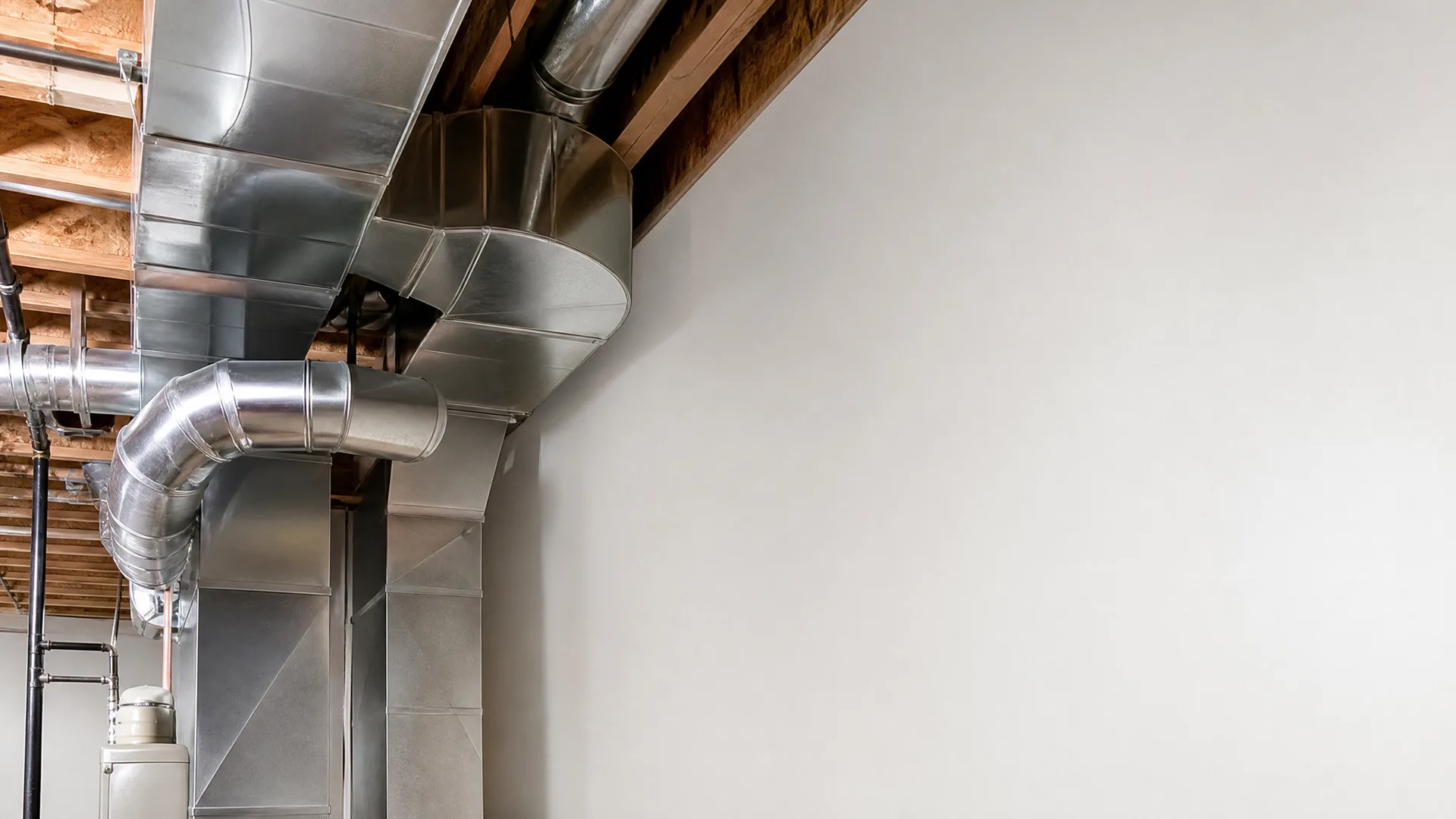
Galvanized sheet metal HVAC ductwork and round pipes running along an exposed wood-joist basement ceiling beside a plain white wall.

Why basements and crawlspaces matter

Return ducts in a basement or crawlspace pull in whatever air sits in that space. If the floor or foundation walls stay damp after a storm, that moisture gets drawn into the duct system along with the air. Galvanized metal doesn't rot, but it holds condensation when warm air meets a cold duct run, and that film of moisture is enough for mold to take hold on the dust already sitting inside.

Galvanized sheet metal HVAC ducts and round pipes installed among wooden joists on a ceiling, beside a large blank white wall.

What a cleaning actually removes

A duct cleaning clears the dust, debris and growth built up on the inside walls of the supply and return runs, along with the coils and housing where the system connects. It doesn't change what's feeding moisture into the ducts in the first place. A leaky duct joint or a cold spot where condensation keeps forming will grow mold back unless that part gets fixed too, and a contractor doing the work can point out where that's happening.

A woman stands in the open front doorway of a single-story house with a covered porch, stone column bases and a dormer window, facing a man in a dark cap and gray polo shirt seen from behind in the foreground.

How mold actually gets into a duct run

Mold needs three things to grow: moisture, a food source, and still air. Ducts rarely sit still long enough to have a mold problem on their own. It starts somewhere else, usually a return line pulling humid air from a basement or crawlspace, or a supply duct running cold enough that moisture condenses on the outside of the metal. Dust that collects on duct liner or sits in a joint gives the mold spores already in the air something to feed on. Once that colony establishes on galvanized sheet metal or duct liner, the blower spreads spores to every room the system reaches every time it cycles.

A contractor doing this work checks the whole path, not just the vents you can see. That means pulling access panels near the furnace, checking the coil and drain pan, and looking at return runs in the basement or crawlspace where moisture collects first. Submitting your information here gets that inspection scheduled with someone who works on systems like yours in Will County, so you're not the one tracking down who actually does this kind of work.

Living room interior with a light sofa holding a dark green cushion and a brown knit throw, a tall leafy plant by a black-framed window, a wooden coffee table with a round tray, and wooden shelves holding vases and books.

Power here costs 17.91 cents per kilowatt-hour

Running the blower longer to chase a musty smell or push air through ducts that need cleaning adds up fast at that rate. A duct system working harder than it should, pulling damp air through a contaminated run, costs you on every bill until the ducts themselves get cleaned.

EIA-861 2025

Once mold is established in your ducts, you're living with it, not just smelling it. Every time the furnace or AC runs, spores move through the supply lines into bedrooms, the kitchen, wherever a vent opens. People with asthma or allergies in the house tend to notice first, more coughing, more stuffiness, symptoms that ease up when they're away and come back once they're home. Anyone sensitive to mold reacts the same way to the growth in your ductwork as they would to a damp basement, because it's the same thing spreading through the air they breathe all day. It also settles on what's underneath the vents. Furniture, countertops, bedding, all of it collects the same dust and spores the ducts are pushing out, which is why wiping a shelf clean one week doesn't keep it clean the next. The registers themselves usually show it before anything else does, a dark ring that comes back no matter how often you scrub it off.

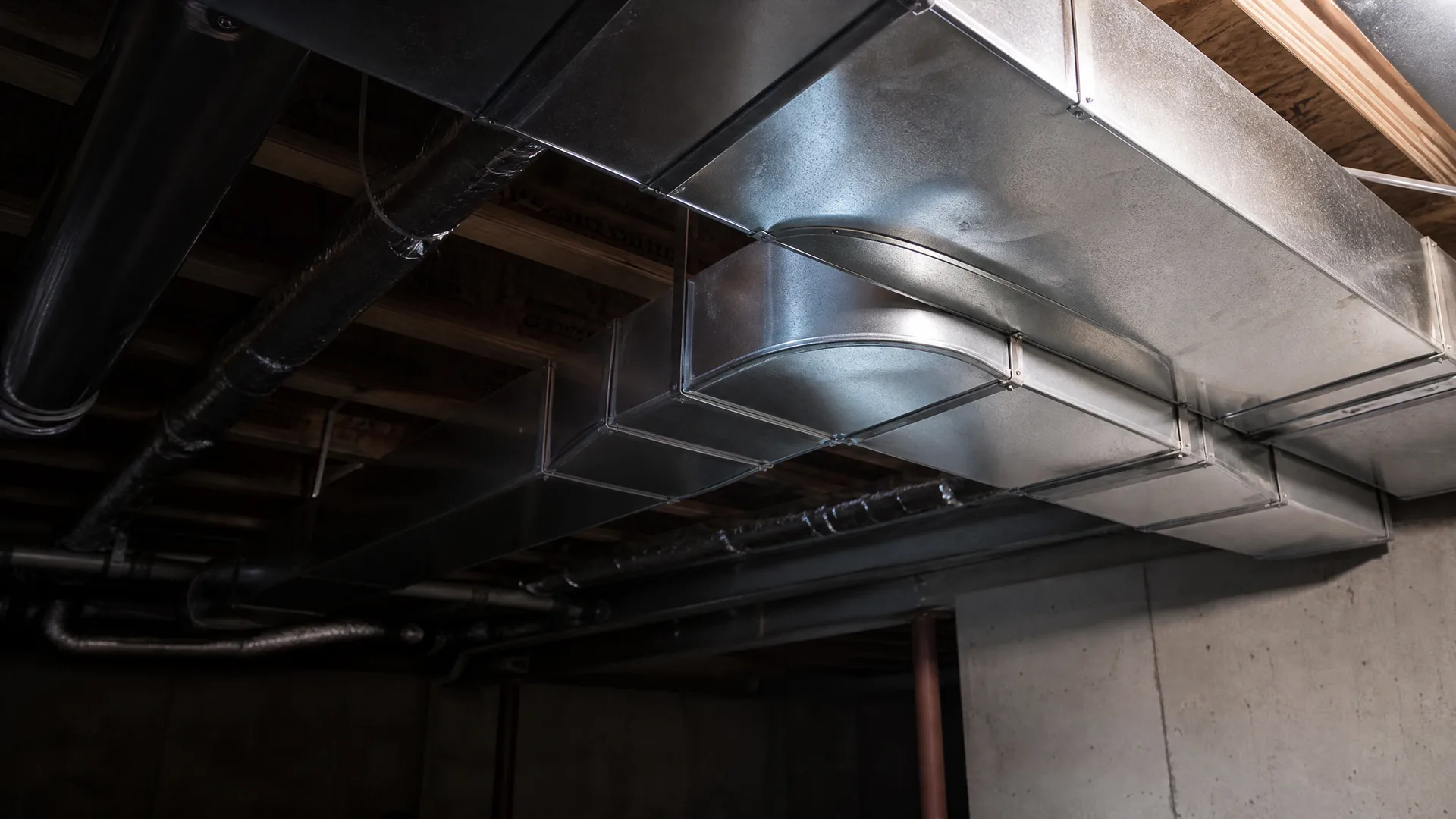
Basement ceiling with galvanized sheet-metal ductwork, wooden joists and subfloor, black and white pipes, above a concrete wall and floor.
Before you get your ductwork cleaning
Unfinished basement with bare concrete walls and floor, exposed wood joists, and galvanized sheet-metal HVAC ductwork and pipes running across the ceiling.
After you get your ductwork cleaning

How much does your house and its seasons shape a mold problem?

  • Half the homes here were built by 1992

    Half the homes in Will County were built in 1992 or earlier. Older ductwork has had more years to develop the seams and gaps where moisture gets in.

  • Heat runs October through May

    Heat runs October through May here, about eight months of the year. That's eight months of the blower pushing air through every duct run, mold or not.

  • Cooling runs June through August

    Cooling runs June through August, and summer humidity gives mold the moisture it needs. A duct system that stayed dry all winter can pick up a problem fast once the AC starts cycling that damp air.

ACS 2020-2024 · NOAA nClimDiv 1991-2020

A woman wrapped in a thick cream knit blanket sits in a chair with an open book on her lap, beside a lit table lamp and a frost-covered window at night.
An older woman with grey-blonde hair in an updo and a beige turtleneck sweater smiles while looking to the side in a warmly lit kitchen, with a round loaf of bread on the counter in front of her and a dark window showing snow outside.

Where this leaves you

  • A musty smell, dark spots near a vent, or dust that keeps coming back are signs worth acting on, not waiting out.
  • Mold in a duct system spreads through every room the furnace or AC serves, so it rarely stays a one-room problem.
  • The moisture that starts mold usually comes from a damp basement, crawlspace, or a return line pulling in humid air.
  • Cleaning removes what's already growing, but it comes back if the moisture feeding it isn't addressed too.
  • A contractor who inspects the ducts can tell you whether cleaning alone solves it or something else is letting moisture in.
  • Sending the form is the last step on your end; from there, finding the right contractor is no longer something you have to manage.

A musty smell when the furnace kicks on, dark rings around a vent cover, dust that comes back days after you clean it off: those are the signs, and they mean something is growing in the ductwork rather than just sitting in the room. It didn't start in the ducts. It started with moisture, usually from a basement or crawlspace that stays damp after a storm, or a return line that's been pulling in humid air for longer than anyone noticed. Once it's established, the furnace and AC do the rest, moving spores into every room the system reaches, not just the one where you first smelled it. That's the part worth understanding before you do anything else. Cleaning takes care of what's already growing in there now. It won't stay gone if the moisture that fed it in the first place is still getting in, which is why the real answer usually involves someone looking at the whole system, not just running a vacuum through the supply lines. A contractor who inspects the ductwork can tell you which one you're dealing with, and what it'll take to keep it from coming back. Once you send the form, that part isn't on you anymore. You've done the work of figuring out what's going on. Finding someone to handle it is the next step, and it's one you hand off, not one you have to chase down yourself.

Galvanized sheet metal rectangular HVAC ductwork running beneath wooden floor joists in an unfinished basement, with insulated pipes and a concrete wall nearby.

Get matched with a duct system pro in Will County

Duct and vent cleaningDucts or ventsWill County, IL
Step 1 of 2

What ZIP code is the job in?