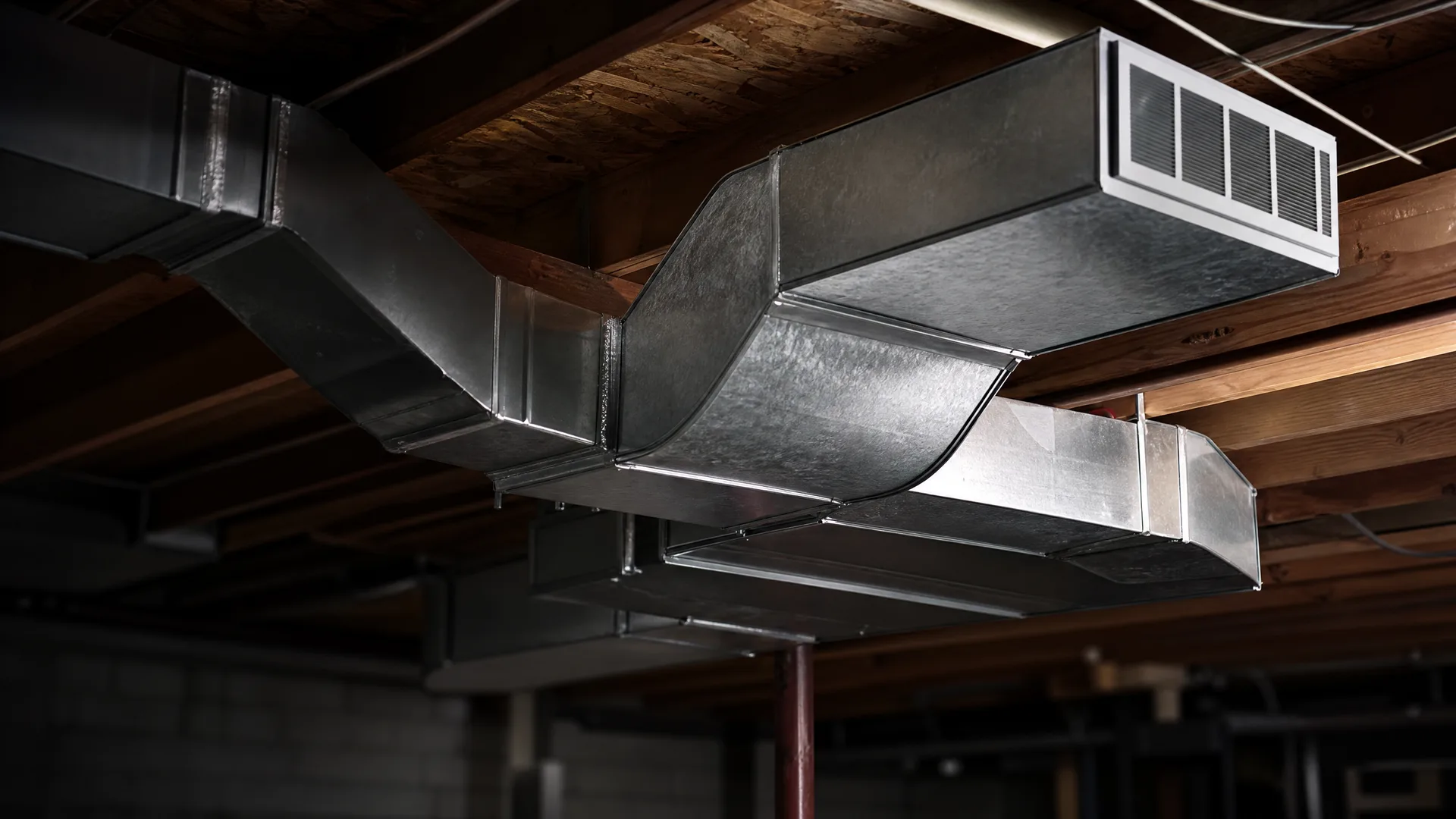
Signs of leaky ductwork in Joliet, IL

Skip searching for someone who cleans ducts in Will County.

Describe it once

A room that won't cool or warm up like the rest of the house, a duct run that's warm to the touch in the attic, or a utility bill that keeps climbing without any change in how you run the system are the usual signs of leaky ductwork. Joints and seams in the ducts work loose over time, especially in a system that cuts in and out all winter and all summer here. Once a seam opens, conditioned air escapes into the attic or crawlspace instead of reaching the room it was meant for, so the furnace or AC runs longer to make up for what it's losing. Dust showing up fast around vents, or a return vent that seems to pull harder than the others, points the same direction. None of this fixes itself. Left alone, the leak just gets wider and the system keeps working harder to cover for it.

Why do ducts in Will County homes leak in the first place

  • Half the homes here were built by 1992

    Half the homes in Will County were built in 1992 or earlier. Duct joints and seams loosen over decades, so a system that old is past the point of being sealed tight.

  • Heat runs October through May

    Heat runs here about eight months a year, October through May. Any leak in the attic or crawlspace is pulling conditioned air out of the house most of the year.

  • Cooling runs June through August

    Cooling only runs three months, June through August, but a leaky return can pull in hot attic air during exactly those months, making the system work against itself.

ACS 2020-2024 · NOAA nClimDiv 1991-2020

Ducts in the attic or crawlspace

Ducts run through unconditioned space in a lot of Will County homes, either up in the attic or down in a crawlspace. A leak out there is the costliest kind because the air that escapes goes straight into brutal summer heat or winter cold instead of into the house. You'll feel it as a room that lags behind the rest of the house, and you may find the duct itself warm or cold to the touch where a joint has opened up. These leaks also run up the gas and electric bill fastest, since none of that lost air ever reaches a vent.


Ducts inside conditioned space

Some ductwork runs through the basement, a utility closet, or between floors, areas that stay roughly the temperature you've set on the thermostat. A leak here still wastes air and still raises the bill, but the house keeps some benefit from it since the air lands inside the envelope of the home rather than outside it. These leaks are easier to miss because no single room suffers the way it does with an attic leak. Dust around a register, a faint whistle near a joint, or a utility closet that runs warmer than the rest of the house are usually the only clues.

A smiling woman with long brown hair in a dark sweater sits at a light stone kitchen counter with a glass of red wine, with a dimly lit living room in the background.
A smiling woman with dark hair pinned up, wearing a beige sweater, sits looking off to the side in a kitchen with a glass of red wine in front of her, a stainless steel refrigerator, marble counter and a potted plant behind her.
A smiling woman with dark shoulder-length hair in a navy sweater sits at a kitchen counter with a glass of red wine, with a lit living room and pendant lights behind her.
A woman in a dark gray sweater laughs while seated at a white marble counter with a glass of red wine, with a blurred living and dining room behind her.

How Duct Leaks Actually Happen

  • Air handlers and furnace blowers run at a slight positive pressure, so any loose joint pushes conditioned air out rather than pulling room air in.
  • Duct board and flex duct are joined with mastic or tape, not just the metal collar, and that mastic dries out and cracks with age.
  • A leak on the supply side near the furnace loses air before it ever reaches a room, which is why some rooms starve while the furnace runs constantly.
  • Return leaks pull unconditioned attic or crawlspace air into the system, so the furnace ends up heating or cooling air that already escaped once.
  • Static pressure climbs when ducts leak, and that extra strain is what wears out a blower motor years before it should.
  • Mastic sealant stays flexible and bonds to metal and board alike, which is why a contractor won't rely on tape alone for a lasting repair.

Your furnace blower pushes air through the ducts at a slight positive pressure. That's normal, and it's exactly why a loose joint is a problem: air finds the gap and pushes its way out rather than staying in the duct where it belongs. The duct runs themselves aren't one solid piece. Sections of duct board or flex duct get joined together with mastic, a gummy sealant, or foil tape, and sealed to the metal collars that connect to the furnace and the boots at each register. Mastic holds up well, but it dries out over the years and cracks, especially where a run has been flexed or jostled during other work in the attic or crawlspace. Where the leak sits matters. A gap on the supply side, close to the furnace, bleeds off air before it ever makes it to a bedroom or living room, which is why that one room never seems to get warm or cool even though the furnace is running nonstop. A leak on the return side works differently. It pulls in hot attic air or damp crawlspace air and feeds it into the system, so the furnace is heating or cooling air that already escaped once. All of this adds up to higher static pressure inside the ducts, and that extra strain is what wears down a blower motor well before its time. It's also why a contractor sealing a leak reaches for mastic instead of tape. Tape alone doesn't hold up the way mastic bonded across metal and board does.

Power here costs 17.91 cents per kilowatt-hour

At 17.91 cents per kilowatt-hour, every cubic foot of air that leaks out of a duct run is air you paid to condition and never got to use. With electric cooling costs this high, a torn seam in the attic shows up fast on the bill.

EIA-861 2025

If one bedroom runs warm every July while the rest of the house is fine, or the gas furnace runs longer each hour than it used to, that's not the equipment failing. It's air leaving the ducts before it reaches the room.

That air still has to be paid for. It left the furnace or the coil already conditioned, and the only place it ends up is the attic or the crawlspace instead of your living room.

Empty basement with bare concrete walls and floor, a steel support column, and galvanized sheet-metal ductwork and pipes running along the exposed wood joist ceiling.
Before you get your ductwork cleaning
Empty unfinished basement with concrete walls and floor, exposed wood joists, metal HVAC ducts and pipes overhead, and a steel support column near a framed wall.
After you get your ductwork cleaning

Explain it one time

Finding out which duct run is leaking means getting under the house or up in the attic with a hand on every joint, and most people don't have the time or the gear for that. Chasing that down on your own means pulling names off a map, calling each one, describing the same warm bedroom and the same high bill over and over, then sitting with a stack of quotes trying to figure out who actually knows duct work in a Will County house and who's guessing. A contractor who services this area through all eight months of heat and the hard winters that follow has likely already traced a dozen leaks like yours this year alone, in the same attics and crawlspaces local homes use. Send the request once and it goes to one of them, not a crowd of five companies working your phone at the same time. That warm room or that climbing bill is still there while you decide, and the duct run behind it won't seal itself.

What a sealed duct system should do

A sealed duct system delivers the air your furnace or AC makes straight to the rooms it's meant for. Every register pulls the same strength of air whether it's the farthest bedroom or the one next to the furnace. The system doesn't have to run longer than its cycle calls for, because nothing it produces is going to waste in the attic or crawlspace. Rooms hold their temperature between cycles instead of drifting back warm or cold within the hour. That's what the ductwork was designed to do when it was installed, and it's what a tight system still does in homes where the joints haven't opened up yet.

What a leaking system costs you instead

Once seams open up, the furnace or AC still runs its full cycle, but part of what it makes never reaches a room. You pay to condition that air and then lose it to the attic or crawlspace before anyone feels it. The thermostat reads satisfied while one bedroom stays off from the rest of the house. The equipment runs longer to make up the difference, which is wear it wouldn't otherwise see. None of that shows up as a breakdown. It shows up as a bill that climbs and a system that works harder every month to deliver less than it used to.

A smiling bearded man in a dark green sweater sits at a dinner table with a glass of red wine, a bowl of salad and a lit candle in the foreground, in a dimly lit room with a framed picture, lamp and potted plants behind him.
A woman in a cream knit sweater reclines on a sofa with her eyes closed and a slight smile, a closed dark book resting on a blanket in the foreground and a lit lamp and small potted plant behind her.

Duct sealing

A contractor seals the leaking joints in place, in the attic or crawlspace, so the air your furnace and AC make actually reaches the rooms.

Get one local pro

Duct replacement

Runs that have cracked, separated, or lost their insulation get pulled and replaced, which fixes leaks that sealing alone can't reach.

Get one local pro
A wooden table with a closed laptop, a ceramic mug of dark coffee, and a glass vase of eucalyptus stems beside a window, with a dark green kitchen cabinet, wooden counter, potted herb, cutting boards and bowl blurred in the background.

A warm room or a rising bill is the duct system telling you where the air is going

A room that won't hold the temperature, a duct run that's warm in the attic, or a bill that climbed with no change in how you live in the house. Any one of those points to the same thing: air leaving the ducts before it gets where it's supposed to go. In a county where half the homes are old enough to have loose joints and gas and electric both cost real money, that's not a small thing to let ride.

Finding the actual leak means someone under the house or up in the attic with a hand on every seam, and most people don't have a free weekend for that, let alone the gear. You'd be pulling names off a map, calling each one, explaining the same warm bedroom three or four times, then sitting with quotes that don't match up. One local contractor who works on duct systems like yours every summer and winter skips all of that. You explain it once, to someone who already knows what a 1992 duct run in a Will County attic tends to do.

Interior corner of a living room with a sheer-curtained window, a light wood console table holding a vase of greenery and a shallow bowl, a woven basket on the lower shelf, and a blurred upholstered sofa and dark wood table in the foreground.
Galvanized sheet metal HVAC ductwork with a white vent grille, mounted against wooden floor joists in a dim basement with concrete block walls.

Skip calling around

Duct and vent cleaningDucts or ventsWill County, IL
Step 1 of 2

What ZIP code is the job in?