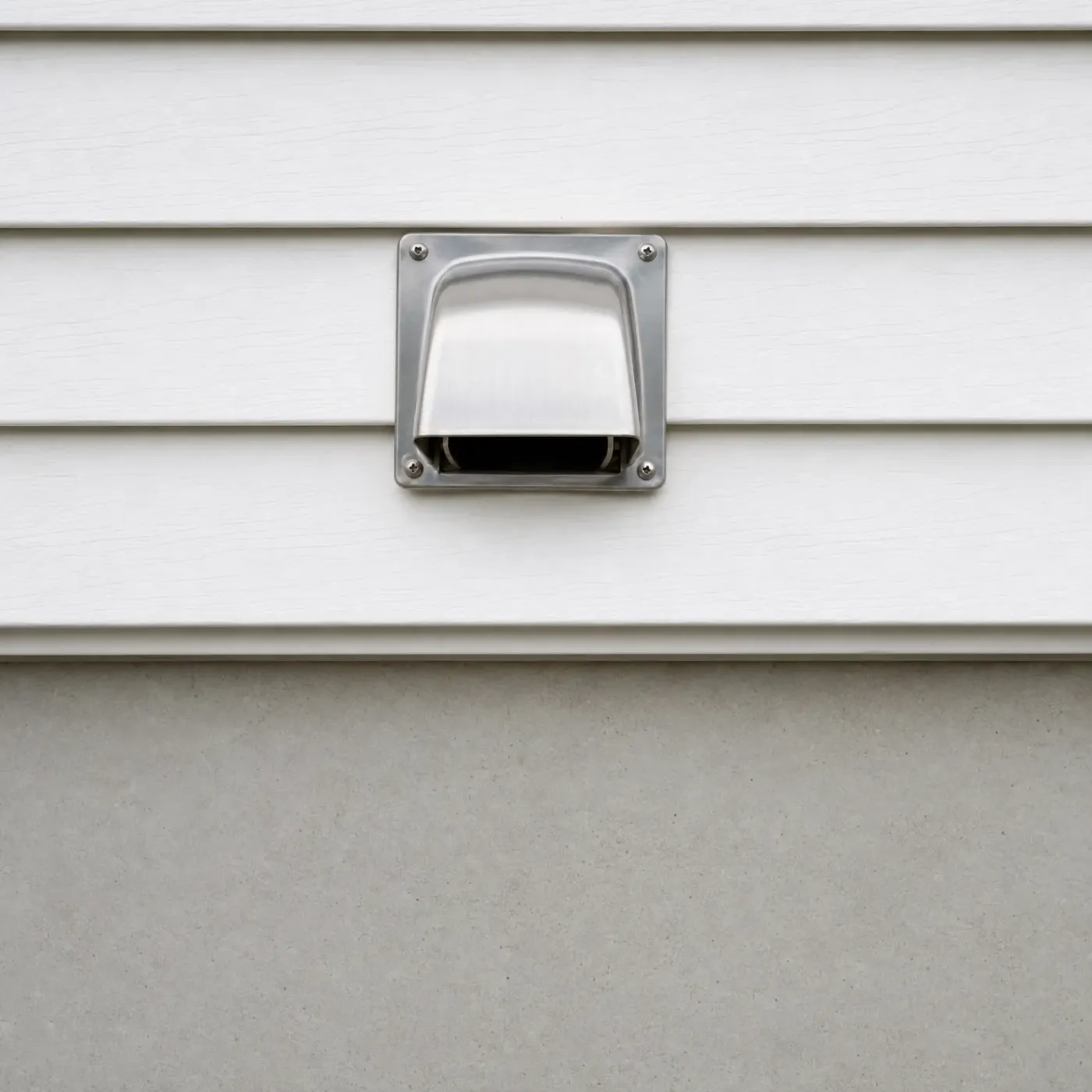
A clear vent hood
The flap sits closed against the siding, and when the dryer kicks on it swings open and stays open while air moves through. Push on it with a finger between loads. It should move freely and snap back when you let go.

You run a load of laundry most days and the dryer still takes two cycles to get clothes dry, or you noticed lint building up around the vent hood outside. You want a number you can put on the calendar, not a vague warning.
Once a year is the baseline for most Cook County homes. If your household runs the dryer daily, or you've got a long duct run from the laundry room to an outside wall, twice a year is closer to right. Lint builds up inside the duct every time the dryer runs, and it doesn't take much to slow the airflow down. A dryer that's venting poorly works harder to do the same job, and in a house built for Chicago winters, that duct often runs through unheated space where lint sits and collects without you seeing it. If drying times have crept up, that's usually the first sign the vent needs attention sooner than the yearly mark.




2.43 people per household on average
Cook County households average 2.43 people. More people means more loads a week, and more loads means lint builds up faster than a once-a-year cleaning accounts for.
Half the homes here were built by 1961
Half the homes in Cook County were built in 1961 or earlier. Older vent runs are more likely to have joints, turns, or longer duct paths where lint collects instead of blowing outside.
Power here costs 18.08 cents per kilowatt-hour
Electricity here runs 18.08 cents per kilowatt-hour. A vent clogged with lint makes the dryer run longer to finish a load, and that extra run time costs more here than in cheaper-power states.
ACS 2020-2024 · EIA-861 2025

A single person or a couple doing a few loads a week can often get by on a yearly cleaning, especially if the vent run is short and straight. Lint still builds up every time the dryer runs, but there's less of it, and a short duct gives it less chance to catch along the way. Check the vent hood outside when you think of it. If the flap opens easily and air moves when the dryer runs, once a year is probably holding.

A full house with kids or a larger family often means laundry every day, sometimes more than one load. That's a lot more lint moving through the duct between cleanings, and a once-a-year schedule starts falling behind sometime in the back half of the year. If cycles are stretching longer than they used to, or the laundry room feels warmer than it should, the vent is telling you it needs attention sooner than the calendar says.

The flap sits closed against the siding, and when the dryer kicks on it swings open and stays open while air moves through. Push on it with a finger between loads. It should move freely and snap back when you let go.

Lint has packed into the louvers until the flap barely moves. Air is forced to push past a wall of lint instead of out into the yard, and some of it works its way back into the duct. A vent in this shape is a fire risk, not just a slow dryer.

A clogged vent doesn't just mean longer drying time. The motor runs longer to push air through a duct that's half full of lint, and that shows up on the power bill every month you leave it. Chicago power rates aren't cheap, so a dryer working twice as hard to do the same job adds up over a year, not just one load.
There's a safety side too. Lint is fuel, and a packed duct sitting behind a hot dryer is how house fires start. You don't need to become an expert in duct cleaning to deal with this. Skip the research, skip calling around to find someone who actually answers the phone, skip explaining your vent setup three different times to three different companies. Send the form once and let someone qualified take it from there.

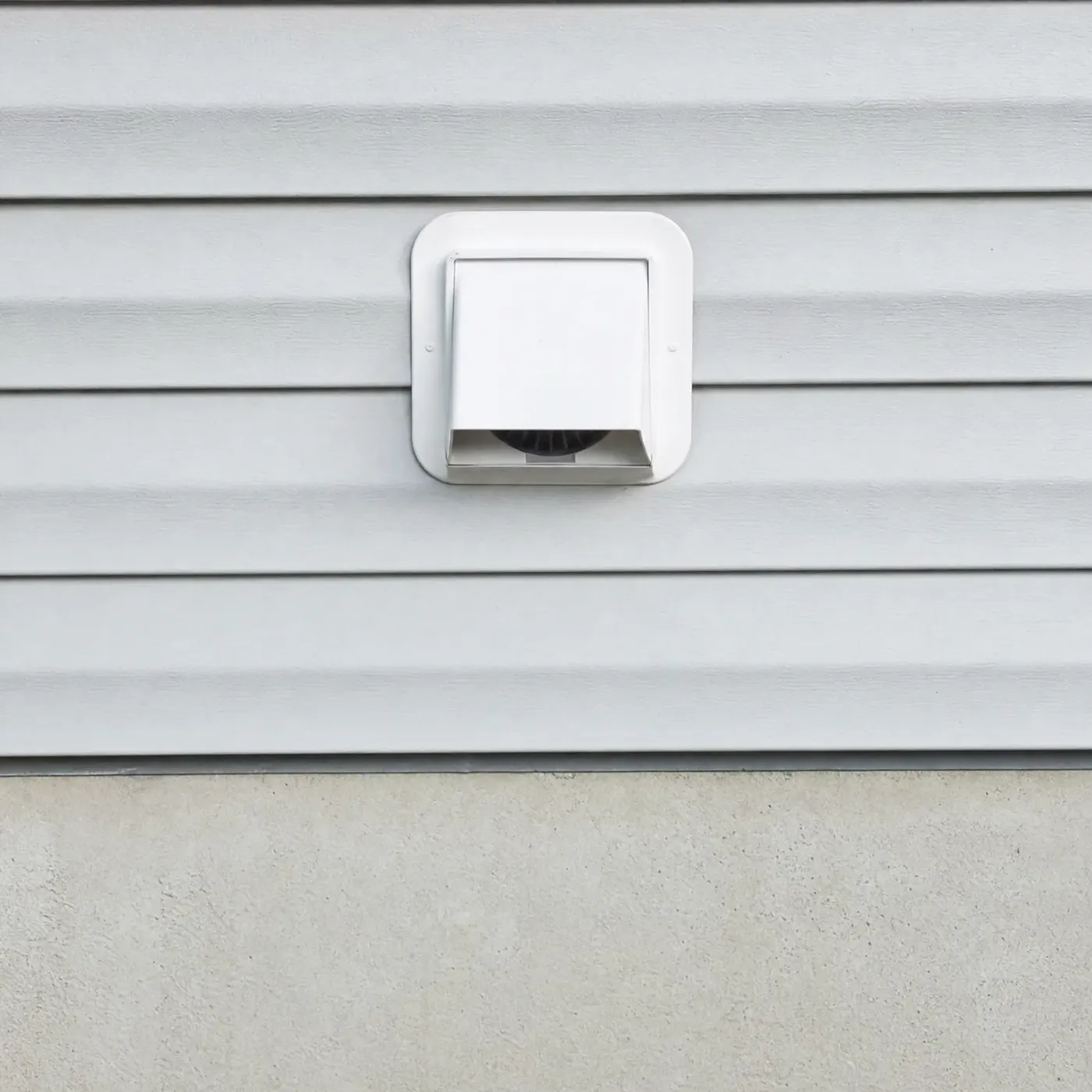
The flap hangs loose and swings open as soon as the dryer starts. Air moves out in a steady stream, not a trickle. Walk outside during a load and you can feel it push past your hand. That's a vent doing its job, and a cycle that ends on time.
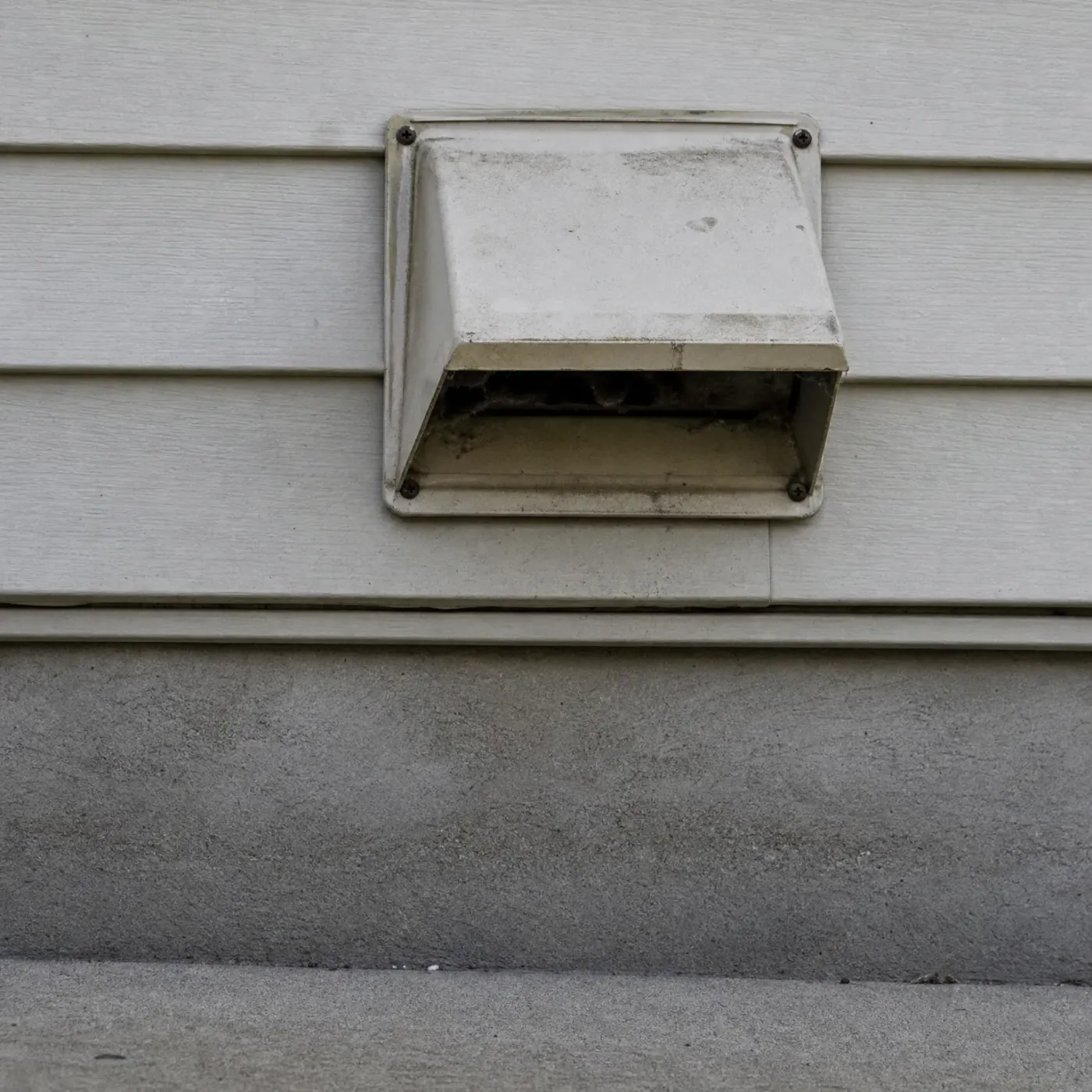
Lint has built up around the opening and the flap barely lifts off the siding. Air that should be pushing outside is backing up into the duct instead. Clothes come out damp after a full cycle, and the dryer runs hotter and longer than it should to get there.


Answer a few questions instead of calling shop after shop.
One request and the search for a pro is handled.
There's no charge for the request.
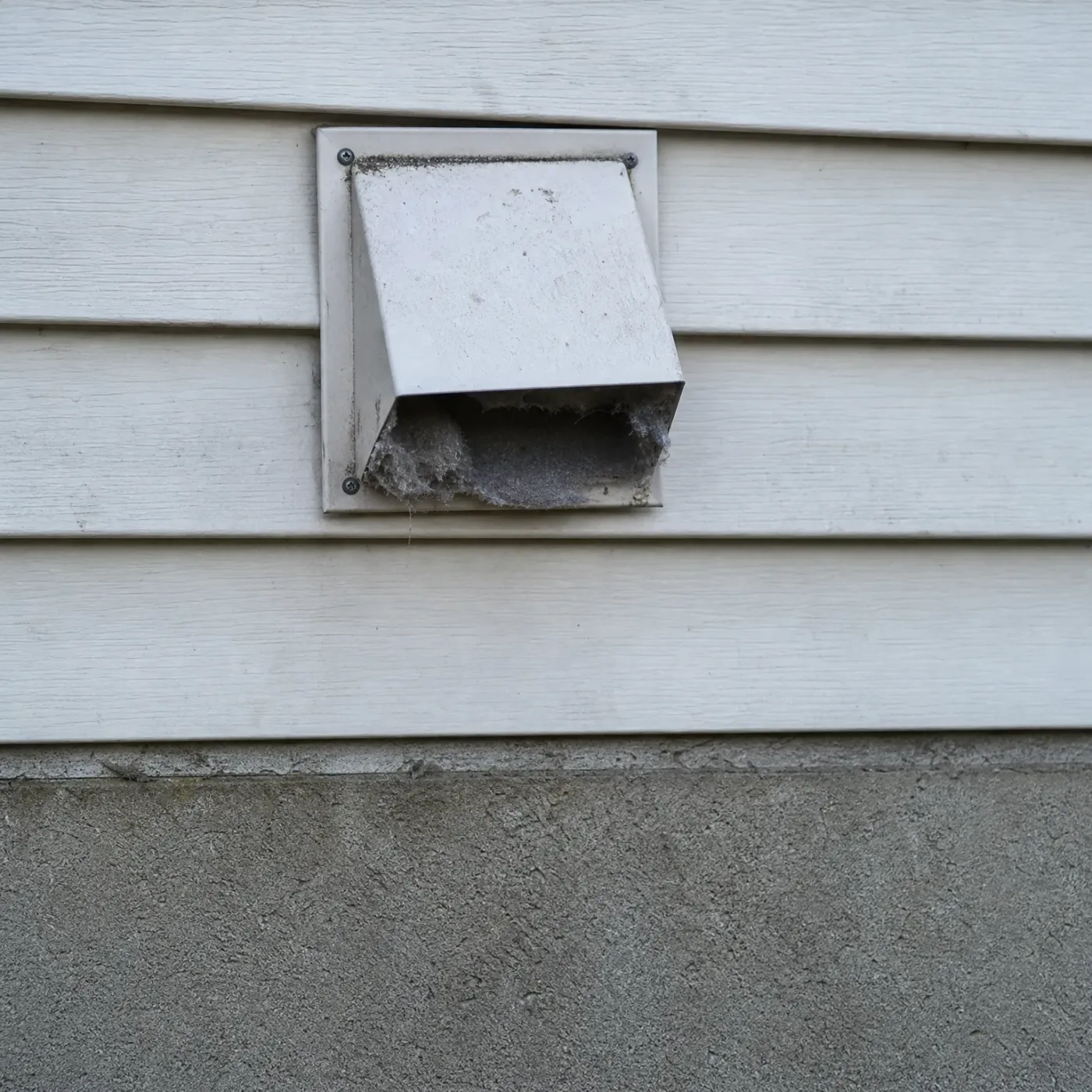
Lint is wet when it leaves the drum, carried along by warm, damp air. As that air moves through the duct it cools, and the moisture drops out and leaves the lint behind to stick to the metal. It sticks fastest at bends and at the seams where one section of duct joins the next. A straight, short run to an outside wall loses less lint along the way. A run with a turn or two, or one that travels further before it reaches outside, gives the lint more surface to catch on before the air carries it clear.
Houses where the dryer sits in a basement or a back utility room often need a duct run of fifteen feet or more to reach an outside wall, longer than a dryer on an exterior wall needs. Every extra foot is more duct wall for lint to catch on, and every bend adds a spot where it collects faster than the straight sections do. If your dryer vents up through a wall or across a long stretch of basement ceiling before it reaches outside, that duct is doing more work to move air the same distance, and it's worth checking more often than a short, straight run to the nearest wall.
A household of 2.43 people here is often a family doing laundry most days, not once a week. Towels, sheets, work clothes, all of it adds up to more loads through the same duct. That pace of use is exactly what pushes a yearly cleaning past the point of catching the lint in time.
ACS 2020-2024
Warm, damp air leaves the drum carrying lint with it.
Air cools as it travels through the duct run.
Moisture drops out and lint sticks to the metal walls.
Buildup collects fastest at elbows, bends and the hood flap.
Touch the front of the dryer partway through a cycle. If it's hot to the touch, or the laundry room feels warmer and more humid than it should, air isn't making it out through the vent the way it's supposed to. Check the lint trap too. If it's covered in a fine film even after you wiped it clean last load, some of that lint is getting past the trap and settling in the duct instead. Left alone, that buildup is more than an inconvenience. A duct packed with lint is a duct holding onto heat it shouldn't, and lint is exactly what a stray spark needs to catch.


Most homes in Cook County need that duct cleaned every six to twelve months, and a household running a load most days sits on the shorter end of that. Check the vent hood outside, watch how long drying takes, and let that tell you when it's time rather than waiting for a date on the calendar. What you don't have to do is any of the legwork that usually comes with it: searching through listings for someone who services dryer vents, calling a few and waiting on callbacks, explaining the same layout of your duct run twice over, then sitting with quotes trying to work out which one is fair. Send the form once and that part is off your plate. Someone qualified to clear the duct and check the hood takes it from there. The vent still needs the work it needs. What changes is that finding the person to do it stops being something you have to manage.





Describe your dryer vent job once, to one pro.
You only hire the pro if you want to.