
Why are birds nesting in my dryer vent?
You went outside to check on something and heard chirping coming from the vent on the wall, or you noticed the flap won't close all the way anymore. Maybe your dryer is taking longer to dry a load than it used to. Birds build nests fast, often in a day or two, and a dryer vent looks like a safe, sheltered spot to them, especially in spring when they're hunting for places to raise a brood.
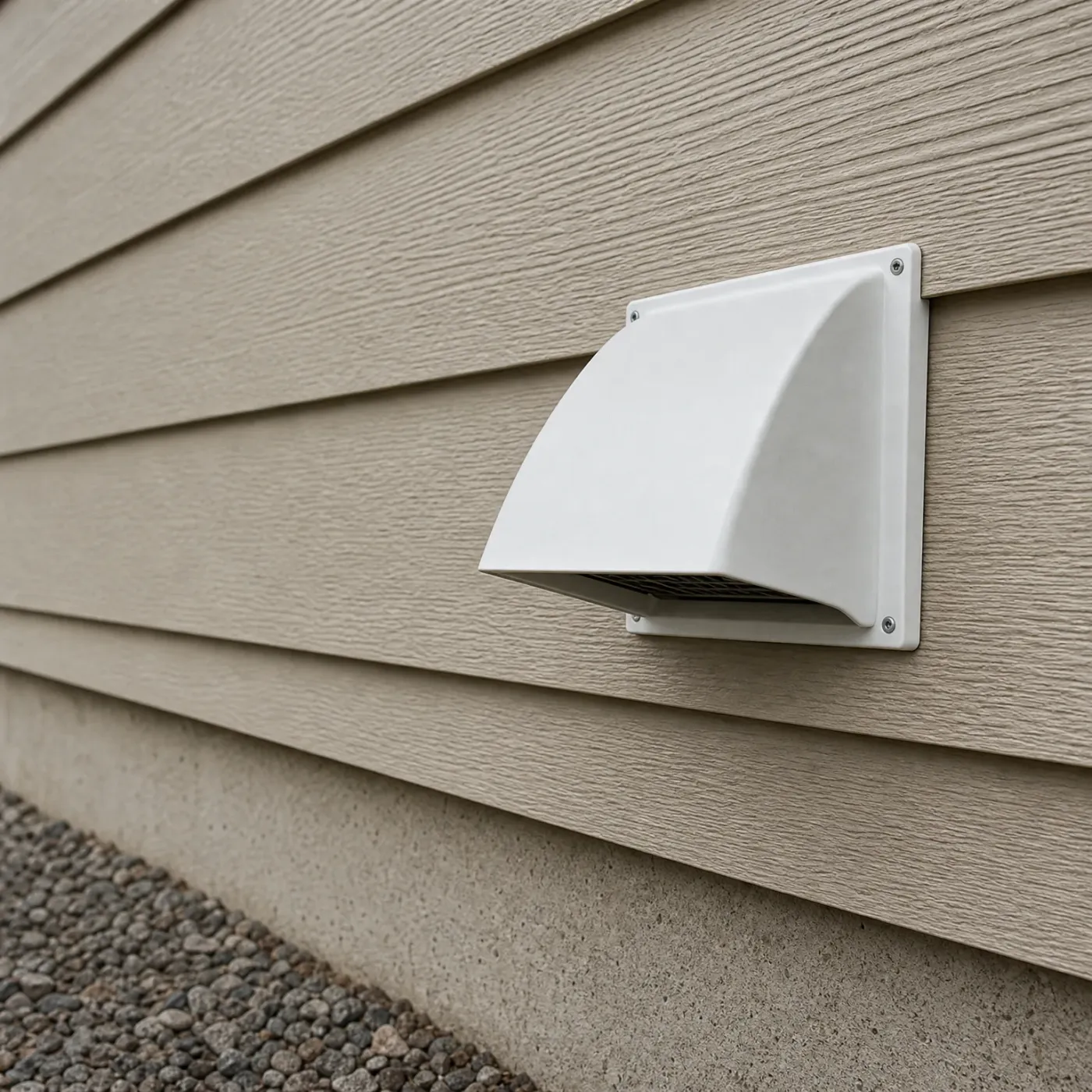
The vent opening looks like a hollow tree or a sheltered ledge to a bird
Birds look for a gap off the ground, out of the weather, and dark inside, and a dryer vent hood gives them all three. If the flap is bent, stuck open, or missing its spring, a bird can push through and start building. Spring is when this happens most, since that's when birds are pairing off and looking for a place to nest before eggs come. Once a nest is in there, lint and dryer heat make the vent duct itself a fire risk, because the airflow that's supposed to carry heat and moisture outside gets blocked. A blocked vent also means your dryer runs longer to dry the same load, which costs more with electricity priced the way it is in Illinois.

Why the flap stops them, or doesn't
A dryer vent is supposed to have a flap or louver on the outside hood that opens when the dryer runs and falls shut when it stops. Birds, usually house sparrows or starlings, look for a small dark gap to build in come spring. If that flap is bent, missing, or held open by old lint, it stops doing its job and the vent looks like any other hole in the wall to a bird looking for shelter.

What a blocked vent does to the dryer
A dryer pushes hot moist air out through that vent every time it runs. A nest packed into the duct gives that air nowhere to go, so it backs up into the duct and the drum. Clothes take longer to dry, the dryer runs hotter than it should, and lint has more time to settle inside the duct instead of blowing outside. In a gas dryer, that backup also keeps exhaust from venting the way it's supposed to.
Nest Left In The Vent, Or Cleared Out
Leave it
- A nest packed with dry grass and twigs sitting next to a heat source is exactly the fire risk your dryer vent isn't supposed to have.
- Every load of laundry pushes damp, lint-heavy air against the blockage instead of outside, and that moisture has to go somewhere.
- A dryer working against a blocked vent runs longer per load, and that shows up on a power bill in Illinois where electricity already costs more.
- Starlings and sparrows return to a nest site year after year once they've used it, so next spring brings the same problem back.
- A vent that won't close all the way also lets summer humidity and cold winter air into the duct, not just birds.
Get it cleared
- A contractor can remove the nest, check the hood flap for damage, and confirm the duct is clear all the way through.
- Clearing the vent lets the dryer push air out the way it's built to, so drying times go back to normal.
- Once the flap closes properly again, it keeps birds, summer humidity, and winter drafts from getting into the duct.
- Matching with a contractor means you're not the one tracking down who handles vent cleaning versus dryer repair versus pest issues.
- A contractor can also spot whether the hood itself needs a guard or repair so the same birds don't just come back.








A contractor opens the vent line at the wall hood first.
The nest and packed lint get pulled out by hand or brush.
A power brush runs the full length of the duct to the dryer.
The flap or louver gets checked so it closes flush again.


Get your dryer vent to the right pro
Send the form and the dryer vent cleaning stops sitting on your list.
Your dryer vent cleaning request goes to a local pro who does this work.
There's no charge for the request.

What a blocked vent does to your laundry room
Run a load with a nest packed into that duct and you'll smell it before you see it. Warm, wet air with nowhere to go backs up into the dryer and sometimes into the room around it. Towels come out warm but not dry. You run the cycle again, and the electric bill or gas bill for that dryer climbs while the clothes still feel damp at the seams.
The part you can't see matters more than the part you can. Lint sitting wet against a hot drum element is how dryer fires start, and Illinois summers add their own moisture to whatever the bird already dragged in. Once you send in your information, matching you with a contractor who clears vents like this is the next step, and someone who handles this regularly takes it from there.

Power costs 17.67 cents per kilowatt-hour statewide
At 17.67 cents a kilowatt-hour, a dryer forced to run two or three extra cycles to dry one load because a nest is choking the vent shows up on your bill fast. Clearing the line out lets your dryer get back to drying a load in one pass.
EIA-861 2025 statewide residential average
A Clear Vent, Closed For Good
- A bird's nest in the vent is a blockage the flap can't fix and the dryer can't push past on its own.
- Once the duct is cleared out and brushed to the dryer, airflow goes back to normal and the flap can close flush again.
- A contractor checks the hood and flap on the way out, so the same gap doesn't invite another nest back in.
- Submitting the form here is the last step on your end; finding someone to send out stops being something you have to track down.
- Illinois summers bring nesting season and sticky weather together, and a vent that can't close stays an open door until someone deals with it.
- A clear vent means one dry cycle instead of two or three, and that shows up on a power bill this high.
A nest in the vent is not something the dryer can push past, and it is not something the flap can fix once the gap is there. The fix is straightforward. A contractor opens the hood, clears the nest and the lint packed around it, then runs a brush the full length of the duct back to the dryer. With the line clear, air moves the way it is supposed to, and the flap can sit flush again instead of hanging open on a wad of lint and twigs. That matters more in Illinois than it would somewhere milder, because nesting season here lines up with the stretch of summer when the air is already heavy, and a vent that cannot close stays open to the next bird looking for the same spot. The hood and flap get checked before the contractor leaves, which is what keeps this from being a problem you deal with again in a month. Once the form on this page is sent, the search part is done. Finding a contractor who covers dryer vent cleaning in your area is no longer something you have to sort out yourself, and that is the weight this step takes off. No wait time is promised here, only that the job of tracking someone down is no longer yours to carry. What you get back is a dryer that dries a load in one pass instead of two or three, which matters on a power bill where every extra cycle shows up.

Dryer Vent Cleaning
The right pro for this job

- Say what's going on with your dryer vent, and a pro who works on them reaches out.
- A local pro who knows dryer vents gets your details and gets in touch.

- One request and the dryer vent cleaning stops waiting on you.
- After this form, you can stop searching for a dryer vent pro.

- Answer a few questions about the dryer vent cleaning and skip the search.
- Answer a few questions instead of calling shop after shop.

- Your dryer vent cleaning request goes to one local pro.
- Only one pro gets your request, so you hear from one company.