Profile view of a bearded man wearing a dark green baseball cap and a dark gray T-shirt against a plain light background.

Why your heat won't reach upstairs in Illinois

RepairFurnace or heatingIllinois
Step 1 of 2

What ZIP code is the job in?

Why won't heat reach the upstairs of my house?

Winter in Illinois means the furnace runs for months straight, and if the upstairs bedrooms stay cold no matter how high the thermostat goes, that's a problem you feel every night. Maybe the kids' rooms never warm up, or the whole second floor lags behind the main level by what feels like ten degrees. You've checked the vents are open. The furnace runs. The upstairs still doesn't get warm.

Heat rises, but your ducts aren't built to chase it upstairs fast enough

Warm air naturally drifts up through a house, so you'd expect the upstairs to run warmer, not colder. The problem is usually the ducts feeding the second floor. They're often smaller or longer than the runs serving the main level, so by the time heated air reaches them, the furnace has already cycled off. A blocked or disconnected duct, a return vent that's missing upstairs, or a damper stuck in the wrong position all do the same thing: they starve the second floor of the air volume it needs. With gas furnaces running long hours through an Illinois winter, that gap between floors shows up every single day, not just on the coldest nights.

A woman with dark hair in a bun wearing a cream knit sweater sits on a gray sofa in a bright living room, looking off to the side.
A woman wrapped in a knit blanket sits on a gray sofa in a living room, looking toward a bright window with houseplants and an armchair in the background.
A woman in a gray cowl-neck sweater sits on a light sofa with cushions, smiling and looking to the side, with a kitchen and window visible behind her.
A woman with dark hair in a bun, wearing a light linen shirt, sits on a sofa and looks to the side, with a window, houseplants and a kitchen with pendant lights blurred behind her.

Why does it feel colder up there no matter what you do

You bump the thermostat up a few degrees and the hallway warms, but the bedrooms at the top of the stairs stay stubborn. Maybe you've added a space heater for one room, or your kids sleep under an extra blanket from November through March. The vents upstairs might blow air that feels weaker than the ones downstairs, or barely blow at all. Some rooms take an hour longer to warm after the furnace kicks on. Left alone, this usually means the furnace is working harder and longer to try to even things out, which shows up on your bill before it shows up anywhere else. A system straining every night through an Illinois winter doesn't tend to get better on its own.

A gray gas furnace stands on a concrete basement floor, connected to sheet-metal ductwork, white PVC vent pipes, and a yellow gas line, with plastic sheeting covering the walls.

Furnace keeping up

A furnace sized and installed right pushes air through the ductwork evenly, so every register gets its share. The gas line, the venting, the ducts all match what the furnace needs to do its job. Rooms far from the furnace still get warm because nothing upstream is choking the airflow.


A metal furnace with louvered panels stands against a concrete basement wall, connected to sheet-metal ductwork and a round flue pipe, with wooden framing posts and a pipe nearby.

Furnace losing the fight

Dust built up around an older furnace points to airflow it's not getting enough credit for pulling through. A blower working harder than it should, a duct run that's undersized or blocked, or a furnace past its best years can all mean the second floor loses out first. A contractor can look at the unit and the ducts together and tell you which one is behind it.

An older metal furnace with PVC and metal pipes stands on a concrete basement floor beside galvanized ductwork, with wooden stairs and a water tank in the background.
Before you get your furnace repair
A gray high-efficiency furnace in a basement with sheet-metal ductwork, white PVC vent pipes, metal plumbing lines, a condensate pump on the floor, and a window showing green trees outside.
After you get your furnace repair

Why ductwork design makes this worse

Heat rises on its own, so the air a furnace pushes up to the second floor is already working against that pull back down through the walls and stairwell. If the ducts feeding the upstairs are long, narrow, or take a lot of turns to get there, the air loses speed before it reaches the register. A duct run sized for a shorter trip to the main floor won't move the same volume of air once it's stretched to the second story. The result is warm air at the registers near the furnace and barely-there airflow by the time it reaches the far end of the house, no matter how long the furnace runs.

What a contractor checks first

A contractor looking at this starts with airflow, not temperature. That means checking static pressure in the ductwork, looking for crushed or disconnected runs in the attic or crawlspace, and confirming the blower is moving the air volume the furnace was built to push. Sometimes a damper got closed or shifted and is cutting off a branch line entirely. Other times the fix is a duct booster or a return added upstairs so air has somewhere to go once it arrives. None of this gets fixed by raising the thermostat, and guessing at it from the ground floor doesn't tell you which of these it is.

An older woman with gray hair in a bun and glasses, wearing a beige knit sweater, smiles while looking to the side in a warmly lit kitchen, with a loaf of bread on the counter in the foreground and a snowy scene outside the window.
A woman with her hair in a bun holds a sleeping young child against her chest, both wrapped in a textured beige knit blanket on a sofa in a dimly lit room with a lamp, framed picture, and bookshelf behind them.

A furnace pro near you

A furnace that can't warm the upstairs isn't something you fix by guessing. It might be a blower that's lost strength, a duct run that was never sized right for the second floor, or a damper that needs adjusting, and telling them apart takes someone who can look at your system directly. Finding that person in Illinois usually means searching, calling a few numbers, explaining the cold bedrooms and the thermostat setting each time, then waiting to see who calls back and trying to judge their quotes against each other. Gas heat runs here from fall through spring, and another winter of closing the upstairs doors and running a space heater costs you comfort you're already paying for through the gas bill. Hand off the search and a contractor who covers your area gets in touch with you directly, so you can describe what's happening once and go from there.

A dark interior hallway with a dim window at the end, a wooden floor, a stair railing on the right, and a bench or rug in the foreground.

You check on the kids before you go to bed yourself. The hallway floor is cold under your feet, colder than it should be with the furnace running all night. You crouch by the vent outside their doors and hold your hand over it. Barely any air moving. Outside the window at the end of the hall, frost has crept in from the edges of the glass, and the glass itself feels like ice when you touch it. It's two in the morning and the house is quiet except for the furnace cycling somewhere below you, working, while the air up here barely moves at all.

A smiling man in a denim shirt and white t-shirt stands in an open dark doorway of a stucco house, facing a woman with long brown hair and a green jacket seen from behind in the foreground.

What's actually happening inside the blower

A furnace blower is sized for a certain amount of air moving through the whole duct system every minute. When a return or a filter is restricted, or a blower wheel has caked up with dust, the motor can't push that volume anymore, and the longest runs lose first. In most two-story layouts, that means the upstairs branch, since it already has more duct length and more turns between it and the furnace than any room downstairs. The air that does make it up there arrives weaker and cools faster.

There's also the zone dampers to consider, if your system has them, or the balancing dampers inside the trunk line near the furnace. Those get set once, at installation, and they're easy to bump or never set right to begin with. A contractor who's seen this in other Illinois homes with the same layout problem can check blower output, static pressure, and damper position in one visit, rather than you guessing room by room which one it is.

A gray upholstered sofa with a matching cushion sits beside a potted plant and a wooden table holding a small green plant in a stone pot, near a curtained window.
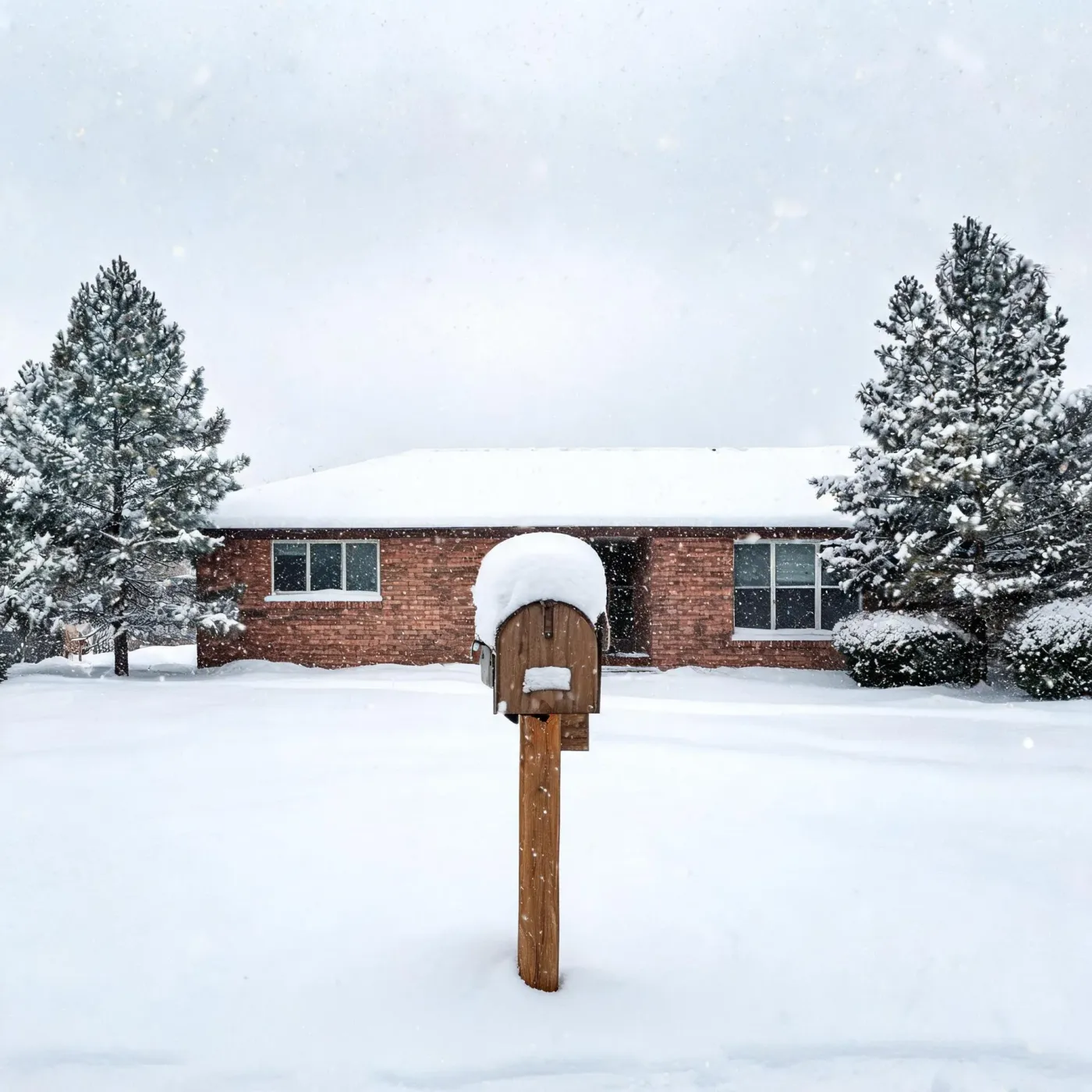
A snow-covered wooden mailbox on a post stands in a deep snowy yard in front of a single-story brick house flanked by snow-laden pine trees during falling snow.

Statewide, winter nights average 20°F, according to NOAA climate data. That kind of cold means your furnace isn't cycling on and off anymore, it's running long stretches just to hold the house steady. The first floor keeps up because it's closer to the furnace and the main trunk line. Upstairs is farther down the duct run, and on a night that cold, that distance shows up as a real temperature gap. You'll notice it most around 2 or 3 in the morning, when outdoor temps bottom out and whatever air is reaching the second floor has lost most of its heat getting there.

NOAA nClimDiv 1991-2020 county normals weighted by homes

A basement utility area with a gray furnace, sheet-metal ductwork, pipes, plastic-covered walls, a concrete floor, and a black shelving unit holding storage bins.
Clean ductwork and a furnace matched to the house keep air moving the full distance, upstairs included.
A gray metal furnace with louvered vent panels stands on a concrete basement floor beside galvanized ductwork, gas and plastic pipes, and foil-faced insulation along the ceiling and wall.
Rust on the cabinet and aging gas and vent lines often mean the blower is losing the fight to reach the second floor.
  1. Burner ignites and the heat exchanger starts warming the air

  2. Blower motor pulls return air across the hot heat exchanger

  3. Supply plenum splits that heated air into branch ducts

  4. Branch ducts carry air up through walls to the second floor

Winter nights average 20°F statewide

At 20°F, a furnace that's barely keeping the upstairs warm has no reserve left to draw on. It's already running near its limit just to hold the first floor steady, so the bedrooms at the end of the longest duct run are the first to fall short.

NOAA nClimDiv 1991-2020 county normals weighted by homes

Cold upstairs, furnace running fine

  • A blower that's lost strength, a duct run sized wrong, or a failing damper all show up the same way: cold air upstairs and a furnace that runs long stretches without catching up.
  • Rooms at the end of the longest duct run fall behind first, especially once nights settle into the 20s and stay there.
  • Rust on the cabinet or aging gas and vent lines point to a furnace losing ground, not a thermostat problem.
  • Finding out which one it is takes someone checking the blower, the ducts, and the furnace itself against what your house actually needs.
  • Instead of calling around to different contractors and explaining the cold upstairs bedrooms over and over, you answer once and get matched with someone who handles this.
  • A furnace that heats the first floor fine but can't reach the second isn't working the way it was installed to.

The upstairs stays cold not because something is broken in an obvious way, but because a blower, a duct run, or a damper isn't moving enough air that far. Your furnace can keep the first floor warm and still lose that fight by the time air reaches the second story, especially once Illinois nights settle into the 20s and your furnace is running long stretches just to hold steady. Rust on the cabinet or gas and vent lines showing their age are signs of a furnace losing ground generally, not just a thermostat setting that needs adjusting. None of this sorts itself out by guessing from the thermostat. It takes someone checking the blower's strength, the duct runs feeding the upstairs, and the furnace itself against what your house actually needs to move enough warm air up there.

That's the part that normally falls on you: calling a few contractors, describing the cold bedrooms and the vents with barely any air moving, waiting on quotes, then doing it again if the first one doesn't pan out. Here you answer once, about your house and what you're seeing upstairs, and get matched with a contractor who handles this kind of furnace problem. No repeating the story to three different companies. No sorting through quotes on your own to figure out who actually knows what they're looking at. The cold upstairs isn't normal, even if the first floor feels fine, and figuring out why is a job for someone standing in front of the furnace, not a guess from the hallway.

Sunlight falls across a beige upholstered sofa with a textured woven cushion and a chunky knit throw, beside a dark wood cabinet holding a ceramic vase with green leafy branches, near a white-framed window.
A sunlit corner of a room with a wooden side table holding a ceramic vase of green foliage and a wooden bowl, beside a light upholstered sofa with a knit throw and rust-colored pillow, with window shadows cast on a beige wall.
A sunlit room corner with beige walls, a white-framed window with sheer cream curtain, wood floor with a light rug, and a woven basket holding a knit blanket.
A beige ceramic vase holding a leafy green branch sits on a wooden cabinet in a corner, with sunlight through a sheer curtain casting leaf shadows on the wall.
A grey upholstered sofa with a rust-orange velvet cushion and a textured throw sits beside a window with linen curtains, next to a wooden side table holding a pale ceramic vase of olive branches.

A local pro for your furnace repair

Describe what your furnace is doing once, in one form.

Request a pro

You're not committing to anything by asking.