How to lower your heating bill in an Illinois winter
Fill out one form instead of calling around for a furnace tune-up.
A gas furnace burns fuel all winter, from the first cold snap through the last freeze in spring. In Illinois that's a long stretch, and electricity here isn't cheap either, so every bit the furnace loses to a dirty burner, a clogged filter, or a blower pulling more power than it should shows up on the bill.
Most of that loss doesn't announce itself. The furnace still runs, the house still gets warm, but it's working harder to do it. A technician who services furnaces every winter knows what tends to go wrong in a system that's been running for months without a check. They can spot a weak flame pattern, a dirty flame sensor, or airflow that's been restricted for so long the homeowner stopped noticing the house felt a little less even room to room.
Finding that person is usually the slow part. You'd normally be searching through listings, calling a few companies, describing the same furnace and the same bill to each one, then waiting on quotes to compare before you even know who's coming to your house. That back and forth takes time you'd rather spend warm.
This page connects you with one licensed contractor local to Illinois, someone who works on furnaces like yours through the same winters you do. Not a list of five companies competing for the job and blowing up your phone. One call, to someone who already knows what an Illinois winter does to a furnace that's gone unchecked.
From there it's a straightforward visit: someone looks at your system, tells you what they find, and does the maintenance that keeps a furnace from quietly costing you more than it should. The button below is where that starts.
How can I lower my heating bill this winter in Illinois?
You're watching the gas bill climb and wondering if there's anything you can actually do about it besides turning the thermostat down and putting on a sweater. A furnace that's running clean and tuned uses less fuel to put out the same heat, and that's the part you have some control over.
Get the furnace serviced before the cold sets in
A furnace that's clean and properly adjusted burns gas more efficiently than one that's been running all year without a look. A dirty burner or a clogged filter makes the furnace work harder to push out the same heat, and that extra work shows up on the gas bill every month it runs. In Illinois, that's a lot of months. Servicing it before the first real cold snap means it's burning efficiently from day one of the heating months, not catching up to a problem halfway through January. It also means less strain on the blower motor, which matters when that motor is running for hours a day through a long Illinois winter.
A furnace running clean
The burner lights, settles into a steady blue flame, and the blower pushes warm air through the ducts without straining. It cycles on, heats the house, and shuts off. Nothing works harder than it has to, and the gas it burns goes into heat instead of waste.
A furnace working against itself
Behind those access panels, a dirty burner or a clogged filter makes the blower pull harder and run longer to push the same heat through the house. It still warms the rooms, but it burns more gas and draws more power doing it, month after month.
Skip calling around
Your request stays with one local pro.
Fill out one short form instead of calling around.
Why does your furnace run so long to reach the thermostat?
You notice the blower kicks on and just keeps going, longer than it used to, and the house still feels like it's catching up to the number on the thermostat. The air coming out of the vents feels cooler than it should. Maybe there's a burnt dust smell the first few times it fires up each season, or the furnace clicks on and off more than it runs steady. Some rooms stay cold no matter how high you set it. None of that is normal wear you just live with. A furnace working that hard burns more gas to make the same heat, and if it's ignoring a real problem underneath, that's how a shutoff happens on the coldest night of the year, not the mildest one.
What a dirty flame sensor costs you
The flame sensor tells the furnace a flame is burning so the gas valve stays open. A thin film of soot on it can make the furnace shut off seconds after it starts, then try again, then shut off again. Each failed attempt still pulls gas and runs the blower before it quits. A furnace that short cycles like this all night burns fuel without ever warming the house past the first few minutes.
What a clean burner actually changes
A furnace burner is set to mix gas and air in a specific ratio. Soot or rust on the burner throws that mix off, so the flame burns yellow and uneven instead of steady blue. An uneven flame transfers less heat into the air moving across the heat exchanger, so more of what you paid for goes out the flue instead of through your vents. Cleaning the burner restores the ratio the furnace was built to run on.
Checked Now or Fixed Later
Skip maintenance
A furnace nobody's looked at keeps running even as the burner gets dirty, so you don't see the problem building until the bill does.
You're left guessing whether a high bill means a bad month of weather or a furnace working harder than it should.
If it quits in January, you're starting from zero: searching for a contractor, calling around, and explaining the same symptoms to each one.
Whoever shows up on an emergency call hasn't seen your furnace before and has to work out its history from scratch.
You end up comparing quotes under pressure, with the house already cold and a repair that can't wait.
Get it checked
A furnace that's been looked at has had the burner cleaned and the flame sensor checked, so it isn't quietly losing gas to a dirty flame.
You find out about a weak part before it fails, on a day when fixing it is a choice and not an emergency.
One licensed local contractor takes the call, so you're not fielding calls back from four different companies at once.
Someone who services furnaces in your area all winter has likely seen your model before and knows what tends to go wrong with it.
You're not re-explaining the furnace's history to a new face. The same contractor who checked it is the one who knows it.
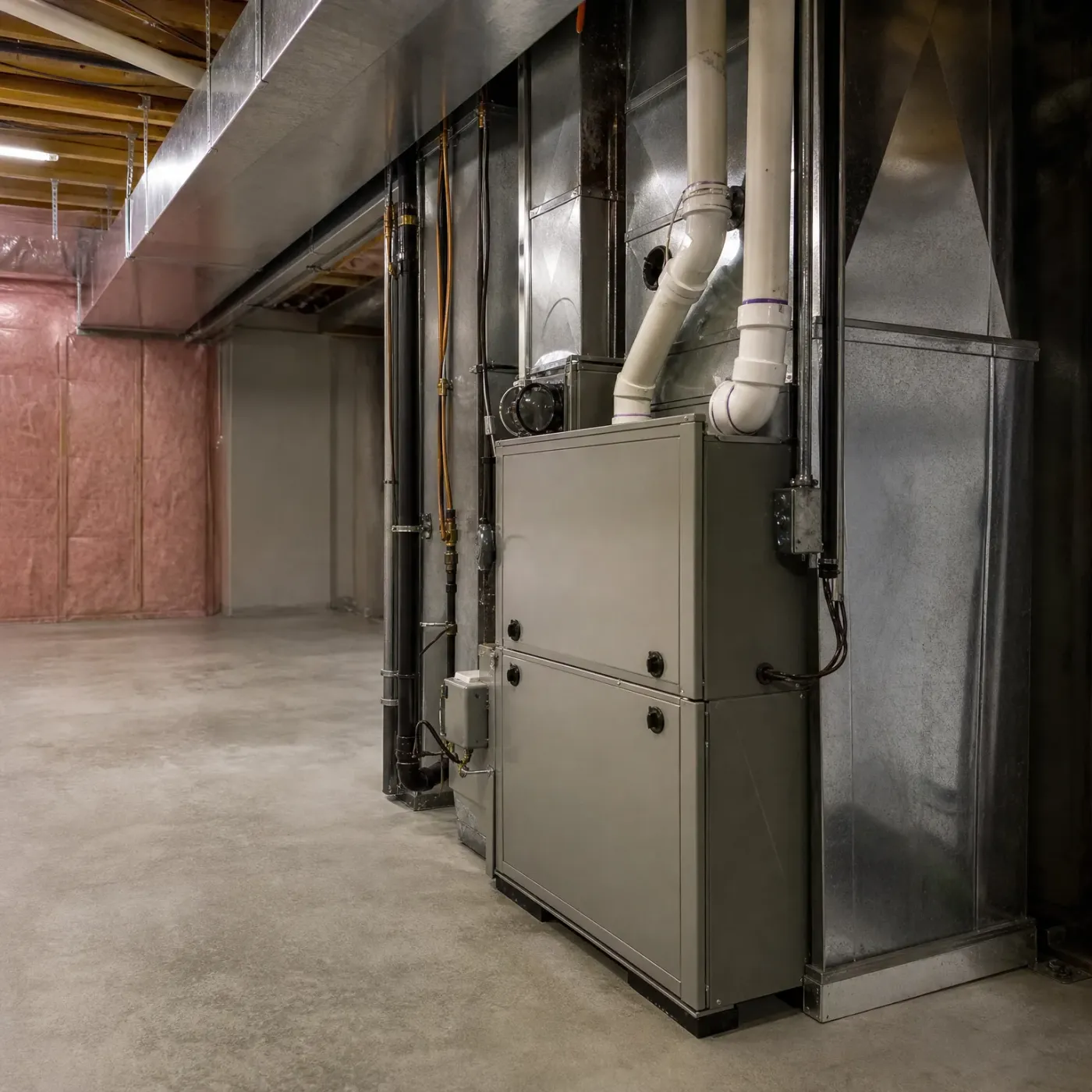
A clean burner draws air the way it's set up to, holds a steady flame, and sends the heat it makes into the ductwork above instead of out a flue pipe.
A furnace left on its own year after year runs dirtier and pulls harder, and a basement like this is where that shows up first.
Statewide, winter nights average 20°F, according to NOAA climate data. A furnace sized for an Illinois winter has to hold that line night after night, not just on the coldest week. That means long runtimes after dark, when the thermostat calls for heat and keeps calling until morning. A burner that's dirty or a blower that's pulling too hard has to work through all of those hours, not just a few, and you'll feel it as a house that never quite gets warm enough or a furnace that seems to run most of the night. Over a whole winter, those long nighttime stretches are where a furnace running clean or running dirty shows up most on the gas bill.
NOAA nClimDiv 1991-2020 county normals weighted by homes
A furnace that's cleaned and checked before the cold sets in burns less gas to hold the same temperature, and that's the whole answer. The rest is just making sure it happens. A tech who services furnaces around Illinois all winter has seen what a dirty burner or a failing flame sensor does to a gas bill by February, and knows what to check before that happens to yours. You'd be working with one licensed local contractor, not a handful of companies calling you back at once, trying to figure out which one actually knows your kind of furnace. You already know what's driving the bill up. The part left is getting someone out to the house who can deal with it directly, instead of you sorting through quotes and explaining the same thing twice.
Describe it once
A licensed local pro takes the request for your furnace tune-up.