
Is a clogged dryer vent a fire risk in Naperville, IL
Yes. A clogged dryer vent is one of the more common causes of house fires, and the risk is real in Naperville. Lint is what catches. Every load sends a little more of it into the vent line, and once it builds up along the duct walls, hot air from the dryer can't escape the way it should. Heat backs up inside the machine instead of venting outside. That heat has nowhere to go but onto that trapped lint, and lint ignites easily. You'll usually notice warning signs before that point: a load that used to dry in under an hour now takes two or three, the outside vent hood barely flutters when you hold your hand near it, or the dryer itself runs hotter than normal to the touch. Winters here add to the problem, since a vent that's partly blocked restricts airflow even more once the hood's flap is stiff with cold. If drying times have crept up or you can't remember the last time the vent was cleaned out, that's worth checking before it gets worse.
What does your household mean for your dryer vent risk?
2.61 people per household on average
With 2.61 people per household on average in DuPage County, most homes here run a load most days, and more loads means lint building up in the vent faster than you'd think.
Half the homes here were built by 1978
Half the homes in DuPage County were built in 1978 or earlier, which means older, longer duct runs that give lint more surface to catch on before it ever reaches outside.
Power here costs 17.56 cents per kilowatt-hour
At 17.56 cents per kilowatt-hour, a dryer working harder to push air through a clogged vent costs you more every time you run it, on top of the fire risk.
ACS 2020-2024 · EIA-861 2025
A dryer vent that runs straight out through a nearby wall clears itself fast and gives lint less room to settle along the way.
A vent that runs long, turns corners, or climbs through two floors to the roof gives lint more surface to catch on, and that's the setup that needs checking more often.


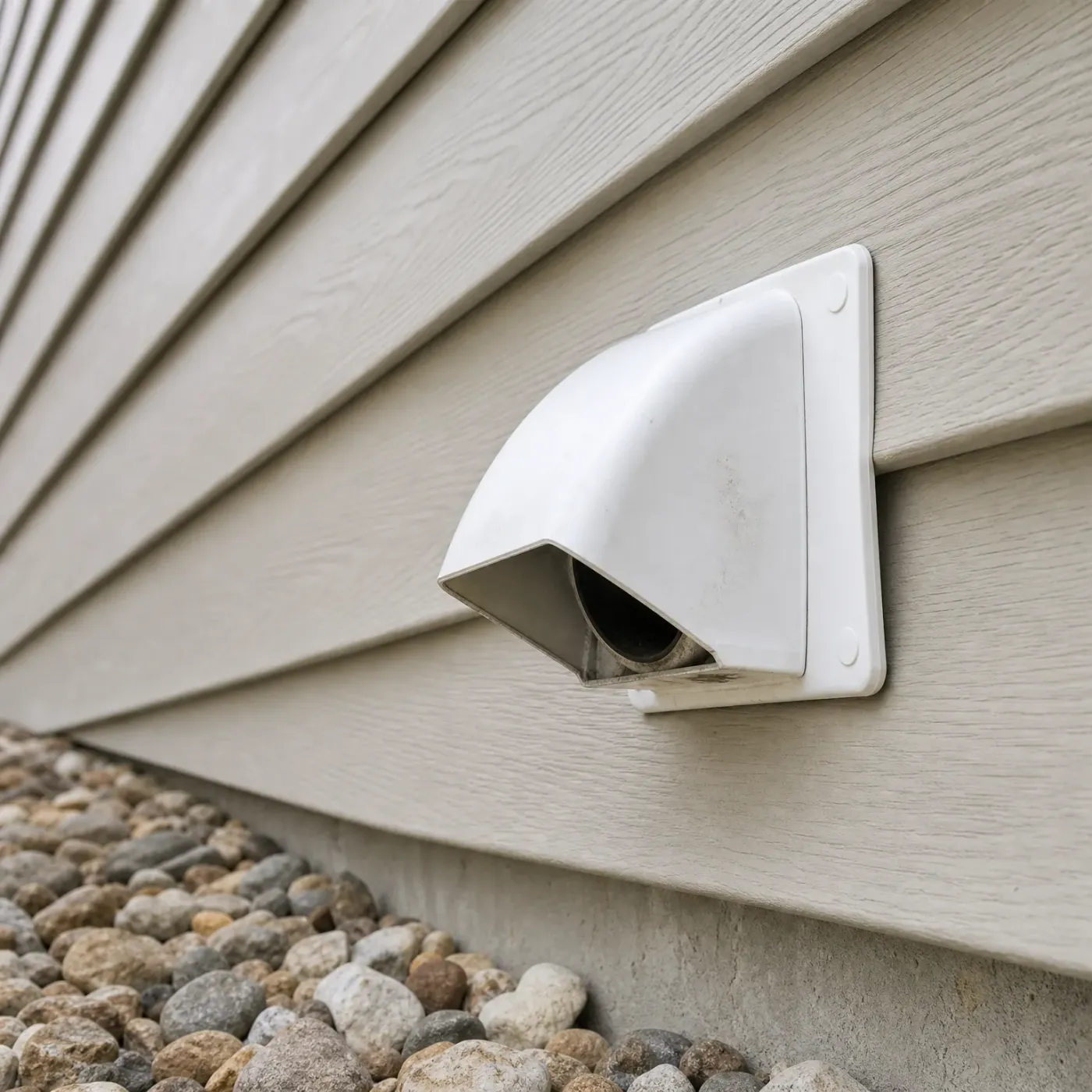
Your dryer pushes heated, damp air out through the vent to clear the drum. That's the whole job of the duct. Lint rides along with that air, and it doesn't wait for the end of the line to settle. It catches on the inside walls of the duct first, so the hood outside your house can look fine while the line behind it is packed. As the opening narrows, the dryer works harder to push air through, and the heating element runs longer to dry each load. That heat has nowhere to go. Lint ignites at a lower temperature than most people assume a dryer ever reaches. The same restriction can push exhaust backward, toward the drum seal and the motor, where more lint collects. One place to check yourself is the flapper on the outside hood. It should swing open when the dryer runs. If it barely moves, or stays shut, that's usually the first sign the vent behind it is restricted.
How a clogged vent starts a fire
- Every dryer forces heated air out through the vent, and that airflow is what carries moisture and lint away from the drum.
- Lint builds up along the inside of the duct first, not at the hood, so a clear-looking vent cap can hide a packed line behind it.
- As the duct narrows with lint, the dryer has to push harder to move air, and the heating element stays on longer to finish a load.
- That trapped heat has nowhere to go, and lint ignites at a lower temperature than most people expect from a dryer.
- A clogged vent also pushes exhaust back toward the dryer itself, which is how lint ends up packed around the drum seal and the motor.
- The flapper on the outside hood is supposed to swing open with airflow, and a weak flap or one stuck shut is often the first sign the line is restricted.


Finding a pro stops being your job
The pro who gets in touch is licensed in Illinois and works in DuPage County.
Send the request and finding a pro stops being your problem.
Sending the form costs nothing.
What would you actually notice if your vent were clogged?
A load that used to take forty minutes now runs through two cycles before the clothes are dry. The top of the dryer feels hot to the touch, or the laundry room itself feels warmer and more humid than it should. You might catch a faint burning smell, especially a few minutes into the cycle. Lint shows up around the lint trap door or along the floor behind the dryer instead of staying in the trap where it belongs. The vent hood outside barely flutters when the dryer runs, even on high heat. Any one of these by itself might mean nothing. Together, they mean hot air and lint aren't leaving your house the way they're supposed to, and that's the exact condition that lets a dryer fire start.

Why the lint catches fire
Lint is dry, loosely packed fiber, and it ignites at a lower temperature than most household materials. A dryer's heating element or burner sits right behind it, cycling on every few minutes for the length of a load. When lint builds up close enough to that heat source, it doesn't take a spark, just enough heat held in one place for long enough. A blocked vent traps that heat instead of carrying it outside.

Where the heat has nowhere to go
A dryer is built to push hot, damp air out through the vent and out of the house. When lint narrows that path, the air backs up inside the duct and inside the dryer cabinet itself. The heating element keeps firing on the same cycle whether the air is moving or not, so the trapped heat climbs higher than the dryer was built to handle. That's the condition a working vent is designed to prevent.
How long does it take for a clogged dryer vent to actually start a fire?
You want a timeline, not a general warning. Maybe the vent hasn't been cleaned in a while and you're wondering if this is an emergency or something you can schedule around. There's no way to know exactly how packed yours is without looking, but the pattern of how a clog gets to that point, and why it doesn't happen all at once, is worth understanding.
There's no set number of loads, it depends on how packed the vent already is
Nobody can give you a day count, because the risk builds with every load rather than showing up on a schedule. A vent that's partly restricted just runs hotter and takes longer to dry clothes. It's when the restriction gets severe enough that heat has nowhere to go that lint sitting close to the heating element can reach its ignition point. That could be the result of months of loads piling up unnoticed, or it could happen faster if the vent run is long or has several turns where lint catches easily. The honest answer is that a clogged vent is a growing risk the whole time it goes uncleaned, not a fixed countdown.




2.61 people per household on average
At 2.61 people, most households here are running a dryer close to daily, not once or twice a week. That steady pace is what feeds lint into the vent fastest, so the gap between cleanings matters more than it would in a house that does one load on Sundays.
ACS 2020-2024
Where That Leaves Your Vent
- A clogged dryer vent is a real fire risk, and in DuPage County's two-dryer-load-a-day households, lint builds up fast.
- A vent that runs long or climbs through two floors needs more attention than one that runs straight out a side wall.
- A longer dry time, a hot dryer top, or a warm laundry room are signs the vent is already restricted.
- A local contractor who clears vents in this area all year knows which duct runs clog fastest and what to check first.
- Working with one licensed local contractor means one visit and one assessment, not a string of calls to sort through.
- Clearing the vent now removes the lint before it has a chance to catch.
A clogged dryer vent is a real fire risk, and nothing about your setup makes you exempt from it. If your household runs a load most days, lint is building up along that duct right now, a little more with every cycle. The layout of your vent run matters too. A short, straight shot out a side wall clears itself better than a line that climbs two floors or turns a few corners on the way to the roof. If your dryer is taking longer than it used to, or the top of the machine feels hotter than it should, or the laundry room holds more heat and moisture than you'd expect, that's the vent telling you it's already restricted. None of this means waiting to see how bad it gets.
A contractor who works on vents in Naperville and the rest of DuPage County all year has seen which duct runs clog first and what tends to go wrong in them. That's the kind of knowledge that comes from doing this work locally, season after season, not from a general checklist. You're also matched with one licensed local contractor, not a handful of companies competing for your callback. One visit, one assessment of your specific vent run, and you know where you stand. The lint that's already built up doesn't clear itself, and every load between now and when it's cleaned is another load feeding it.

Let someone else find the pro
You're not committing to anything by asking.
A packed vent only gets worse with the next load. Sending the request now means someone local who checks dryer vents every week takes a look before lint turns a long dry cycle into a real hazard.