
HVAC Installation in Belleville, IL
A new system here will heat from October through April and cool from May through September every year. Tell us about the house, and a licensed contractor who covers St. Clair County will get in touch.
Tell us about the job
It takes about a minute.

What a system in Belleville has to handle
Your new system needs to do two jobs well. From October through April it has to hold the house warm through nights that average 26°F. From May through September it has to keep up on afternoons that average 87°F. That is twelve months of work with almost no break between them.
Most homes here heat with gas, so a furnace paired with the right size air conditioner is the common setup. Sizing matters both ways. Too small and it runs constantly without catching up. Too large and it cycles on and off without pulling the humidity down in summer or holding a steady temperature in winter. St. Clair County also sees its share of wind. Ten years of records show 84 damaging wind events and 9 winter storms, so whatever gets installed should be set up to start back reliably once the power is back on.
- 7 months
- October through April, your system heats
- 5 months
- May through September, it cools
- 26°F
- the average winter night it heats against
- 87°F
- the average summer afternoon it cools against
NOAA nClimDiv, 1991–2020 normals
In Illinois, HVAC licensing for homes is left to the cities and towns.
St. Clair County does not run its own contractor license, so there is no state or county record to check against. Whatever protection exists here comes from the city or township the house sits in, and that varies from one to the next.
In most cities and counties, installing a furnace, air conditioner or heat pump needs a permit from the local building office, with an inspection once the work is done. That inspection is what catches a bad gas connection or a system that was not set up right, not a license number.
Source: Illinois General Assembly
- When should I replace my HVAC system?
- Once your furnace or air conditioner is old enough that a breakdown is more likely than not, and repairs keep adding up, replacement makes more sense than fixing it again. If a contractor is quoting a major repair, ask what a new system would cost against paying for that same repair again next year. Homes here run the furnace from October through April and the air conditioner from May through September, so both machines work hard most of the year with little downtime to hide a growing problem.
- Should I replace my furnace and air conditioner at the same time?
- If they are close in age, yes. A furnace and air conditioner installed years apart often were not matched to run together, and pairing an old unit with a new one can keep the new one from running at its rated efficiency. Replacing both also means one installation instead of two, with the ductwork and airflow checked once for the whole system. If yours were installed at different times and only one is failing, a contractor can tell you whether the other is worth matching now or waiting on.
- What happens during an HVAC installation?
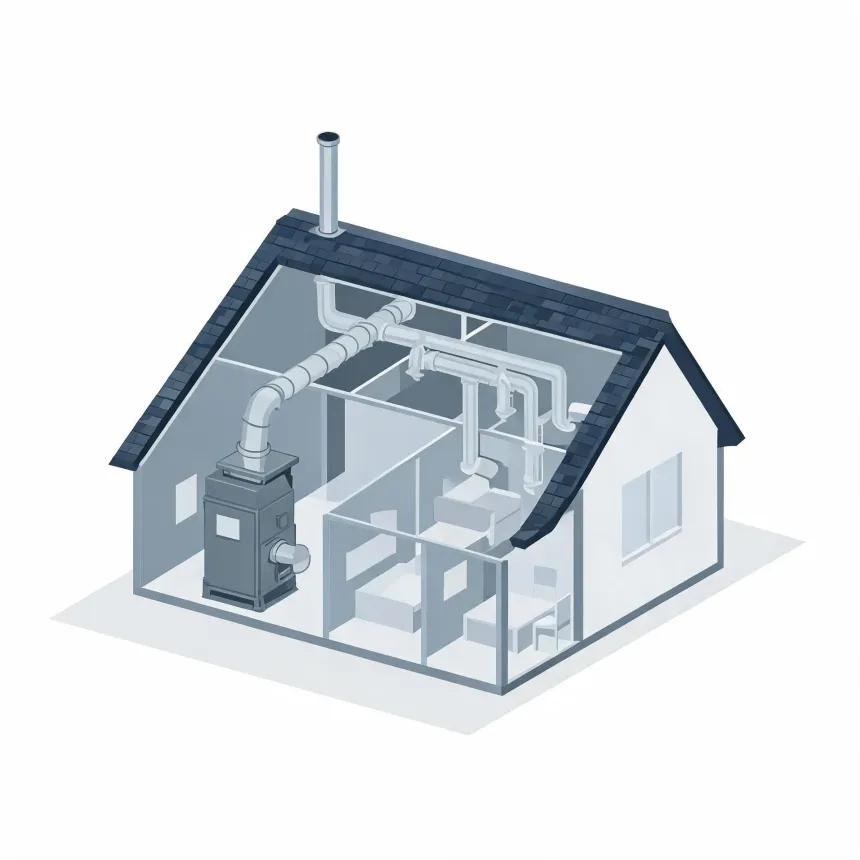
- A contractor removes the old furnace, air conditioner, or both, and sets the new equipment in place, connecting it to your ductwork, gas line or electrical circuit, and the condensate drain. They check the ductwork itself for leaks or sizing problems, since a new system connected to bad ductwork will not perform the way it should. If you are getting a new air conditioner or heat pump, the refrigerant lines get connected and pressure tested. Once everything is running, the contractor checks the airflow and the temperature rise across the furnace, and the refrigerant charge, before calling the job done. A contractor can walk you through the specific steps for your house once they have seen the equipment and the space it goes in.