
AC Maintenance in Champaign, IL
Air conditioners here run from June through September, so May is the time for a tune-up. Tell us about your system, and a licensed contractor who covers Champaign County will get in touch.
Tell us about the job
It takes about a minute.

Four months of hard running, every year
Your air conditioner in Champaign County works hard for a short stretch. June through September, with afternoons averaging 84°F, it runs long hours to keep up. That kind of steady demand wears on the parts that keep the system cooling, the capacitor, the contactor, the condenser coil.
A tune-up before the season checks those parts while they're easy to check. A weak capacitor gets caught before it strands you with a unit that won't start. A dirty coil gets cleaned before it forces the system to run longer than it should to cool the same house.
- 4 months
- June through September, your air conditioner is on duty
- 84°F
- the average summer afternoon it cools against
- 70 hail events
- in ten years, and hail bends the fins on outdoor coils
- 223 wind events
- in ten years, and wind drives debris into outdoor units
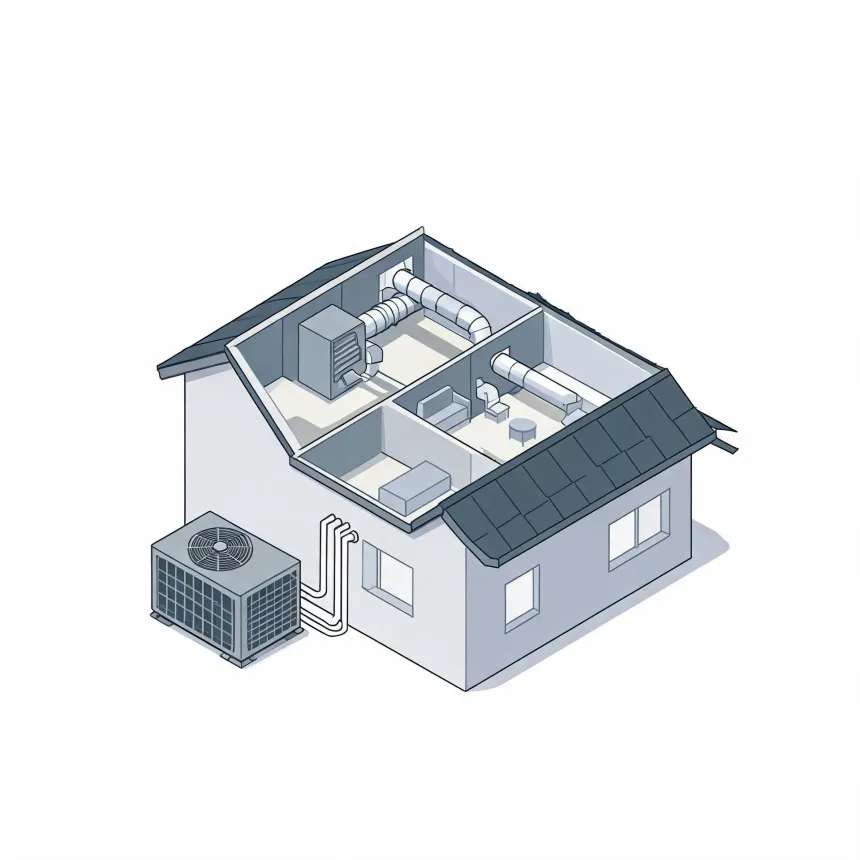
NOAA nClimDiv, 1991–2020 normals

Book your AC tune-up in May, before homes here start needing cooling in June.
- Jan
- Feb
- Mar
- Apr
- May
- Jun
- Jul
- Aug
- Sep
- Oct
- Nov
- Dec
A tune-up checks the refrigerant charge, cleans the coils, tests the capacitor and tightens the electrical connections.
In Illinois, HVAC licensing for homes is left to the cities and towns.
Illinois does not license HVAC contractors at the state level. Whether a contractor needs a local license depends entirely on the city or town where the house sits, so there is no statewide exam or record behind the work, only whatever the municipality has decided to require, if anything.
For a maintenance visit on your air conditioner, the one protection that holds no matter where you are in Illinois is federal. If the technician checks the refrigerant charge or works on the coil, they are required to hold EPA Section 608 certification. That certification covers handling refrigerant safely and legally. It is not a general license for the work as a whole. Beyond that, what governs the visit is whatever rule your municipality has put in place.
Source: Illinois General Assembly
- What does AC maintenance include?
- A technician checks refrigerant pressure, cleans the outdoor coil, tests the capacitor, and looks at electrical connections for wear. They also check the fan motor, replace or clean the air filter, and confirm the thermostat is calling for cooling correctly. In Champaign, this is worth doing before June, since your system will run hard for the next four months straight.
- How often does an air conditioner need maintenance?
- Once a year, in spring before you need the cooling. Champaign summers push the system for four months at highs around 84°F, so a spring check catches a weak capacitor or low refrigerant before it fails on the first hot week. Skipping a year does not always cause a breakdown, but it raises the odds.
- Is AC maintenance worth it?
- Yes, because most breakdowns trace back to something a technician could have caught early, like a failing capacitor or a coil coated in debris. Champaign gets frequent hail and wind, 70 hail events and 223 damaging wind events over the last ten years, so an outdoor unit here takes more of a beating than in a calmer climate. A yearly check is the way to find storm damage or worn parts before they leave you without cooling during the four months you need it most.