Illinois HVAC Pros

Does closing vents help your AC in Illinois

Tune-up, service, or cleaningCentral ACIllinois
Step 1 of 2

What ZIP code is the job in?

No. Closing vents in rooms you don't use doesn't help your AC, and in most homes it works against it. Your system is sized to push a certain amount of air through the whole duct system. Shut several vents and that air has nowhere to go, so pressure builds inside the ducts. That pressure can force cooled air out through gaps and seams before it ever reaches a room, and it makes the blower work harder to move the same amount of air. In Illinois, where summers run hot and sticky and the system is already working long hours to keep up, that extra strain shows up as higher bills and more wear on the blower motor and coil. If a room runs warmer than the rest of the house, the better move is to have someone look at whether that duct run is sized and balanced right, not to close the vent and hope.

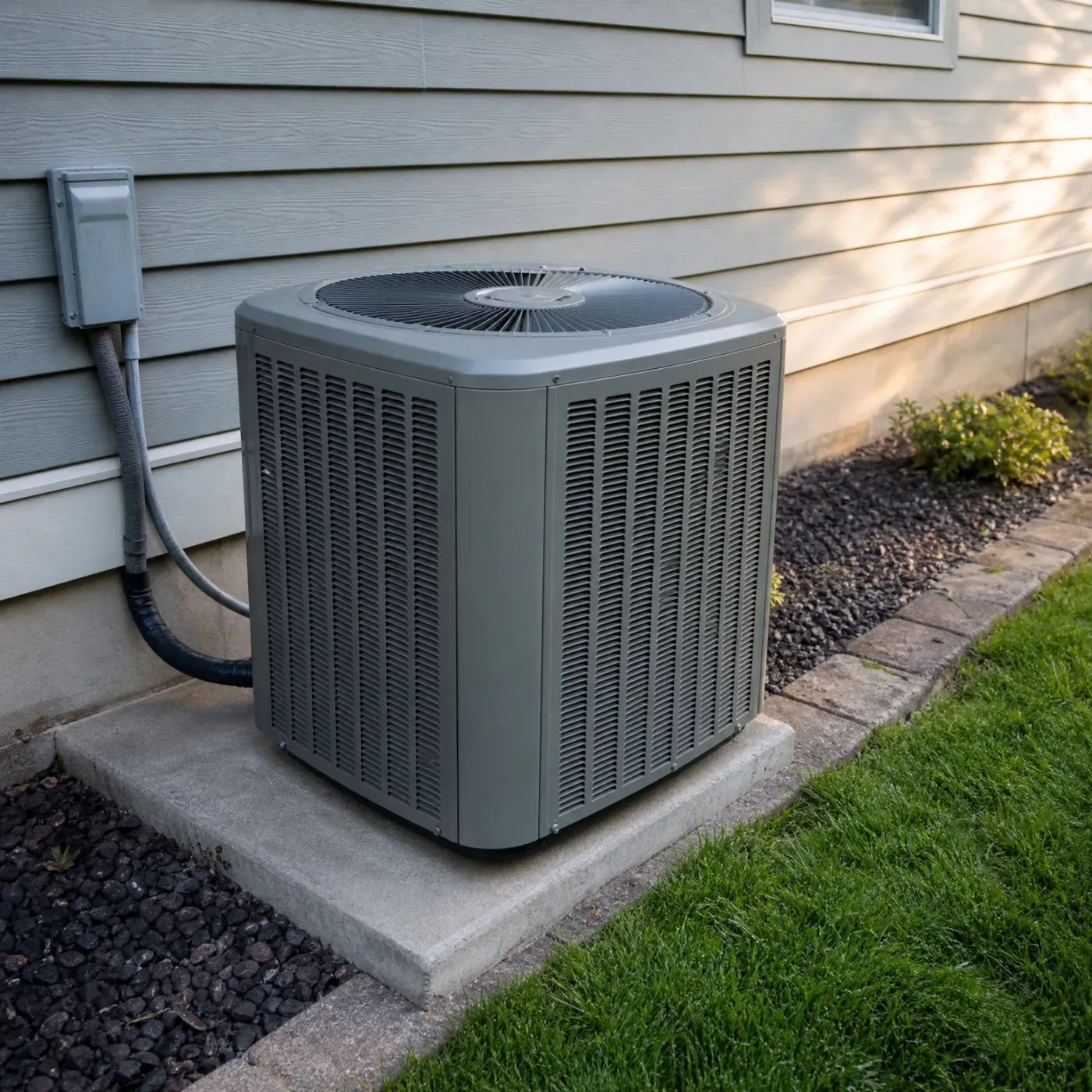
A gray outdoor air conditioning condenser unit on a concrete pad beside a house with horizontal siding and a stone veneer base, with a wall-mounted disconnect box and conduit, next to a shrub bed and a concrete patio.

Vents open, system balanced

Air moves through the ducts the way it was designed to, out through every vent and back to the return. The coil stays at the pressure it needs to cool properly, and the unit outside runs a normal cycle instead of fighting itself.

An outdoor air conditioner condenser unit on a concrete pad beside a house with light gray vinyl siding, with a gray electrical disconnect box and conduit on the wall, gravel beds and dried plants nearby, and a concrete sidewalk in the foreground.

Vents closed, pressure with nowhere to go

Closed vents push air back into the ducts instead of the rooms. That extra pressure can force air out through gaps in the ductwork, and the blower works harder to move the same amount of air through fewer openings. Over a muggy Illinois summer, that strain adds up.

Why does closing vents mess with the air pressure in my ducts?

You figure a few closed vents just mean less cooled air going to empty rooms, with no real downside. But you keep hearing that it throws off the pressure in the ducts, and you want to know what that actually means for the system running in your house.

The blower keeps pushing the same amount of air whether the vents are open or shut

Your blower is set to move a fixed amount of air, figured for the duct system with all the vents open. It doesn't sense how many are closed and back off. Shut three or four vents and that same volume of air gets forced through fewer openings, so the pressure in the supply ducts climbs. Some of it leaks out through the duct seams and joints before it ever reaches a room. The rest pushes back toward the blower and the coil, which can slow the airflow across the coil enough that it runs colder than it should. On a muggy Illinois afternoon, that's the opposite of what you want your system doing.

An outdoor air conditioner condenser unit beside a house with horizontal siding and stucco, its coil fins covered in white cottonwood fluff that also collects on the surrounding grass and mulch.

Late afternoon, and the cottonwoods along the yard have been letting go for days. You walk past the condenser to drag the trash bin to the curb and notice the fins look gray-white, almost furry, where the fluff has caught and packed itself against the coil. The unit is running, you can hear it, but the air coming off the top feels weaker than it should on a day this sticky. You crouch down and pick at a bit of the fluff with your finger. It's matted in deep, not something a quick brush-off is going to clear. You make a note to deal with it this weekend, then head back inside.


Closing Vents: Help or Harm

Close the vent

  • A spare bedroom that sits empty most of the year feels like a safe place to shut off airflow and let the AC focus elsewhere.
  • Closing one or two vents partway, in rooms you rarely use, usually won't choke the system enough to cause trouble.
  • It feels like it should save you something on a summer power bill, since you're not cooling a room nobody sits in.
  • The relief doesn't come from the duct work, it comes from running a smaller space through the same return air path.
  • A closed vent in a rarely used room still leaves the rest of the house on the same loop, so the system isn't starved for air overall.

Leave it open

  • Your furnace blower was sized for a specific number of open vents moving a specific amount of air, and closing several changes that math.
  • Air that can't get out through the vents backs up into the ducts, and the coil can end up running colder and wetter than it's built for.
  • A coil that stays too cold too often is more likely to ice over, which shuts down cooling until it thaws.
  • The outdoor unit still runs the same compressor cycle whether three vents are open or ten, so you're not cutting its workload by much.
  • Illinois summers already push the system hard for months at a stretch, and added strain from blocked airflow shows up as more frequent repair calls.
  • A contractor who services AC systems in your area every summer can check your duct pressure and tell you if any rooms are actually safe to close off.
A gray outdoor air conditioner condenser unit on a concrete pad beside a house with horizontal siding and a light stucco wall, with a disconnect box and refrigerant lines on the wall and a shrub and mulch bed at left.

The coil needs steady airflow

Your evaporator coil is built to have a certain volume of air moving across it all the time. That air carries heat away and keeps the coil above freezing. Cut the airflow by shutting vents and the coil can drop below 32 degrees. Once ice forms, it blocks even more air, so the problem feeds itself. By the time you notice warm air at the vents, there's often a solid sheet of ice sitting on the coil that has to melt before the system can work right again.

A gray outdoor air conditioning condenser unit on a concrete pad surrounded by gravel, next to a white horizontal-lap-sided house wall with an electrical box and conduit, against a blank white background on the left.

The compressor pays for it

Behind the pressure buildup is the compressor, the one part in your AC that costs the most to replace. It's built to move refrigerant against a certain resistance. Closed vents raise that resistance on the low side and change the pressures the compressor is pumping against on both ends. Run it that way for years and the bearings and valves inside wear faster than they should. A contractor who services AC units all over Illinois every summer will tell you this is one of the quieter ways people shorten a compressor's life without ever touching it directly.

Power costs 17.67 cents per kilowatt-hour statewide

At 17.67 cents per kilowatt-hour, every extra hour your condenser runs from closed vents shows up on the bill fast. A system fighting pressure it wasn't built for draws more power to move the same air, and in Illinois that extra draw costs more than most states pay.

EIA-861 2025 statewide residential average

A gray-haired bearded man in a dark coat and scarf dusted with snow stands smiling in a dimly lit entryway with a white front door, a side table with a lit lamp, an oval mirror, and a patterned rug.
An older bearded man in a dark snow-dusted coat and gray scarf stands just inside a dimly lit home entry, with a framed picture, lit table lamp, and an adjoining room with a fireplace behind him, and snow visible through the open door.
A gray-haired, bearded man in a dark snow-dusted coat stands smiling in a dimly lit entry hall with a staircase, a lit table lamp, a framed picture, and a living room visible through a doorway.
An older man with gray hair and a beard, wearing a dark jacket dusted with snow, stands smiling in a dimly lit hallway with lamps and a living room visible behind him.

Get the right pro for your air conditioner

A licensed local pro takes the request for your air conditioner tune-up.

It costs nothing to send, and you don't have to hire anyone.

Rooms closed off for the season

A guest room shut for the winter, or a basement nobody sits in during August, is a fair place to try this. The vent stays closed for months at a time, not flipped open and shut day to day, so the system settles into one steady pattern instead of fighting a moving target. It's still adding some resistance, but a system that only has to adjust once holds up better than one adjusted every day. If you try this anywhere, this is the lower-risk version.

Vents closed day to day

Shutting a vent in the morning and opening it again at night, chasing the sun around the house or trying to cool only the room you're in, keeps the system guessing. Every change shifts the pressure somewhere else in the duct system, and the coil and the condenser outside have to absorb that shift again and again. Over a summer of doing this daily, the wear adds up in a way a single closed vent in an empty room never does. If you want to manage comfort room by room, a contractor can tell you whether your system is built for zoning. Closing and opening vents isn't that.

A weathered outdoor air conditioner condenser unit on a concrete pad beside a house with horizontal vinyl siding, with a conduit and disconnect box on the wall to the right.
Before you get your air conditioner maintenance
A gray outdoor air conditioning condenser unit on a concrete pad beside a house with horizontal lap siding, with a conduit and electrical disconnect box on the wall and a green shrub in mulch to the right.
After you get your air conditioner maintenance
A gray outdoor air conditioner condenser unit on a concrete pad beside a house with horizontal lap siding, with a wall-mounted disconnect box and conduit at left and a green shrub and mulch bed at right.

System running as built

This is what the duct system was sized for. Air moves out through every vent, the coil gets the flow it needs, and the condenser outside cycles on and off instead of running long and hard. Nothing in the house is fighting the blower.

An outdoor air conditioner condenser unit on a concrete pad beside a house with horizontal lap siding, with a conduit running to a gray electrical disconnect box on the wall.

System pushing against closed vents

Same unit, same ducts, but several vents shut. The blower is still trying to move the same volume of air, so pressure climbs in the ducts that are still open. The coil can ice over, and the condenser outside works harder to do the same job.

A woman wrapped in a thick beige fleece blanket sits on a sofa with an open book on her lap, beside a lit table lamp, with a frost-covered window behind her.
A smiling older woman with gray hair in a cream knit sweater stands in a dimly lit kitchen beside a window showing snow outside, with a round loaf of bread on the counter in the foreground.
Single-story house with tan horizontal siding and a dark shingled hip roof, fronted by a patchy green and brown lawn and a concrete walkway leading to the covered entry.

Summer air in Illinois carries a dew point that averages 63°F across June, July and August, a figure the National Weather Service tracks. That's the sticky, heavy kind of air that makes your skin feel damp even standing still. Pulling moisture like that out of the air is what makes your AC work hard in the first place, and it needs full airflow across the coil to do it. Close off vents and you're asking a system to wring water out of thick summer air while it's already short on the flow it needs. You'll notice it as a house that feels cool by the thermostat but still clammy, because the air moving past the coil wasn't enough to pull the humidity out along with the heat.

NASA POWER T2MDEW county cells weighted by homes

Is your AC working harder since you closed those vents?

Maybe you noticed the air coming out weaker at the vents that are still open, even in rooms you use every day. Maybe the condenser outside is running longer stretches than it used to, especially on the hot, sticky afternoons Illinois gets all summer. You might hear it cycling on again just minutes after it shuts off. Inside, a room that should feel cool takes longer to catch up, or the air feels damp instead of crisp. None of this means something is broken yet, but it means the system is working against pressure it wasn't built to handle. Left alone through a full summer, that strain is what leads to a coil or a condenser failing before it should.

  1. Closed vents cut the airflow your blower was built to move.

  2. Pressure climbs inside the ducts with nowhere to vent.

  3. Airflow across the evaporator coil drops below what it needs.

  4. The coil runs colder and can start icing over.

A woman in a cream sweater and jeans stands in the open doorway of a white stucco house, holding the dark door, while a man in a dark quilted jacket seen from behind walks toward the entry past potted plants.

Leave the vents open and let the system do what it was built for

Closing vents doesn't save you anything. Your AC was sized for your ductwork as a whole, and it runs best when air can go where it was designed to go. Open the vents, keep the airflow steady, and let your maintenance visits handle the rest.

If you're not sure why the system seems to be working harder than it used to, or you've already closed vents and want to know what shape your ducts and coil are in after a summer like this, a local contractor who works on Illinois systems all season can look at your specific setup and tell you what's actually going on. You'd be matched with one contractor, not a handful calling at once, and they'd reach out to you directly about what your house needs.

Interior corner with a beige sofa holding a dark green and a light cushion and a textured throw, a potted small-leaved tree beside a white-framed window, and a dark shallow bowl on a wooden coffee table in the foreground.
A gray outdoor air conditioning condenser unit on a concrete pad beside a house with horizontal lap siding, with a wall-mounted disconnect box and conduit, lava rock mulch, a shrub, and grass nearby.

A pro who works on air conditioners

Find a licensed air conditioner pro

Your request goes to one pro, not a list of companies.

No charge to send it. You decide if you hire them.